Measure 31 / 155

02 — Administration · Measure 2.11 · 31 / 155

Enhance mutual severance without turning voluntary exit into an automatic cheque

The scheme became permanent in 2026. A proposal of one month of salary per year of service needs costing, caps and a clear organisational case.

Bible France · documentary chapterUpdated : 12 August 2026Primary sources prioritised
Measure 2.11 — Enhance mutual severance without turning voluntary exit into an automatic cheque
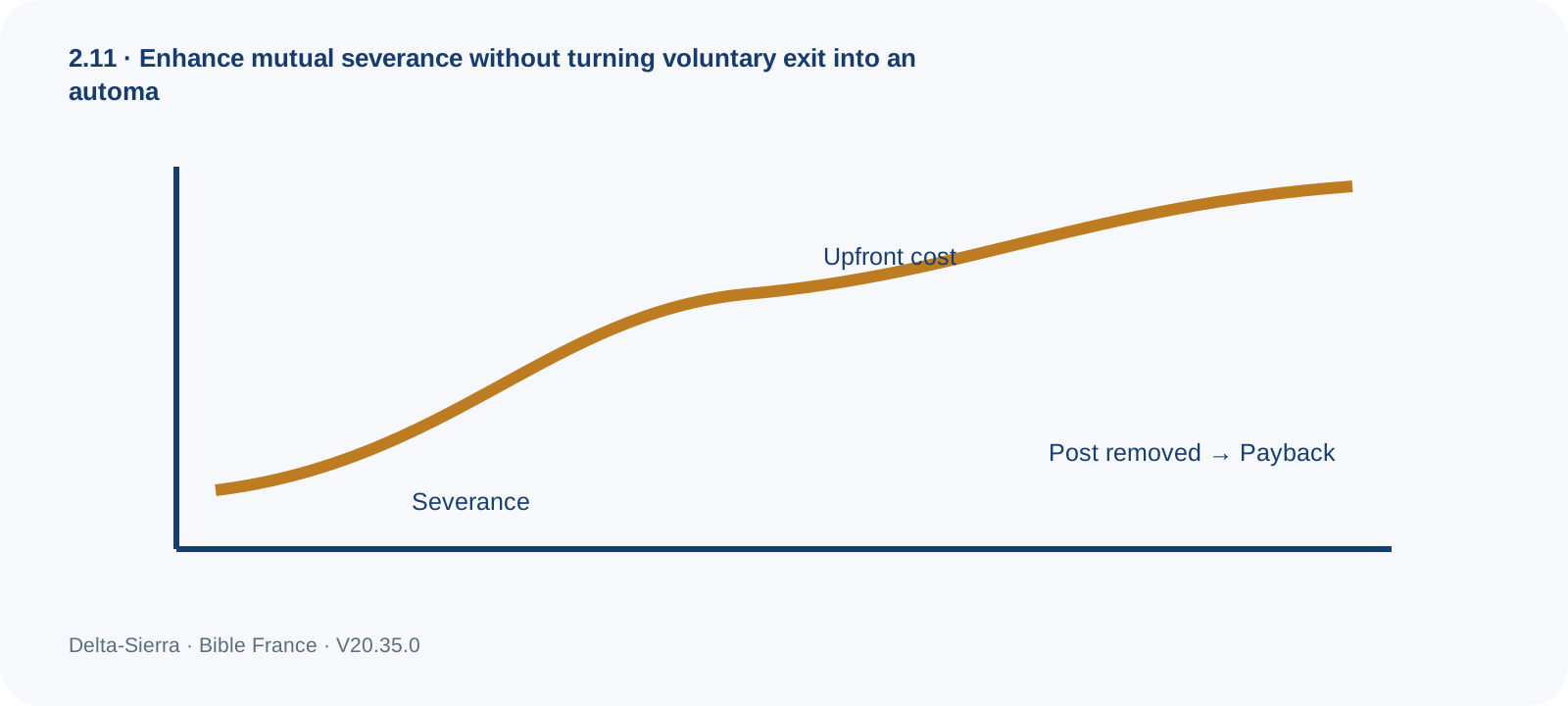
Measure-specific visual explanation 2.11

In 30 seconds

Current positionThe scheme became permanent in 2026. A proposal of one month of salary per year of service needs costing, caps and a clear organisational case.
ProposalEnhance mutual severance without turning voluntary exit into an automatic cheque
Legal routeStatute and decree amending the specific severance scale, with budget envelopes and eligibility rules.
Financial effectUpfront investment; savings depend on actual non-replacement and the payback period for each departure.
ConfidenceHigh on legal framing and method; financial estimates require consolidation before booking.
Main riskAn overly generous scale can pay people to leave only to replace them, eliminating any saving.

The legal framework is now permanent

Mutual termination for civil servants was made permanent in the 2026 Finance Act. Current minimum compensation is progressive and well below one month of salary per year for much of a career. The Plan’s proposal is therefore a major policy change, not a description of current law.

Each proposed departure needs a payback calculation. If the position must be refilled, a generous severance payment may create no saving at all. Shortage occupations should be protected from automatic eligibility.

Voluntary character and workforce effects need monitoring

The scheme is based on agreement between the administration and the civil servant. Higher compensation should not become a substitute for the safeguards that apply to organisational restructuring.

Public reporting should include severance amounts, tenure, occupations, positions genuinely eliminated, replacement recruitment and payback periods. This allows the policy to be adjusted if it mainly attracts skills that government then has to buy back.

Costing and legal delivery

Statute and decree amending the specific severance scale, with budget envelopes and eligibility rules.

Upfront investment; savings depend on actual non-replacement and the payback period for each departure.

Transition expenditure is reported separately from recurring savings, and transferred activity remains public expenditure unless the policy itself is discontinued.

What must be proved before implementation

An overly generous scale can pay people to leave only to replace them, eliminating any saving.

The implementation file should calculate the payback period of every enhanced mutual termination. It must show the statutory baseline, additional indemnity, annual post cost, replacement decision and any contractor spending that follows the departure.

Notes and sources

  1. DGAFP — pérennisation de la rupture conventionnelle en 2026 — primary/institutional source used for the measure framework.

  2. Décret n°2019-1596 — barème minimal de l’indemnité — primary/institutional source used for the measure framework.
  3. Code général de la fonction publique — rupture conventionnelle — primary/institutional source used for the measure framework.
  4. Loi de finances 2026 — article 173 — primary/institutional source used for the measure framework.


Further reading

The author’s books extend the programme but do not replace the primary sources cited in this chapter.

Réforme de l’État book cover

Réforme de l’État — Plan de Rupture

The architecture of the 155-measure programme.

IA : comment transformer la France book cover

IA : comment transformer la France

AI use cases, automation and human oversight in public services.

Compare voluntary-departure cost with the cost of keeping the post

Mutual termination in the French civil service was made permanent by the 2026 Finance Act. [1] [4] The Plan's proposal of up to one month of gross salary per year of service is therefore an additional political choice, not a description of current law.

The current minimum schedule under Decree 2019-1596 rises by seniority brackets and is materially different from one month per year. [2] Each case should show the statutory minimum, the proposed amount and the cost avoided only if the position is genuinely not replaced.

The General Civil Service Code protects the consensual nature of the mechanism. [3] A public dashboard should therefore track occupation, payment, replacement, later contracting and payback time so that a generous departure followed by an immediate replacement is not booked as structural savings.

Implementation evidence to publish

Enhanced mutual termination should be evaluated case by case as an investment decision. The administration needs to know whether the position disappears, is transformed or is refilled before any departure payment can be booked as a structural saving.

The post-reform comparison should focus on payback time and whether the supposedly removed position or skill was recreated through another spending channel.

Failure modes to test before national rollout

Enhanced mutual severance must be tested against windfall exits, loss of scarce skills and savings that disappear once replacement costs are counted.