Measure 30 / 155

02 — Administration · Measure 2.10 · 30 / 155

Redeploy staff to priority services instead of recruiting everywhere

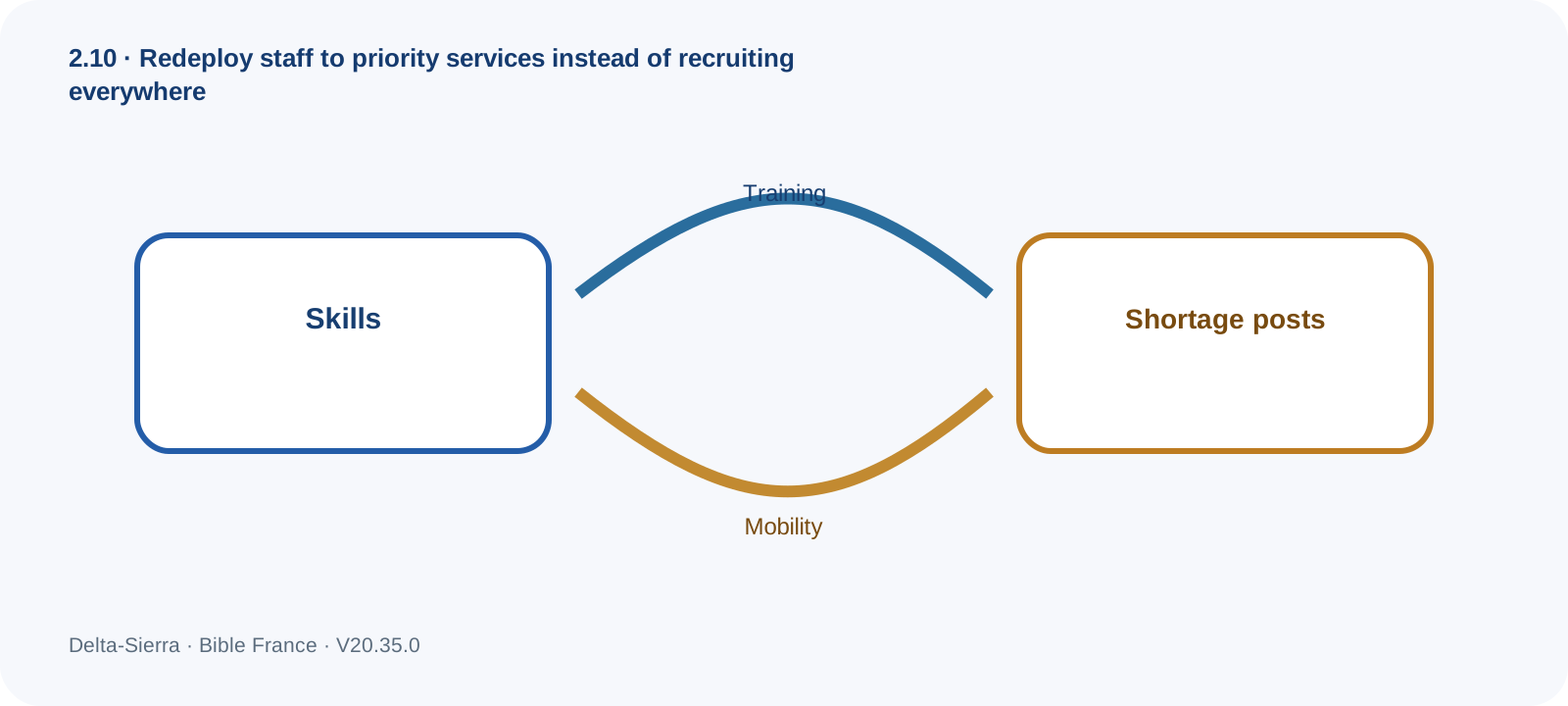
Build an internal public-sector skills market with visible shortage posts, bridging training, geographic support and post-mobility follow-up.

Bible France · documentary chapterUpdated : 12 August 2026Primary sources prioritised
Measure 2.10 — Redeploy staff to priority services instead of recruiting everywhere
Measure-specific visual explanation 2.10

In 30 seconds

Current positionBuild an internal public-sector skills market with visible shortage posts, bridging training, geographic support and post-mobility follow-up.
ProposalRedeploy staff to priority services instead of recruiting everywhere
Legal routeStatutory regulations, collective agreements, an interministerial mobility platform and training/relocation funding.
Financial effectStructural effect: the main gain is avoided external recruitment and better allocation, not automatic headcount cuts.
ConfidenceHigh on legal framing and method; financial estimates require consolidation before booking.
Main riskForced mobility without skills, housing or support can fail and simply create another vacancy.

Build a public-sector internal skills market

Mobility is already material: 11.9% of State civil servants changed establishment in 2023. The reform should connect that movement to shortage services through a common skills profile, visible vacancies and short bridging programmes.

Status rules matter, but transferable capabilities in procurement, budgeting, data, legal work or project management should be recognised across ministries. Highly regulated or rare occupations require explicit compatibility rules.

Support geographic moves and verify success after twelve months

A move can fail because of housing, family employment, schools or commuting rather than the job itself. Relocation support, temporary housing and trial secondments should be costed against external recruitment.

Priority services must be defined by published vacancy, backlog, risk and recruitment indicators. A transfer counts as successful only if the agent remains in post and the receiving service’s capacity actually improves.

Costing and legal delivery

Statutory regulations, collective agreements, an interministerial mobility platform and training/relocation funding.

Structural effect: the main gain is avoided external recruitment and better allocation, not automatic headcount cuts.

Transition expenditure is reported separately from recurring savings, and transferred activity remains public expenditure unless the policy itself is discontinued.

What must be proved before implementation

Forced mobility without skills, housing or support can fail and simply create another vacancy.

The implementation file should combine a priority-vacancy map with a common skills taxonomy. It must record internal candidates considered, training required, mobility conditions and the external recruitment avoided when a vacancy is successfully filled from within government.

Notes and sources

  1. DGAFP — Mobilité des agents, édition 2025 — primary/institutional source used for the measure framework.
  2. DGAFP — Stratégie territoriale RH de l’État 2026-2028 — primary/institutional source used for the measure framework.
  3. DGAFP — Rapport annuel 2025 — primary/institutional source used for the measure framework.
  4. Code général de la fonction publique — primary/institutional source used for the measure framework.


Further reading

The author’s books extend the programme but do not replace the primary sources cited in this chapter.

Réforme de l’État book cover

Réforme de l’État — Plan de Rupture

The architecture of the 155-measure programme.

IA : comment transformer la France book cover

IA : comment transformer la France

AI use cases, automation and human oversight in public services.

Create a genuine internal public-sector skills market

Mobility should use a common skills taxonomy rather than only civil-service corps and job titles. DGAFP mobility data and the 2026-2028 territorial HR strategy provide the evidence base for existing flows and geographic needs. [1] [2]

A service should qualify as 'priority' only through published evidence: excessive delays, documented vacancies, a new statutory mission or critical functions such as justice, health, security or control. The annual civil-service report provides context to prevent every organisation declaring itself exempt from redeployment. [3]

For employees, offers should disclose pay, remote-work options, location, training and duration. The General Civil Service Code remains the legal framework. [4] Success is measured by voluntary placement, retention after twelve months and reduced external recruitment where suitable internal skills existed.

Implementation evidence to publish

A mobility programme becomes credible when employees can see real receiving positions and managers can search for transferable skills across organisational boundaries. The system should record why a service is considered priority and whether vacancies were filled internally before external recruitment.

The post-reform comparison should focus on time to fill priority posts, voluntary mobility, retention and external recruitment avoided.

Failure modes to test before national rollout

Mobility reform must be tested against vacancy displacement, local recruitment constraints and transfers that move shortages instead of solving them.