Measure 32 / 155

02 — Administration · Measure 2.12 · 32 / 155

Create a progressive reduction of activity from age 58 to 62

Build on progressive retirement, now available from age 60, and explicitly cost any extension from age 58 while organising knowledge transfer.

Bible France · documentary chapterUpdated : 12 August 2026Primary sources prioritised
Measure 2.12 — Create a progressive reduction of activity from age 58 to 62
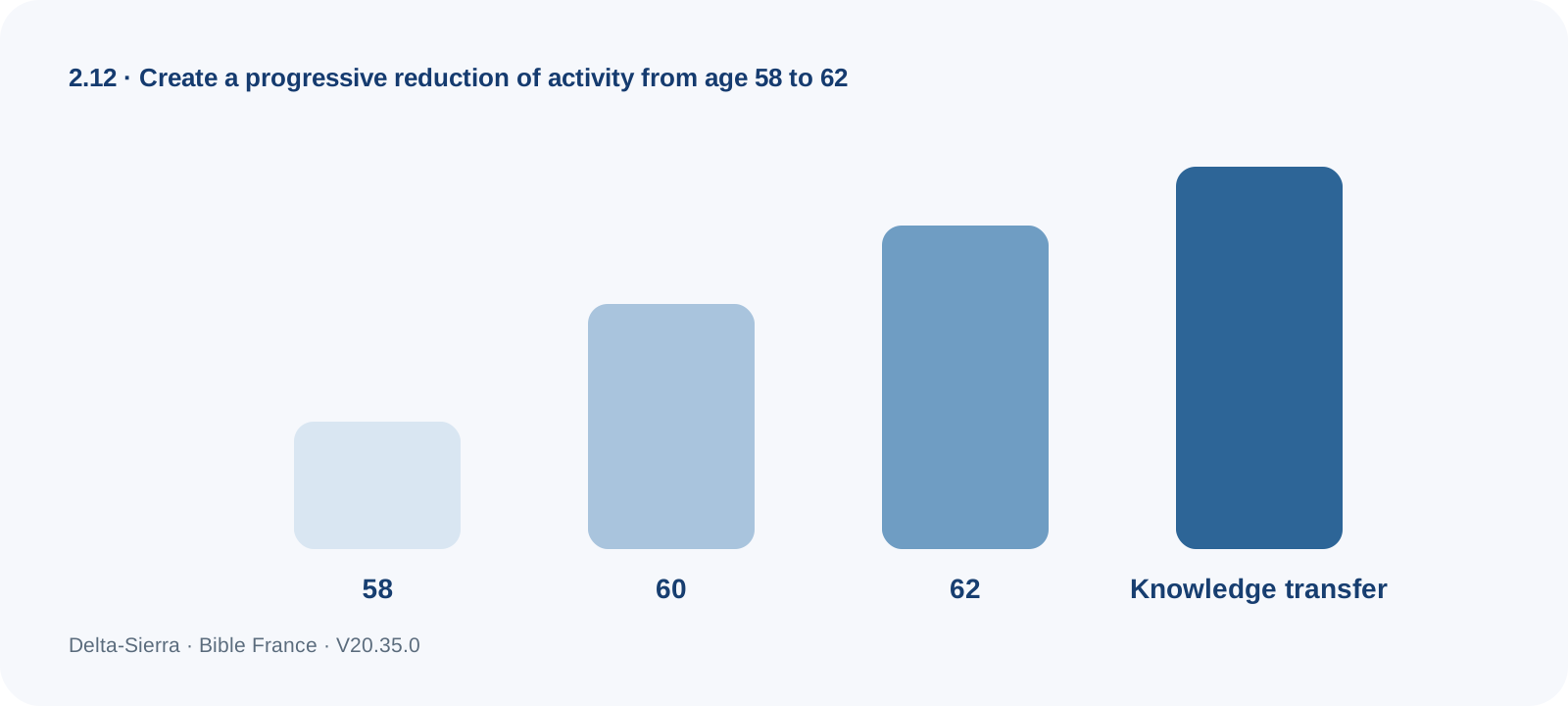
Measure-specific visual explanation 2.12

In 30 seconds

Current positionBuild on progressive retirement, now available from age 60, and explicitly cost any extension from age 58 while organising knowledge transfer.
ProposalCreate a progressive reduction of activity from age 58 to 62
Legal routeProgramme legislation and pension/public-service rules, with explicit funding for reduced activity and part-time arrangements.
Financial effectTransition investment; it may ease workforce renewal but is not an automatic saving.
ConfidenceHigh on legal framing and method; financial estimates require consolidation before booking.
Main riskProgressive retirement already exists from age 60 under specific conditions; an age-58 scheme would be a genuine extension, not current law.

Progressive retirement already exists from age 60

Public servants have access to progressive retirement, and since September 2025 the entry age is 60, subject to conditions including 150 quarters and part-time work. A Plan covering ages 58–62 therefore creates a new cost-bearing extension for ages 58 and 59.

The page must distinguish the existing pension mechanism from any new subsidised reduction in working time. Otherwise the fiscal cost would be hidden inside a policy described as if it already existed.

Use reduced activity for knowledge transfer

A senior employee working 60–80% can reserve structured time for mentoring, documentation and succession. Eligibility should take account of physical strain, scarce expertise and replacement needs, rather than age alone.

Evaluation should cover retention, absence, knowledge transfer, replacement and total public cost. A pilot in selected occupations would provide better evidence before a national age-58 extension.

Costing and legal delivery

Programme legislation and pension/public-service rules, with explicit funding for reduced activity and part-time arrangements.

Transition investment; it may ease workforce renewal but is not an automatic saving.

Transition expenditure is reported separately from recurring savings, and transferred activity remains public expenditure unless the policy itself is discontinued.

What must be proved before implementation

Progressive retirement already exists from age 60 under specific conditions; an age-58 scheme would be a genuine extension, not current law.

The implementation file should model each progressive-activity profile by entry age, working percentage, pension component, duration, mentoring duties and replacement timing. The objective is to show both payroll effects and the value of organised knowledge transfer.

Notes and sources

  1. Code des pensions civiles et militaires — retraite progressive — primary/institutional source used for the measure framework.

  2. Décret 2025-681 — âge de 60 ans / modalités — primary/institutional source used for the measure framework.

  3. DGAFP — retraite progressive dans la fonction publique — primary/institutional source used for the measure framework.
  4. DGAFP — Rapport annuel 2025 — primary/institutional source used for the measure framework.

Further reading

The author’s books extend the programme but do not replace the primary sources cited in this chapter.

Réforme de l’État book cover

Réforme de l’État — Plan de Rupture

The architecture of the 155-measure programme.

IA : comment transformer la France book cover

IA : comment transformer la France

AI use cases, automation and human oversight in public services.

Connect the 58-62 proposal to existing progressive retirement

The legal baseline changed before the Plan could be implemented: progressive retirement is now available from age 60 under conditions, including for public employees. [1] [2] The proposed 58-62 mechanism should therefore be presented as an extension and workforce-management tool rather than an entirely new concept.

The strongest rationale is knowledge transfer. Reduced working time can fund mentoring, documentation and pairing with a successor. DGAFP material on progressive retirement helps separate pension rights from any new end-of-career agreement. [3]

Scenarios should model entry age, working percentage, duration, partial pension, replacement and mentoring value. Demographic data in the annual civil-service report can identify occupations where knowledge loss is most urgent. [4]

Implementation evidence to publish

A progressive-activity scheme should be designed around workforce planning and knowledge transfer, not only a payroll reduction. The administration should identify occupations where retirement waves threaten continuity and pair reduced working time with documented mentoring obligations.

The post-reform comparison should focus on payroll, replacement, mentoring output and the continuity of scarce knowledge after retirement.

Failure modes to test before national rollout

Progressive activity reduction must be tested against workload transfer, pension interactions and unequal access between occupations and services.