


Health on Mars: what we know, what we extrapolate, and what nobody knows yet
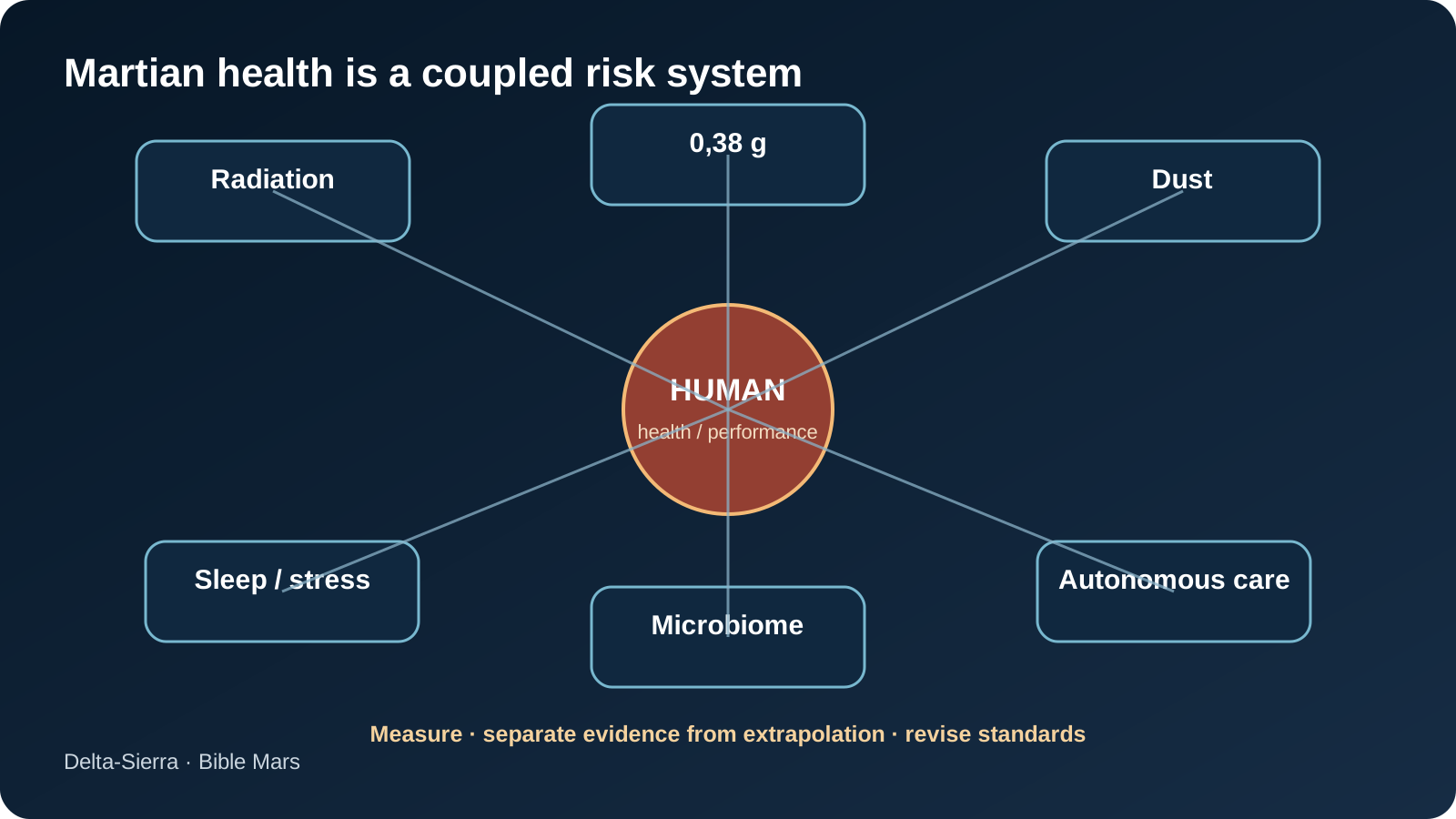
Mars does not create one medical risk. It combines radiation, partial gravity, dust, isolation, delayed communications and the absence of rapid evacuation.
The deceptively simple phrase “health on Mars” hides several environments
A person travelling to Mars does not move from Earth into one stable Martian environment. Months of microgravity or possible artificial gravity come first, along with deep-space radiation, landing loads and adaptation to roughly 0.38 g. The crew then lives inside a pressurized machine where air, water and microbes are recycled, dust tries to enter through every interface, communications are delayed and terrestrial emergency evacuation does not exist. Mars medicine is therefore a systems problem before it is a list of diseases.
The evidence must be classified. Human spaceflight provides substantial data for microgravity and some space-radiation questions. We also have confinement studies, bed-rest analogues, cell and animal work, and models. We do not have humans living for years at 0.38 g, human pregnancies in Martian gravity, or authentic airborne Martian dust returned to Earth for full toxicology. Saying “unknown” is not a weakness; it marks the boundary of evidence.
A credible Mars reference should therefore ask of every claim: measured in humans, observed in a ground analogue, observed in animals or cells, modelled, or still unknown? That matrix lets readers understand why a hazard can be taken seriously without turning a hypothesis into a clinical fact.
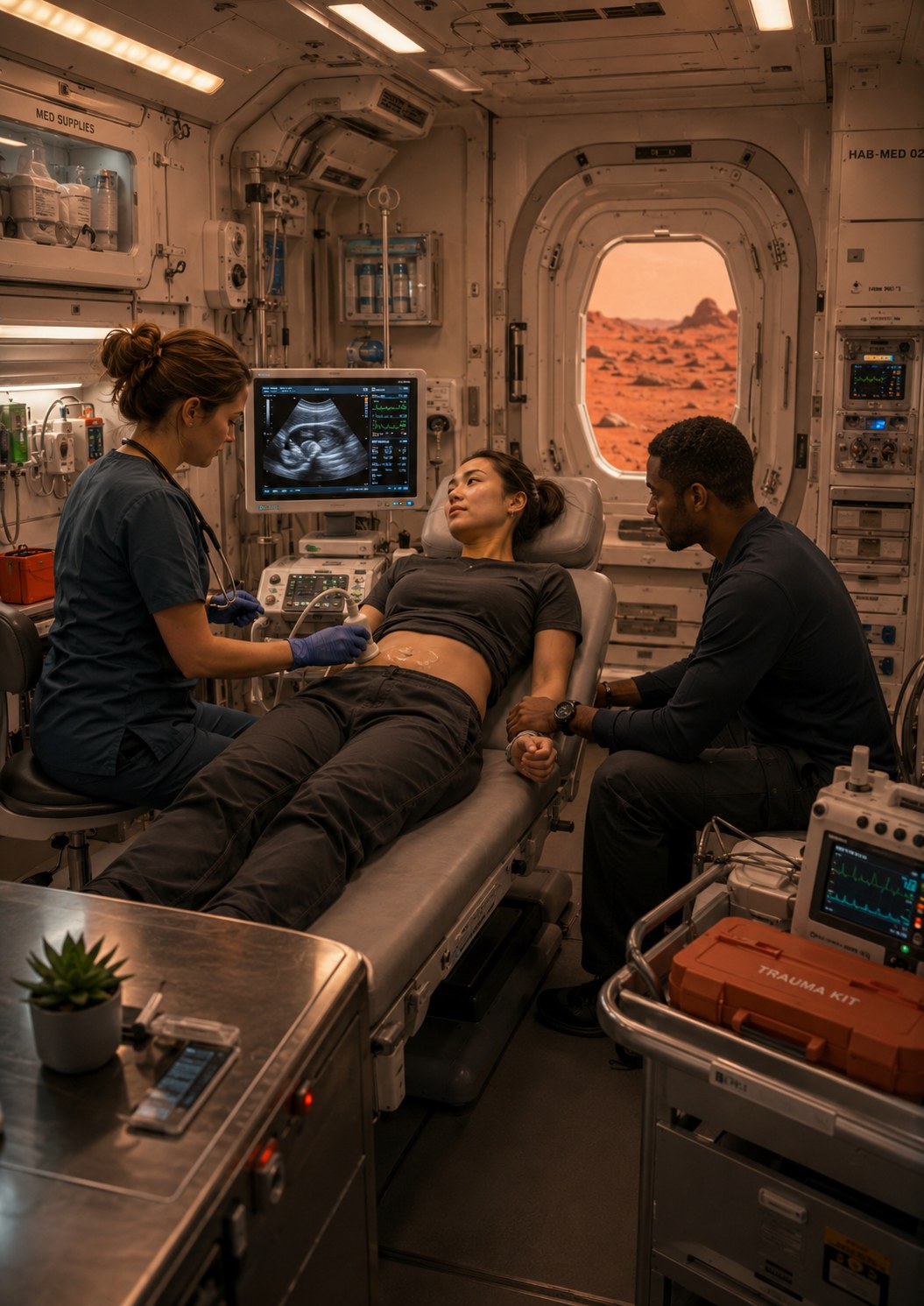
A patient hundreds of millions of kilometres from a university hospital
On Earth, the seriousness of an accident depends partly on the chain of care surrounding the patient. An open fracture a few kilometres from a major hospital is not the same problem as the same fracture in a remote desert. Mars takes that logic to an extreme: even when the planets are relatively close, propagation delay prevents real-time conversation, and evacuation to a terrestrial hospital is measured in months rather than minutes. The first change of perspective is therefore to stop asking only “which diseases might occur on Mars?” and ask instead “which medical functions must exist locally because nobody outside the settlement can provide them in time?”
That question turns health into an architecture problem. Radiation risk depends on trajectory, shielding and solar activity. Deconditioning depends on gravity history, exercise, nutrition and duration. Respiratory risk depends on dust, airlocks, cleaning, filters and EVA practice. Infection risk depends on human microbiomes, water, food, crops, humidity and antibiotic use. Psychological risk depends on habitable volume, privacy, noise, sleep, governance and the ability to resolve conflict. Medicine becomes an unusually sensitive observer of the entire settlement: a health anomaly may be the first symptom of an environmental or engineering failure.
A permanent population will also stop looking like a corps of astronauts selected from thousands of candidates. A four-person expedition can choose exceptionally healthy people and study almost every medical history before launch. A town of one thousand will inevitably contain children, older residents, chronic disease, disability, possible pregnancies, domestic accidents and conditions that were not part of the mission scenario. Moving from crew to civilian population is therefore a categorical transition: medicine stops being merely a mission subsystem and becomes a public service.
Five risk families that interact rather than add neatly
A useful map follows five coupled families: radiation, gravity, particulate and chemical environment, closed biological ecology, and medical autonomy. They do not act independently. Bone loss can worsen the consequences of a fall; a fracture can reduce exercise and accelerate deconditioning. Dust irritation can reduce exercise tolerance. Sleep disruption can impair attention during EVA. Infection may force antibiotic use that changes the microbiome of a closed habitat. These chains of causation are why a checklist of “Mars hazards” is not enough.
Every risk should therefore be paired with its evidence level and its interfaces. NASA human-system standards, ISS data, bed-rest studies, animal experiments, confinement analogues and models answer different questions. Their value comes from combining them carefully without pretending that an analogue is a Martian clinical trial.
Radiation, gravity and duration: the body accumulates a mission history
Radiation risk depends on particle type, energy, tissue, age and accumulated exposure, not merely a single dose number. Mars provides some shielding through the planet and atmosphere, but far less than Earth. Water, food and regolith can be arranged around occupied zones; transit remains difficult because added shielding directly increases vehicle mass.
Partial gravity adds a different uncertainty. Human microgravity experience documents changes in bone, muscle, cardiovascular regulation, balance and other systems. Mars is not microgravity, so 0.38 g may preserve some functions better than zero g. But there is no direct human dose-response curve showing that 0.38 g is sufficient for lifelong health. The rigorous statement is that Martian gravity is likely helpful relative to weightlessness in several respects, while its lifetime adequacy remains unknown.
The sequence matters operationally: microgravity during transit, 0.38 g after landing, and possibly 1 g after return. Crew members must be capable of walking, escaping, rescuing a colleague and maintaining the base immediately after a long voyage. Adaptation is therefore a mission operation, not only a biomedical statistic.
2026: How do you set a dust limit for dust nobody has brought home?
Martian dust is an unusually clear example of engineering under uncertainty. In July 2026 NASA published documentation supporting a proposed limit for Martian particles smaller than 10 micrometres in habitable air: a 24-hour time-weighted average of 0.1 mg/m³ for exposure scenarios up to 30 days. The value was not obtained by asking volunteers to breathe real Mars dust; authentic airborne Martian dust is not available on Earth for such toxicology.
The approach uses lunar toxicology, simulants and Martian mineralogical knowledge, and applies additional conservatism for database uncertainty. This is important because it shows how a technical health requirement can be built before perfect evidence exists. NASA also states that the value should be reconsidered as better Martian data become available and as mission duration changes.
For a settlement, the number flows directly into architecture: airlocks, clean/dirty zoning, suit handling, filtration, particle monitoring, washable surfaces and respiratory medicine. A toxicology limit becomes an infrastructure requirement.
From a provisional limit to a prevention architecture
In July 2026 NASA published a detailed assessment of crew exposure limits for Martian dust. The problem is almost philosophical: no authentic sample of airborne Martian dust has yet been returned to Earth for comprehensive toxicology. Experts therefore have to build a protective limit from indirect evidence — lunar-dust toxicology, regolith simulants, rover and lander mineralogy and geochemistry, iron content, amorphous phases, silica-related questions, particle size and uncertainty about biopersistence.
The expert panel judged a preliminary continuous limit of 0.1 mg/m³ reasonable and appropriately conservative for early short-stay scenarios of up to thirty days, treated as a twenty-four-hour time-weighted average for the relevant particle fraction. That value is not “the toxicity of Mars.” It is a provisional design rule created under uncertainty. The derivation starts from a 0.4 mg/m³ lunar limit and includes a database uncertainty factor to reflect what remains unknown about real Martian dust.
The number becomes useful when translated into architecture. A 500 m³ habitat at a uniform 0.1 mg/m³ contains 50 mg of airborne dust at that instant. But health depends on particle size, exposure duration, air renewal, surface deposition and re-suspension. Total mass alone is not enough. The system needs concentration measurements, particle-size awareness and cleaning methods that do not turn deposited material back into a respirable cloud.
The best medicine is usually to keep the dust outside
If the lungs are expected to filter Mars, the design has already failed. The first barrier is external: materials, cleanable surfaces, seals and suit interfaces. The second is the airlock: dirty/clean zoning, localized extraction and storage of contaminated equipment. The third is ECLSS: filtration, particulate monitoring, replacement and containment during maintenance. Clinical surveillance comes afterward, using symptoms, pulmonary testing, biomarkers or imaging when justified.
This turns a medical standard into a cross-system requirement. A concentration limit becomes filter flow, capture efficiency, cleaning frequency, airlock design, EVA procedure and replacement-filter inventory. It also becomes an industrial qualification problem: a locally produced filter that is “almost the same” is not acceptable without measuring its efficiency and pressure drop.
What the first human mission should measure for the next one
The first human presence will also be a characterization campaign. Actual size distributions of dust re-suspended indoors, material carried in by suits, airlock effectiveness, personal exposure, filter behavior and symptoms should be documented. Standards can then evolve. A good design is therefore not merely compliant with the 2026 limit; it carries instruments capable of showing whether that limit was overly conservative, insufficient or aimed at the wrong hazard.
From airborne concentration to operational exposure
A limit in milligrams per cubic metre is abstract until it is converted into an order of magnitude. Consider a 500 m³ habitat, chosen here only as a pedagogical scenario. A uniform airborne concentration of 0.1 mg/m³ would correspond to:
M = C × V = 0.1 mg/m³ × 500 m³ = 50 mg.
Only fifty milligrams of fine particles, if uniformly suspended in five hundred cubic metres, reaches that concentration. Fifty milligrams is a tiny mass compared with any excavation or EVA operation. The calculation does not imply that a real habitat is perfectly mixed: concentrations near an airlock, filter, suit or cleaning operation may differ greatly. It shows why respirable dust is an air-control problem, not merely a matter of whether a floor looks clean.
Particle size matters as much as total mass. Two deposits containing the same mass can behave differently if one is dominated by coarse grains that settle quickly and the other by fine particles that remain suspended or are easily resuspended. “Dust” therefore needs a vocabulary of particle-size distribution, respirable fraction, deposition, resuspension and mineral composition. A filter may capture large particles very well yet behave differently for smaller fractions; an aggressive cleaning method can remove visible deposits while briefly increasing the airborne concentration.
The contamination chain: from boot to lung, workshop and greenhouse
A particle may begin kilometres from the habitat, attached to a wheel, a suit joint or a tool. It can enter an airlock, settle on a seal, be lifted by airflow, reach a filter, stick to a wet surface, contaminate a biological sample or migrate toward a crop area. A serious health policy therefore maps transfer pathways. Suitports that keep most of a suit outside, dirty-side airlocks, local extraction, cleanable surfaces, pressure zoning, electrostatic methods and particulate monitoring are successive barriers rather than cosmetic features.
Maintenance makes the problem harder. A loaded filter eventually has to be removed, potentially releasing what it captured. A contaminated bearing may wear and produce additional particles. A greenhouse cannot accept untreated external regolith merely because it is local: salts, perchlorates, metals and fine fractions can interact with plants, water and people. Martian dust therefore belongs simultaneously to medicine, ECLSS, EVA, agriculture, machinery and construction.
A provisional standard should carry its own research programme
The 2026 limit is scientifically interesting because it shows how engineering proceeds before complete toxicology exists. The correct response is neither to ignore it nor to treat it as eternal truth. Early human missions should measure personal concentrations during and after EVA, particle-size distributions, resuspension peaks, airlock and filter performance, dust chemistry, respiratory markers and symptoms. Those measurements should be linked to operations: terrain, EVA duration, cleaning method, maintenance event and filter condition.
The settlement could then operate a deliberately revisable standard. If one mineral fraction dominates risk, monitoring can change. If a particular airlock architecture cuts exposure by an order of magnitude, it can become a design standard. If average concentrations are low but short peaks are important, control can shift toward event management. Martian medicine therefore begins partly as field science.
Medicine without evacuation: autonomy becomes a clinical capability
Terrestrial emergency care depends on an invisible network of laboratories, specialists, imaging, blood products, pharmacies, transport and biomedical technicians. Mars breaks that network. Earth can provide consultation and updated knowledge, but cannot place a surgeon’s hands at the patient during an urgent event when one-way delay is measured in minutes.
TRISH research is relevant because it explores health architectures for remote operations and data that remain useful with limited connectivity. HERMES supports semi-autonomous collection and monitoring of biomedical and mission data; SENTINEL explores automated tissue-chip systems. These projects are not a ready-made Mars hospital, but they point toward bringing data, analysis and some decision support closer to the crew.
A settlement must also measure medical capability as a resource. Owning an ultrasound system is not equivalent to being able to perform a useful examination if the probe is broken, nobody is trained, or power is unavailable. Capability is the intersection of staff, equipment, consumables, drugs, procedures and time.
Microbiome and infection: the habitat carries billions of additional passengers
Every person brings microbial communities, as do food, plants, surfaces, filters and water systems. In a closed habitat, disinfectants, antibiotics, humidity and material choices can select for different organisms. The goal cannot be a sterile city; it is to prevent technical and biological loops from amplifying disease or contaminating another critical system.
Scale changes the problem. Two sick people in a crew of four may remove half of the maintenance workforce. At one hundred inhabitants the problem looks more like public health: surveillance, isolation, vaccination, laboratory capability and service continuity. At one thousand people local epidemiology becomes a permanent function.
Health therefore joins ECLSS, water, food and cleaning as a monitoring network. A settlement that does not understand its biological environment does not fully understand its habitat.
Sleep, stress and collective meaning: what Mars500 can and cannot tell us
Mars500 studied long confinement and variables such as sleep, stress, mood, hormones, immune function and performance. It is valuable because it turns “isolation is difficult” into measurable phenomena. It did not reproduce deep-space radiation, microgravity, true Mars risk or civilian family life, so it should be treated as one analogue rather than a simulation of all Martian conditions.
Mental health will depend on physical design: noise, lighting, privacy, personal space, alarm load, sleep opportunities, perceived fairness and the meaning of work. An alarm system or schedule becomes a medical issue if it destroys sleep for months.
A city also differs from an astronaut crew. Missions can select a small group for exceptional tolerance. A society must include many personalities, ageing citizens and children. Human robustness becomes a design property of institutions rather than a selection criterion.
A 24 h 39 min sol: a small offset with system-level consequences
The Martian solar day lasts about twenty-four hours and thirty-nine minutes. A little more than half an hour sounds minor, but it complicates operations when a team wants to live on local Mars time while staying connected to Earth teams. Surface missions have already required ground personnel to work on Mars time during selected phases. A settlement faces a deeper question: should civil time follow the sol, should Earth references be preserved for communications, and should technical systems use separate time scales?
Human circadian biology does not simply obey a wall clock. Light, meal timing, exercise, screen exposure, night work and stress all influence sleep and alertness. In an underground or heavily shielded habitat where natural sunrise may be invisible from many rooms, lighting becomes a countermeasure. A lighting failure or poor shift policy can therefore degrade performance before anyone labels the problem “medical”.
The mental health of a selected crew is not the mental health of a town
Mars500 and polar analogues provide useful evidence on isolation, monotony, rhythms, stress and group dynamics. A town of one thousand, however, will contain couples, separations, families, adolescents, bereavement, professional conflict, status differences and people who never chose the same level of risk as the pioneers. Crew-selection psychology cannot simply scale into civil society.
Architecture can reduce some burdens: quiet rooms, privacy, deep visual fields, adjustable lighting, acoustic variety, social spaces, access to plants, exercise and the ability to withdraw temporarily. Governance can reduce others: predictable schedules, complaint mechanisms, conflict mediation, medical confidentiality and role mobility. On Mars, mental health will not be produced by psychologists alone; it will emerge from the design and fairness of the settlement.
The largest unknown: can we define Martian health before generations live there?
Early bases can measure bone, strength, sleep, radiation, dust and biomarkers in extraordinary detail. A city must turn those measurements into population medicine: what are normal values at 0.38 g? How should childhood development be interpreted? Which drugs degrade differently? Which cumulative risks dominate after decades?
That creates a documentary duty. Lack of proof is not proof of safety, but plausible concern is not proof of harm. For decades, Mars medicine may remain a hybrid of clinical care, engineering and carefully governed research.
Maturity will therefore not be a catalogue of imagined Mars diseases. It will be an infrastructure that measures, compares, learns and changes its rules as evidence improves while keeping uncertainty visible.
Martian medicine begins with an evidence map, not a list of diseases
The first mistake would be to discuss “health on Mars” as if physicians already had a Martian population and decades of epidemiology. We have astronauts exposed to microgravity, crews confined in analogues, animal and cell studies, bed-rest studies, radiation measurements and human-spaceflight standards. We do not have a cohort that has lived ten years at 0.38 g, breathed inside Martian habitats for twenty years, raised children under that gravity and accumulated decades of surface radiation. A serious reference work must therefore show where each conclusion comes from.
Evidence can be organized into five layers. First: direct human observation in spaceflight, such as bone loss, cardiovascular deconditioning or sensorimotor adaptation in microgravity. Second: human terrestrial analogues such as head-down bed rest or long isolation. Third: animal or cellular experiments that test mechanisms that cannot ethically be studied in humans. Fourth: physical and biological models extrapolated toward Mars. Fifth: genuinely unresolved unknowns. That hierarchy prevents a plausible hypothesis from being promoted into a fact.
NASA-STD-3001 adds another layer. It does not say “this is exactly what Mars will do to the body”; it states requirements NASA adopts to reduce identified human risks. Revision F of Volume 2, approved in July 2026, includes a new Martian-dust requirement. A standard is therefore a protective engineering decision built from the best available evidence at a specific date. It deserves to be treated as a reference while remaining distinct from a universal biological law.
One crew experiences three gravity environments
A human Mars mission does not expose the body to a single gravity level. Transit may involve months of microgravity, the surface provides about 0.38 g, and an eventual return exposes the body again to 1 g. The sequence matters more than any phase alone. A deconditioned astronaut does not arrive on Mars as a rested traveler: the crew must survive EDL, regain mobility and perhaps perform critical operations while cardiovascular, muscular and balance systems are changing regime.
A resident who has spent years at 0.38 g may partially adapt to the local environment. The medical objective is no longer merely “survive Mars” but preserve function for work, aging and perhaps return to Earth. Two objectives may conflict: optimize the body for Martian life while retaining enough reserve to tolerate terrestrial gravity. A permanent community may eventually need to decide whether return-to-1-g capability remains a health goal for everyone or only for selected people.
Medicine is an interface between systems
A dust-related respiratory condition is also an airlock, suit, filtration and cleaning problem. A fracture is also a mobility, ergonomics and gravity problem. Infection is also an air, water, food, surface and microbiome problem. Surgery is also a power, oxygen, sterilization, instrumentation and spare-parts problem. Health therefore cannot live inside one isolated page; it must be linked to ECLSS, dust, habitat, energy, food, industry and communications.
This is where a research base becomes a society. A short mission can select exceptionally healthy adults and exclude many conditions. A city will contain allergies, disability, pregnancy, chronic disease, aging and ordinary accidents. The medical system must stop being designed only around the “ideal astronaut” and become a public service able to care for a real population.
Medical autonomy: radio delay changes what it means for a physician to be “available”
On the ISS, crews benefit from extensive ground support and, in some situations, return capability. On Mars, rapid evacuation disappears and a specialist may be tens of minutes away in communication round trip, before considering real staffing and scheduling. Telemedicine remains valuable, but it becomes asynchronous: collect an ultrasound, photograph or medical record, send it, wait for expertise, then decide locally.
TRISH is working directly on the transition toward more autonomous health care. Its HERMES platform is intended to enable semi-autonomous collection and monitoring of biomedical and mission data so that useful health information travels with the explorer rather than living only on Earth servers. Programs such as SENTINEL also investigate remote biomarker capabilities. Algorithms should support clinicians by moving data, decision support and actionable capability closer to the person who needs them, not replace clinical judgment.
A Martian medical architecture therefore needs medical “holdover”: what can the community do for six hours, six days or several weeks without Earth expertise? It needs protocols, local knowledge, supplies, instruments, an offline-accessible health record and cross-trained skills. A surgeon may be unavailable; someone else must at least stabilize the patient. A highly capable nurse or medic may be one of the most valuable people in the settlement because that role connects triage, pharmacy, sterile practice, monitoring and continuing care.
The health record is itself a critical system
A city cannot stream every raw biomedical byte to Earth. It must retain records locally, manage access rights, protect privacy, maintain backups and decide which data deserve remote review. A network failure must not erase allergies, medication history or laboratory results. Medical cybersecurity therefore becomes patient safety.
Autonomy also creates a need for operational explainability. If a decision-support system recommends a treatment, the clinician should be able to understand the input data, uncertainty and contraindications. A remote community cannot delegate medicine to a black box that becomes useless when the interplanetary link disappears.
From selected crew to civilian population: health changes scale
With four people, strategy can depend on strict medical selection, prepositioned consumables and broad cross-training. At twenty residents, the base already needs coverage schedules, pharmacy management, infection isolation and redundant skills. At one hundred people, chronic disease, injury, dental care and behavioral-health needs become more common; a laboratory, richer imaging and formal health governance become rational. At one thousand residents, the community no longer has a “mission medical kit” but a health system.
Scale also changes risk arithmetic. A complication that is rare for one person can become likely across a population and many years. A town cannot size medical capability around the average patient alone. It must consider correlated demand: a fire may create multiple casualties, contaminated food may affect dozens of people, and heating failure may disproportionately harm vulnerable residents.
Prevention therefore becomes an industrial asset. Vaccination, air quality, food safety, ergonomics, exercise, behavioral health and screening can avoid consuming resources that are hard to replace. On Mars, every prevented illness saves not only suffering but medications, skilled labor, diagnostics, power and sometimes equipment parts.
Finally, population medicine creates questions of justice. Who sets priorities when two patients need the same device? What does confidentiality mean in a settlement of one hundred people where everyone knows everyone? How much individual choice remains when one person’s condition can affect the safety of the crew? These are no longer only engineering questions; they mark the transition from exploration to civilization.
From expedition medicine to public health
With four people, the dominant strategy can remain preventive: strict medical selection, complete records, cross-training, a robust kit and aggressive avoidance of known hazards. At twenty residents, an on-call rota becomes necessary: who covers the night? Who replaces a sick medic? Who can perform ultrasound? Who has dental skills? At one hundred residents, vaccination, infection surveillance, chronic disease, laboratory capability, mental health and occupational medicine become permanent functions. At one thousand, the idea of a single “mission doctor” is obsolete.
A simple probability exercise shows why. Suppose, purely as an engineering illustration, that an unspecified medical event has an annual probability of 1% per person. The probability that at least one event occurs in a population of N people over a year is:
P = 1 − (1 − 0.01)^N.
- 4 people: about 3.9%;
- 20 people: about 18.2%;
- 100 people: about 63.4%;
- 1,000 people: above 99.99%.
This is not a clinical incidence estimate for any disease. It illustrates a design principle: an event that is rare for one person stops being rare when population and time increase. A city therefore sizes medical capability around a portfolio of events, possible simultaneity and the time required to replace consumed resources.
Public-health surveillance becomes critical information infrastructure
A permanent population will need to track air quality, water, infection, injuries, occupational exposure, countermeasure performance and health trends. Yet collective safety does not abolish privacy. The temptation to measure everything will be strong because every resident is valuable and early warning can prevent disaster. The political questions arrive immediately: who can inspect a worker’s health data? Which measurements are mandatory before an EVA? How long are records retained? Can a person refuse monitoring if their role is safety-critical?
Martian public health must therefore pursue two objectives that can conflict: detecting weak signals early and preventing the settlement from becoming a permanent medical-surveillance society. That tension is a question of civilization, not paperwork.
Isolation is measurable, but a Mars analogue is not Mars
Mars500 remains useful precisely when its limits are stated clearly. Long confinement allows researchers to study sleep, stress, mood, performance, immune and neuroendocrine changes in a way that an ordinary laboratory visit cannot. It also shows that a crew is not six independent individuals: routines, leadership, privacy, communication patterns and accumulated fatigue interact. Yet the participants remained on Earth, under 1 g, without Martian radiation, dust, EVA workload or irreversible separation from terrestrial rescue. The analogue informs mechanisms and operations; it does not certify the psychology of a future colony.
For a settlement, the lesson is to measure trends rather than wait for crisis. Sleep duration, workload, conflict, exercise, social withdrawal and cognitive performance can change gradually. Monitoring should not become coercive surveillance, but a community needs ways to notice when chronic overload is degrading safety. Behavioral health therefore connects architectural privacy, lighting and circadian design with staffing, schedules and governance.
A closed habitat is also a microbial experiment
Humans continuously exchange microorganisms with air, water, food and surfaces. A sealed habitat with recycled water and limited resupply creates an ecological system in which cleaning chemicals, antibiotics, humidity and filtration become selective pressures. Sterilizing an entire city would be both impossible and undesirable; pathogen control must coexist with an understanding of how beneficial and harmless microbial communities change.
That requires longitudinal sampling and interpretation. A shift in microbiome composition does not automatically equal disease, and a detected organism is not automatically an infection. The medical system should connect environmental microbiology with clinical evidence, avoiding both complacency and unnecessary antimicrobial use. Over years, the colony itself becomes a dataset that no terrestrial analogue can fully reproduce.
Prevention becomes infrastructure as tangible as a pump or a cable
On Earth, a large share of medicine can intervene after a problem appears. On Mars, that strategy will be much more expensive. Every dust exposure avoided, fall prevented, protected hour of sleep, early contamination detection and sustained exercise programme lowers the probability of consuming a medical capability that cannot be rapidly replenished. Prevention therefore stops being personal advice and becomes an architectural function. Airlock design affects dust dose. Lighting affects circadian rhythms. Handrails affect trauma risk. ECLSS maintenance affects irritants and infection. City design manufactures part of its own epidemiology.
This leads to a useful rule: before asking “how many medicines should be packed?”, ask “which causes of illness or injury can be removed by design?” A habitat that carries dust through every EVA will need more respiratory surveillance, cleaning, filter consumables and care. A habitat that arrests contamination through successive zones shifts part of that burden into airlocks, fabrics, washable surfaces, ventilation and procedures. Architecture cannot prevent every illness; it can move the system away from risks that are controllable.
The microbiome of a settlement connects medicine, water, air, agriculture and maintenance
A Martian settlement will never contain only its human residents. It will carry skin, gut and respiratory microbiomes, organisms associated with plants and food, wastewater communities, biofilms and surface microbes. In a closed system these communities move between people and machines. A microbial shift in a water loop can become a health issue; antibiotic practice can alter microbial ecology; a greenhouse can introduce its own organisms; a poorly maintained filter can become a niche rather than a barrier. Microbiology must therefore be treated as a network of flows rather than a list of pathogens.
The useful question is not “can Mars be sterilised?” A living town will not, and should not, be sterile. The question is which communities should be monitored, which zones should be separated, which changes should trigger investigation, and which samples should be archived so changes over years can be reconstructed. At one thousand residents, Martian public health will need a microbiological history of the town just as engineering will need histories for pumps, valves and pressure vessels.
A 24 h 39 min Martian sol is a public-health variable
A sol lasts roughly twenty-four hours and thirty-nine minutes. The difference from an Earth day looks small, but it becomes operationally meaningful if local life follows Mars time while teams, families and communications on Earth remain on terrestrial clocks. A settlement may allow schedules to drift with the sol, stabilise local work shifts, or maintain several time references. Each choice affects sleep, alertness, shift work, light exposure and coordination.
Health cannot treat time as administrative metadata. Sleep quality, late-shift errors, EVA timing, communication windows and high-vigilance tasks will all need attention. At one thousand residents there will also be children, emergency services, continuous industrial processes and night work. The issue starts to resemble occupational health and temporal urban planning, but on a world whose day itself is different.
From four to one thousand residents: when medicine becomes epidemiology
With four people, a respiratory or gastrointestinal infection can disrupt the whole crew. With twenty, functions can begin to be separated, but the contact network grows. With one hundred, a clinic can become more specialised while kitchens, workshops, schools and greenhouses create more complex transmission routes. With one thousand residents, surveillance, vaccination, isolation, exposure tracing, occupational health, school health, chronic disease and medical privacy become population systems.
An illustrative calculation shows why scale changes the meaning of a rare event. Suppose, only to demonstrate the mathematics, that one individual has a 1% annual probability of some medical event. The chance of at least one event in a population of N people is P = 1 − (1 − 0.01)^N. For four people the result is about 3.9%; for twenty, 18.2%; for one hundred, 63.4%; and for one thousand it is effectively certain. This is not a clinical estimate for appendicitis, fractures or any particular disease. It simply explains why a settlement cannot size its medical system as though it were still an expedition crew.
Medical data will be critical infrastructure — and a form of power that needs limits
Earth-independent medicine benefits from richer local data: physiology, radiation exposure, air quality, sleep, activity, medication history and laboratory results. Edge-first architectures such as HERMES illustrate the value of keeping information usable locally when connectivity is limited. Yet a town cannot turn that need into unlimited surveillance. Patients, workers and children must retain rights over their records even while clinicians need reliable emergency access.
The tension is structural: the farther Earth is away, the more useful local data becomes; the larger the community, the greater the potential for misuse. Martian medicine will therefore need both measurement capability and explicit rules for privacy, access, retention, clinical audit and secondary use. Autonomy does not only mean treating a patient without Houston. It also means governing the information required to treat that patient.
Chronic radiation and an acute event require different medical logic
The word “radiation” hides different operational situations. Chronic galactic cosmic-ray exposure is a long-duration accumulation of dose and uncertainty, while an intense solar particle event may require an immediate operational response: end an EVA, move into a shelter, check dosimetry and reorganise work. Medicine therefore connects directly to space weather, shielding and activity planning. Dose is not merely a number reviewed after the mission; it becomes an operational variable.
For a permanent population, decades of follow-up will need to distinguish individual dose, radiation quality, age, tissue, medical history and biological uncertainty. Dose cannot be converted mechanically into an individual destiny. It can, however, guide career planning, compare living locations, determine shelter placement and identify groups that warrant closer monitoring. Medicine becomes an interface between radiological protection, urban design and occupational fairness.
Exercise and physical activity can become an urban-health requirement
If Martian gravity does not provide all the mechanical loading required for long-term health, part of the response will probably depend on exercise and activity. That changes the habitat. Training equipment consumes volume, generates heat and noise, needs maintenance and must remain available as population grows. A settlement that treats exercise as optional recreation may discover that it has underbuilt a health system.
The opposite assumption is also unsafe: one hour of exercise cannot simply be declared equivalent to twenty-three hours in a different gravitational field. Physiological systems respond to different stimuli. The programme should therefore follow evidence rather than defend one fixed prescription, measuring skeletal loading, strength, cardiovascular performance, recovery, sleep and adherence. Architecture for exercise — and perhaps centrifugation — must remain adaptable as knowledge improves.
Occupational health will differ between miners, technicians, growers and clinicians
A town will not be a homogeneous astronaut crew. Excavation teams may see more dust; maintenance technicians more solvents, lubricants and particles; greenhouse workers more bioaerosols and treatment chemicals; clinicians more infectious exposure; and outdoor crews more radiation and suit-related strain. Public health therefore needs an exposure map by job and location.
That map can change design priorities. Modifying a process, improving an airlock, changing filtration or reducing EVA duration may prevent more harm than adding another medical test. On Mars, occupational health may become one of the strongest interfaces between engineering and medicine because a poorly controlled exposure consumes human capability, spare parts, medicines and mission time at once.
A clinical dashboard is not enough: the colony needs a decision doctrine
As wearable sensors multiply, a settlement could continuously measure heart rate, sleep, activity, oxygen saturation, temperature and many biomarkers. The danger is to confuse more data with better medicine. A safe health system must define what triggers action, who receives an alert, how false positives are controlled and how privacy is protected. A sensor that creates one hundred useless alarms per day can reduce safety through alarm fatigue.
Context matters. Elevated heart rate during EVA is not the same as the same value at rest. One poor night may be transient; a trend over weeks can reflect sleep loss, infection, nutrition or workload. Martian medicine should therefore emphasize longitudinal trajectories and individual baselines rather than blindly applying terrestrial thresholds.
At one thousand residents the issue becomes political. Can an employer see a worker’s medical risk before an EVA? Can a safety authority temporarily remove someone from critical duty? These are questions of labor rights and privacy as much as medicine.
Prevention must also be architectural. If dust drives respiratory risk, the first countermeasure may be a better airlock, cleaner suit interface and filtration rather than another drug. If sleep deteriorates, lighting, noise, scheduling and workload become medical countermeasures. Human health on Mars is a whole-system design problem.
From isolated hazards to systems medicine: protecting a Martian town
A list of hazards can create a false sense that each risk arrives separately. A real Martian settlement would expose real people to interacting constraints. Poor sleep increases the probability of error; a maintenance error can degrade life support; dust leakage can irritate the respiratory system; inflammation can complicate infection; and medicines stored for years may no longer behave exactly as a short terrestrial supply chain assumes. Martian medicine therefore has to become systems medicine.
Build a risk × mission phase × population matrix
Evidence is meaningful only in context. Transit, the first week after landing, a five-hundred-day surface stay and twenty years of permanent residence are not the same medical environment. A useful matrix combines mission phase, duration, age, sex, medical history, EVA exposure, cumulative dose and local clinical capability. It prevents observations from a small, highly selected astronaut cohort being silently generalized to a civilian population.
NASA’s Human System Risks framework separates areas such as SANS, immune changes, venous thromboembolism, medication effectiveness, sleep, nutrition, dust and Earth-independent medical operations. The point is not that NASA has solved Mars. The point is that the risks already form a network. Each claim should therefore identify the strength of its evidence: direct human flight evidence, ground analogue, animal study, model or unknown.
Martian dust: a preliminary limit must remain preliminary
In July 2026 NASA described a preliminary requirement for respirable Martian particles smaller than 10 micrometres: 0.1 milligram per cubic metre as a twenty-four-hour time-weighted average for exposure scenarios up to thirty days. That value is useful for designing airlocks, filters, cleaning procedures and monitoring instruments. It is not a final biological frontier. No authentic airborne Martian dust sample has yet been returned to Earth, so the requirement necessarily draws on lunar toxicology, simulants and mineralogical data from Mars missions.
The engineering consequence is that a settlement must measure what people actually breathe. Particle count alone may not capture chemical composition, size distribution, electrostatic behaviour or perchlorate-related concerns. Health therefore connects directly to metrology, filter maintenance, airlock design and indoor-air quality. A clinical system must be able to reconstruct where an exposure occurred, for how long, to whom and after which operational event.
VTE, SANS and immunity: microgravity is not a perfect model of 0.38 g
NASA’s recent work on venous thromboembolism highlights altered jugular flow in microgravity, while SANS research shows that the spaceflight environment can alter the eye and vision. These observations matter for transit and for mechanism. They are not direct evidence of a person living for years at 0.38 g. The rigorous sentence is therefore: spaceflight proves that changing gravitational loading can change physiology, but the full dose-response curve between 0 g, 0.38 g and 1 g is not known.
As population grows, prevention becomes public infrastructure
With four people, almost every individual can be managed like a mission case file. At twenty, screening calendars, vaccination, stock control and cross-training become organized services. At one hundred, occupational health, local epidemiology and environmental surveillance become permanent functions. At one thousand, the settlement needs the logic of a small town: general medicine, behavioral health, dentistry, rehabilitation, laboratory capability, chronic disease care, environmental health and planning for multi-casualty events.
The core question has changed. It is no longer only “how do we keep astronauts fit for a mission?” It becomes “how do we protect a diverse population for decades without rapid evacuation?” That second question is what turns a mission-health chapter into a colonization reference.
An exposure registry should connect environment and clinical history
The settlement should be able to reconstruct an individual exposure history: radiation dose, dust events, EVAs, atmosphere incidents, sleep schedules, medication and job changes. Such a registry does not mechanically predict illness. It makes longitudinal comparison possible and helps prevention adapt as evidence accumulates. Governance matters: medical data, operational data and management access should not collapse into one unrestricted database.
Environmental sensors need the same discipline. A carbon-dioxide, particle or radiation measurement is more useful when it is time-stamped, located, calibrated and connected to system state. An instrumented town is not one that hoards numbers; it is one in which numbers can explain an event and support a decision.
Avoid the category error: mission, patient and population are different levels
A standard designed for a professional crew over a defined mission does not automatically become public-health policy for children, older people or residents with chronic disease. A future town will probably need several doctrines: fitness for EVA, occupational exposure, residential air quality, emergency limits, maternity and pediatrics. That distinction belongs early in the Mars reference because a colony is not simply a longer mission.
The human body as a coupled system: risks that reinforce one another
A Mars health architecture cannot safely treat bone, vision, immunity, sleep, dust and vascular risk as isolated chapters. The same crew experiences months of microgravity, radiation, confinement and workload, then arrives in partial gravity and a dusty closed environment. The useful unit of analysis is therefore a health trajectory: what changes during transit, what recovers after landing, what may persist, and which combinations can turn a modest physiological change into an operational failure.
SANS, circulation and vision: when fluid shifts become an operational problem
Spaceflight Associated Neuro-ocular Syndrome, SANS, illustrates the problem. NASA describes changes involving the back of the eye, optic nerve and related brain structures in some long-duration flyers. On Mars the relevant question is not simply whether an eye changes in microgravity. A crew must land after months in transit, read displays, use suits, drive vehicles and potentially perform technical or medical work before the long-term response to 0.38 g is known. A small change in visual function can therefore have mission consequences.
NASA's 2026 OCHMO work on venous thromboembolism adds another layer. Updated recommendations focus on altered flow and stasis in the internal jugular vein and the difficulty of measuring them reliably in flight. Mars gravity might improve some fluid-distribution effects, but there is no basis for assuming that it instantly erases the risk accumulated in transit. Portable ultrasound and risk-based decision support therefore belong to mission architecture, not merely to a medical appendix.
Immunity, microbiome and the closed habitat
NASA documents altered immune responses and reactivation of latent viruses during spaceflight, while host-microorganism studies examine how crew microbiomes and environmental microbes change. A Martian habitat links those two domains: people, surfaces, water loops, food production and waste systems exchange organisms continuously. An infection can therefore be a signal of sleep loss, stress, poor humidity control, biofilm growth or failures in cleaning and ECLSS operation.
At four people, control may rely on screening, quarantine and a narrow set of point-of-care tests. At one hundred or one thousand residents, the same problem becomes epidemiology, antimicrobial stewardship, vaccination, environmental sampling and governance of sensitive health data. The medical system changes category as population grows.
From four explorers to a thousand residents
A four-person mission can center on prevention, a highly trained medical officer and a compact set of diagnostics. With twenty people, maintaining rare skills and replacing consumables becomes harder. At one hundred, laboratory capability, pharmacy and public-health surveillance begin to separate into functions. At one thousand, chronic disease, aging, reproductive health, occupational medicine and outbreaks can no longer be treated as unlikely exceptions.
A simple scaling relation helps explain why. If an individual event has annual probability p, the expected number in population N is roughly N × p. Real populations are more complex because risks correlate and age structures differ, but the relationship makes one point clear: a medical architecture acceptable for four selected astronauts cannot simply be multiplied by 250 and called a city health system.
Mars medicine must be designed as a portfolio of risk, not a larger first-aid room
Distance changes medicine. A terrestrial hospital relies on an invisible network of specialists, laboratories, blood supply, imaging, pharmacy, evacuation and resupply. Mars breaks several of those links simultaneously. NASA’s IMPACT tool is being developed to quantify exploration medical risk and compare medical capabilities. Version 1.0 uses an expanded list of 119 conditions and connects events, resources and crew time affected.
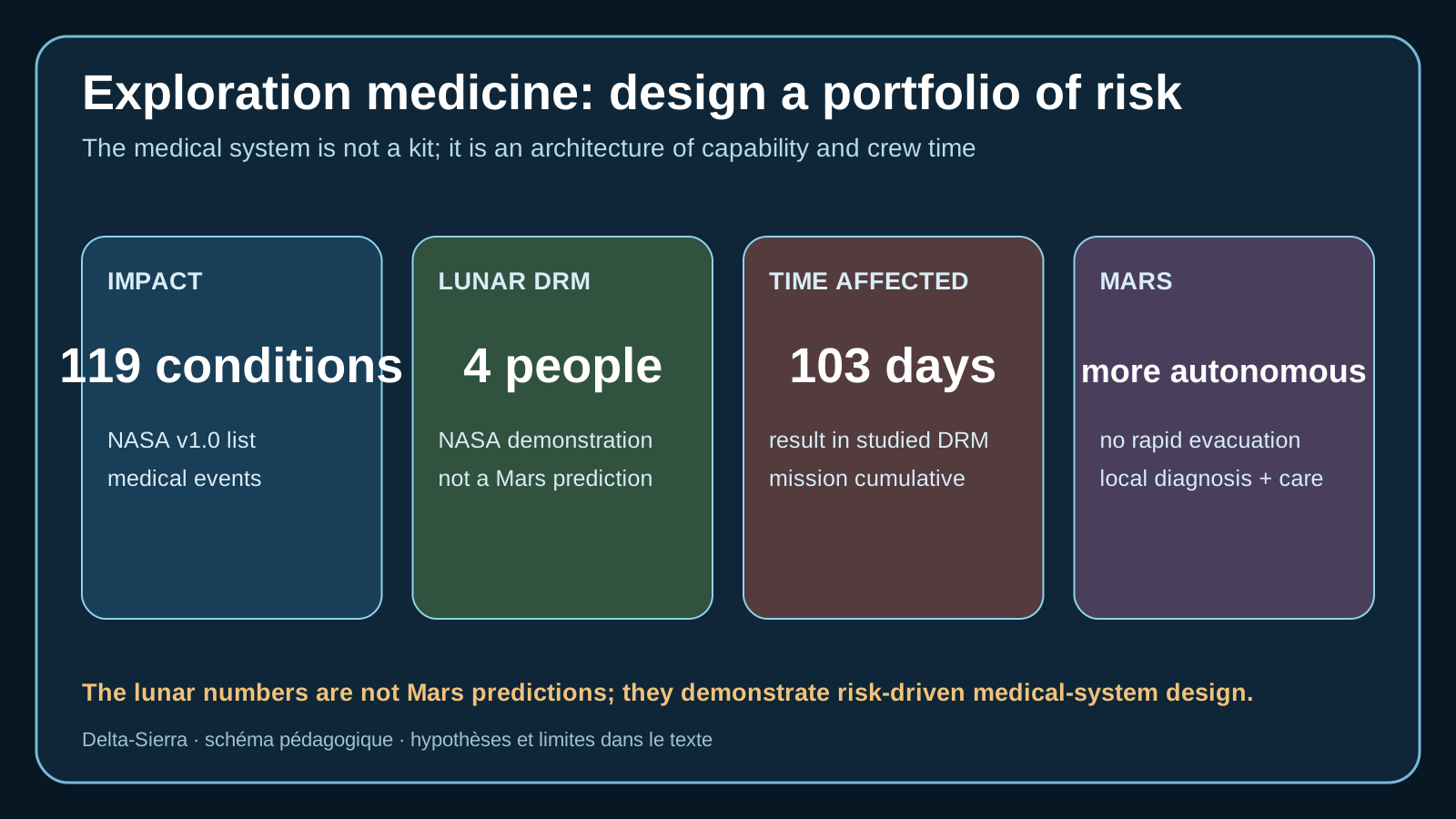
A lunar analysis illustrates the method without being transferable as a Mars forecast. In a four-person long-duration lunar design-reference mission, one IMPACT demonstration estimated 103 cumulative crew-days affected by medical conditions and found decompression sickness, trauma and respiratory failure among important risk contributors. Mars duration, gravity, radiation and evacuation constraints differ. The lesson is that relatively infrequent medical events can consume a large fraction of operational capability.
The settlement should therefore design around capabilities rather than terrestrial departments: airway control, ventilation, ultrasound, perhaps miniature x-ray, damage-control surgery, anesthesia, sterilization, pharmacy, laboratory testing, dentistry, behavioral care, rehabilitation and burn management. One versatile capability may mitigate many conditions and justify more mass than a highly specialized device.
Human expertise is also a consumable. A surgeon can become the patient; the medical officer can be unavailable. Procedures should let a second crewmember perform selected interventions using delayed consultation, simulation, checklists and validated decision support. NASA-STD-3001 provides human-health, habitability and environmental requirements, but a Mars settlement will extend autonomy and duration beyond anything yet demonstrated.
Pharmacy becomes a chemistry and logistics problem. Drugs age, some need controlled storage and substitutions may exist. The settlement must track stability, lot, date, consumption and alternatives. Eventually local pharmacy becomes an industrial capability involving synthesis of selected compounds, dosage forms, purity testing and sterility. Medical autonomy without analytical capability would be unsafe.
Health data should serve care rather than mere surveillance. Long missions will generate time series on sleep, activity, vision, bone, muscle, radiation, mood and biomarkers. Their value is earlier intervention: changing work, nutrition, exercise or exposure before a trend becomes a medical event. Mars medicine should be judged by whether it preserves function for months after an event, not only survival during the first hours.
The medical system should be judged by human-capability days preserved. A sprain, infection or dental emergency may rarely threaten the settlement directly yet remove a critical worker for weeks. IMPACT-style analysis is valuable because medical burden is not only mortality. Every event should be connected to lost function: who can still perform EVA, cover a night shift, maintain ECLSS or assist a complex procedure?
Medical redundancy is also skill redundancy. Critical procedures need at least one second operator who can perform them at a lower level of expertise with simulation and delayed telemedicine support. Data, imaging and interventions should be recorded so Earth specialists can review them asynchronously. Mars medicine therefore becomes a partnership among local crew, diagnostic tools and distant experts separated by time.
Pharmacy eventually merges with industry. As population grows, local production of selected simple solutions, disinfectants, medical gases or dosage forms may become more robust than storing many years of finished products. But any medical production demands purity, dose control, sterility and analytical verification: pharmaceutical autonomy does not exist without metrology and quality assurance.
Primary and institutional sources: ntrs.nasa.gov; www.nasa.gov; www.nasa.gov; ntrs.nasa.gov.
Specialized sources — coupled human health risks
- NASA Human System Risk Board — institutional map of human-spaceflight risks
- NASA — SANS Risk — neuro-ocular changes and long-term uncertainty
- NASA OCHMO — VTE Risk Score 2026 — 2026 thromboembolic-risk update
- NASA — Immune Risk — immune change and latent-virus reactivation
- NASA — Host-Microorganism Interactions — microbiome and closed-environment risk
- NASA — Martian Dust Exposure Limit 2026 — preliminary Martian dust exposure limit
Mars medicine must manage well-documented spaceflight risks and Mars-specific unknowns at the same time. Radiation, partial gravity, isolation, dust, trauma and communication delay do not have equal evidence. Compressing them into one health-risk number would hide the uncertainty that should guide research.
The medical architecture must remain revisable. Early mission data may change surveillance, stocks, exercise, shielding or clinical criteria. The safer system is not one that pretends every threshold is known today, but one that can incorporate new evidence without losing continuity of care.
A useful evidence strategy keeps surveillance tied to the uncertainty it is meant to reduce. Bone and muscle adaptation, cardiovascular change, radiation exposure, dust toxicity and behavioral health do not mature at the same rate, so one medical monitoring package cannot answer every question equally well. Early crews may therefore need research measurements that later become unnecessary once thresholds are better constrained, while other measurements become more important as stays lengthen. Designing that evolution in advance prevents a temporary research protocol from being mistaken for the permanent clinical standard of a Martian community.
Primary sources — human health and the Martian environment
Medical evidence must be read by level of proof. Flight standards define operational requirements; astronaut data describe environments humans have actually experienced; terrestrial analogues isolate selected constraints; and animal work probes mechanisms. None is silently promoted into direct clinical evidence for long-duration life on Mars.
- NASA-STD-3001 Volume 2, Revision F — 2026 requirements for human factors, habitability and environmental health.
- NASA — Martian Dust Exposure Limits — 2026 toxicology rationale, provisional PEL and uncertainty.
- NASA — Medical Operations and Clinical Care — Spaceflight medical operations and care.
- TRISH / Baylor — Hermes — Edge-first health-data architecture for constrained operations.
- DLR — AGBRESA — Sixty-day bed-rest analogue and artificial gravity.
- ESA — Mars500 study overview — Isolation, sleep, stress, immunity and analogue limitations.
- NASA — Animal Biology Program — Animal models and partial-gravity experiments.
Health risk on Mars is a portfolio rather than a single dominant hazard. Radiation, partial gravity, isolation, altered sleep, dust exposure, limited medical capability, and delayed consultation interact over different timescales. A design that reduces one risk can worsen another: more shielding mass can constrain habitat volume or mobility, exercise equipment consumes power and crew time, and aggressive dust exclusion can complicate EVA operations. Medical planning therefore needs both exposure metrics and operational consequences. The useful question is not simply whether a value is “safe,” but which adverse outcome it is intended to prevent, over what duration, with what uncertainty, and what action becomes necessary as the margin erodes.
The hardest medical cases are those that cannot be converted into an evacuation decision. On Earth or in low Earth orbit, severe deterioration can trigger transfer to a higher level of care. Mars removes that branch from the decision tree for long periods. The settlement therefore needs explicit thresholds for what can be treated locally, which procedures are within crew competence, what diagnostic evidence is required before an invasive intervention, and when the objective changes from definitive treatment to stabilization. Training, pharmacy, blood management, imaging, sterilization, oxygen, power, water, and waste handling become one medical system rather than independent services.
Long-duration partial gravity remains an evidence gap that should stay visible in architecture decisions. Short exposures and microgravity data can identify mechanisms, but they do not establish a complete dose-response curve for years at 0.38 g. Countermeasures should therefore be treated as monitored interventions rather than assumed solutions. Exercise adherence, muscle and bone trends, cardiovascular performance, balance, injury rates, and recovery after illness all become valuable longitudinal data. A settlement can contribute scientifically only if measurements remain comparable across years and if changes in equipment, protocols, and population are recorded well enough to separate biology from operational drift.
Public-health capacity also changes with population. Four people can manage many risks through individual knowledge and direct observation; a hundred people need surveillance, infection-control rules, occupational-health records, and reliable triage; a thousand people need laboratory capacity, professional specialization, preventive programs, and governance for scarce medical resources. Growth therefore increases capability and complexity at the same time. The medical architecture should be judged by whether it can preserve essential care while its own staff, equipment, and supply chains are under stress.
Medical autonomy also has a logistics dimension that is easy to underestimate. Drugs have shelf lives and storage constraints; sterile supplies are consumed by procedures; diagnostic sensors and imaging equipment require calibration; and some treatments depend on oxygen, cold storage, clean water, or stable power. A medical inventory should therefore be linked to scenarios rather than counted only by item. The settlement needs to know which conditions consume the same scarce reagent, which alternatives exist when a preferred drug is unavailable, and which procedures become impossible if a sterilizer or imaging system is down. This approach reveals common-cause medical failures that a simple pharmacy list can hide.
Population growth changes epidemiology as well as clinical capability. A four-person expedition has little opportunity for sustained transmission of many infections once quarantine is complete, whereas a larger settlement has schools, workplaces, shared facilities, visitors between modules, and a broader microbiome. Infection control therefore evolves from preflight screening and isolation toward surveillance, ventilation management, vaccination policy, laboratory testing, and outbreak response. These functions have to coexist with planetary-protection rules so that protecting crews from terrestrial microbes does not erase the scientific evidence being sought in Martian samples.
Rehabilitation after illness or injury deserves the same attention as acute treatment. Reduced mobility can prevent EVA, exercise, emergency response, or access to dispersed facilities even when the patient is medically stable. A settlement therefore needs physiotherapy knowledge, assistive devices, accessible routes, and staffing models that tolerate one person being unavailable for weeks. In a small crew, the medical consequence of an injury includes the capability that disappears from the work roster, so recovery planning must connect clinical status with operational staffing.
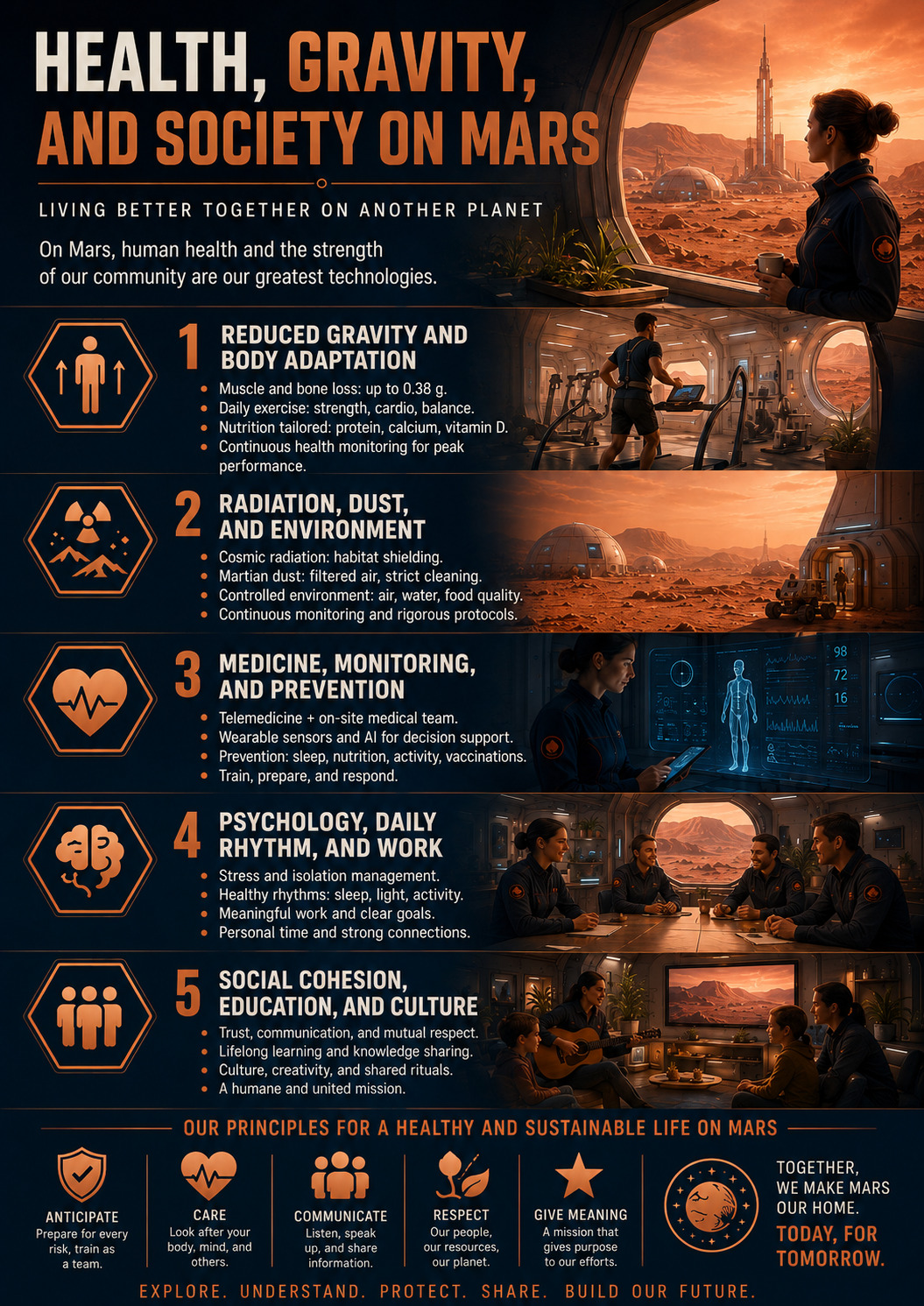
What changes when medicine must work for years without evacuation
A Mars mission forces medicine to be designed differently from short-duration care in low Earth orbit. On Earth, a severe emergency can often be stabilized and then transferred to a larger clinical facility. On Mars, that transfer does not exist on the scale of minutes or hours and may remain impossible for months. Health therefore becomes an architectural problem: which capabilities must be local, which can be delayed, which resources need independent backups, and which decisions must be made without waiting for Earth? NASA human-system standards provide requirements and design constraints for crewed missions, but they do not prove that a diverse civilian population could live for decades at 0.38 g. They are a starting point for managing risk; settlement adds duration, population diversity, industrial exposure, pregnancy and aging, and the absence of rapid evacuation.
Prevention, early detection, treatment and recovery are one system
A useful medical architecture separates four functions while showing their dependencies. Prevention includes screening, vaccination, hygiene, sleep, exercise, nutrition, radiation protection and exposure control. Early detection turns trends into action before a problem becomes an emergency: cardiovascular, musculoskeletal, immune, neurovestibular, behavioral and environmental data all matter. Treatment begins when prevention and monitoring have not been enough. Recovery then determines whether the resident can return to work, needs rehabilitation, or becomes a long-term patient in a settlement whose workforce may be small. These functions use the same scarce infrastructure: power, clean water, diagnostics, sterile supplies, drugs, communications, trained personnel and maintenance. A medical system that cannot obtain a replacement pump, verify a sensor or control contamination is not independent simply because it has a physician.
Evidence must be labelled by environment
Evidence from the International Space Station is indispensable, but the station combines microgravity with comparatively rapid access to Earth, frequent resupply, a highly selected astronaut corps and a medical support model built around ground expertise. Mars changes all of those variables at once. Lunar missions will add partial gravity and deep-space exposure, yet lunar gravity is not Martian gravity and the logistics are still radically closer to Earth. Ground analogues can study confinement, work organization, communication delay or selected physiological mechanisms, but they do not reproduce Martian gravity, atmospheric pressure, dust chemistry or deep-space radiation. The correct conclusion is not that analogues are useless; it is that each result needs an explicit boundary stating what was actually tested.
The hospital begins long before the hospital room
On a settlement, health protection starts in environmental engineering. Carbon dioxide control, humidity, aerosols, acoustics, lighting, thermal comfort, toxic substances, microbial control and dust exclusion can change the incidence of illness before any medical instrument is used. NASA’s 2026 update to its human-system standards and its work on preliminary Martian dust exposure limits illustrate why this matters: environmental limits are part of medical prevention. The same is true of radiation dosimetry and sheltering, food quality and nutritional stability, work-rest cycles, exercise hardware and psychological support. The clinical service is therefore one node in a broader health system rather than an isolated department.
Medical autonomy is an engineering requirement
Communications delay means Earth can advise but cannot reliably command a time-critical intervention. A future crew or settlement therefore needs diagnostic protocols, decision support, training, drug and consumable inventories, imaging and laboratory capabilities, and maintenance plans designed for local action. Autonomy does not mean ignoring Earth expertise; it means using delayed expertise without making survival depend on a real-time conversation. NASA technical work on autonomous medical care for exploration explicitly treats this as a mission capability. For settlement analysis, the practical test is simple: for every serious condition, ask what can be recognized locally, what can be treated locally, what material is consumed, what expertise is required, what happens if the preferred treatment is unavailable, and how long the patient can remain stable before the next logistics opportunity.
Documentary anchors: NASA-STD-3001 Volumes 1 and 2; NASA Human Research Program risk portfolio; NASA technical reports on autonomous medical care and medical-system concepts for Mars exploration. These sources establish requirements and research directions. They do not eliminate the central unknown: no human population has yet lived long term in Martian gravity.
Define a settlement health dashboard before emergencies dominate attention
A durable medical programme needs a small set of trends that can be followed without turning every resident into a research subject. Examples include functional capacity, injury frequency, sleep disruption, exposure history, selected cardiovascular and musculoskeletal measures, environmental dust indicators and the use of scarce medical resources. The purpose is operational: detect a slow deterioration that no single clinic visit would reveal. A dashboard should distinguish population trends from individual clinical records and should never convert a screening signal into a diagnosis automatically.
Thresholds also need actions attached to them. A rising injury rate may trigger a change in work design, suit procedures or exercise; a persistent environmental signal may trigger filtration inspection and exposure controls; a pattern of medication failures may change storage or formulary policy. In that sense, health monitoring becomes part of settlement systems engineering: evidence changes workload, habitat operation, maintenance priorities and future design instead of remaining an isolated medical report.
Medical autonomy also needs an explicit evidence hierarchy
A settlement will combine evidence from astronaut experience, terrestrial medicine, analogue missions, animal studies, engineering models and local Martian observations. Those sources should not be flattened into one certainty level. A finding demonstrated in selected astronauts under microgravity can justify surveillance without proving the same magnitude of risk at 0.38 g; a laboratory result can identify a mechanism without defining a clinical threshold. Labelling the evidence level beside high-consequence recommendations helps clinicians and engineers decide where conservative margins are justified and where new local data should change policy.
Recovery capacity is as important as treatment capacity
After injury, surgery or illness, a patient may need weeks of reduced workload, rehabilitation and monitoring. On Earth that burden is distributed across hospitals, family, transport and outpatient services. On Mars it remains inside the settlement workforce. Medical planning should therefore model not only beds and emergency procedures but days of limited duty, rehabilitation equipment and the chance that a caregiver is removed from another critical role. A medically survivable event can still become an operational crisis if recovery consumes scarce people for too long.
One final rule: uncertainty must remain visible
When evidence is incomplete, the public page and the clinical system should say so explicitly. Confidence is increased by transparent uncertainty, not by replacing it with a precise-looking number.