


Kindle
I Walked on Mars — Book 3: They Are Coming
ASIN still needs to be copied from KDP; a search link is provided in the meantime.
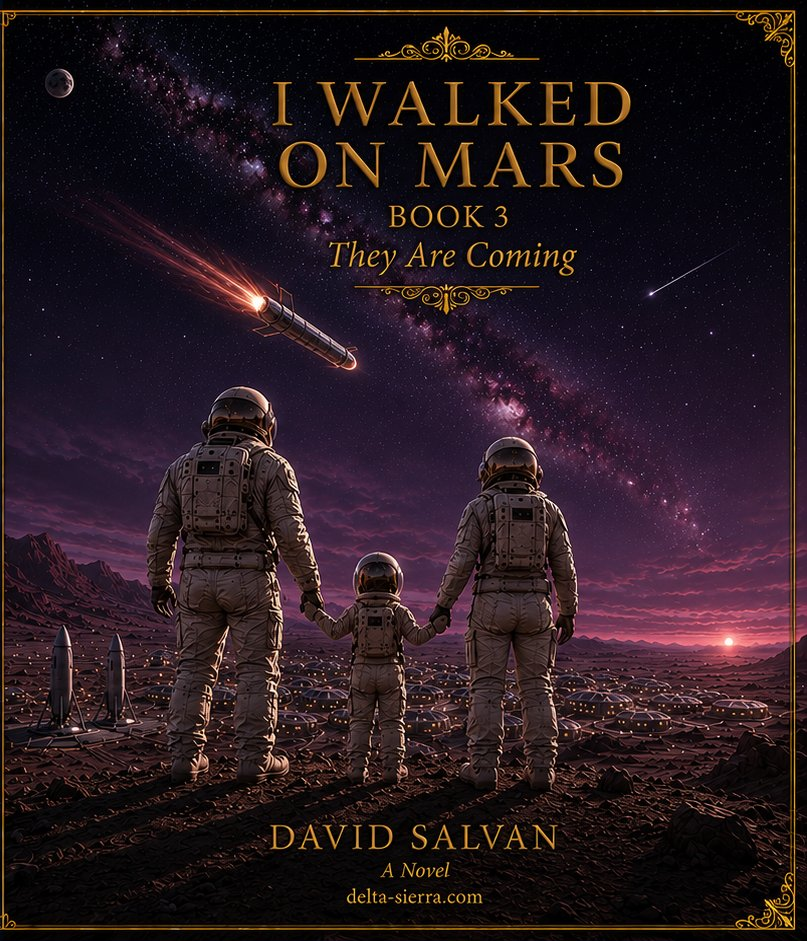
Realistic science-fiction novel : Third book in the quadrilogy
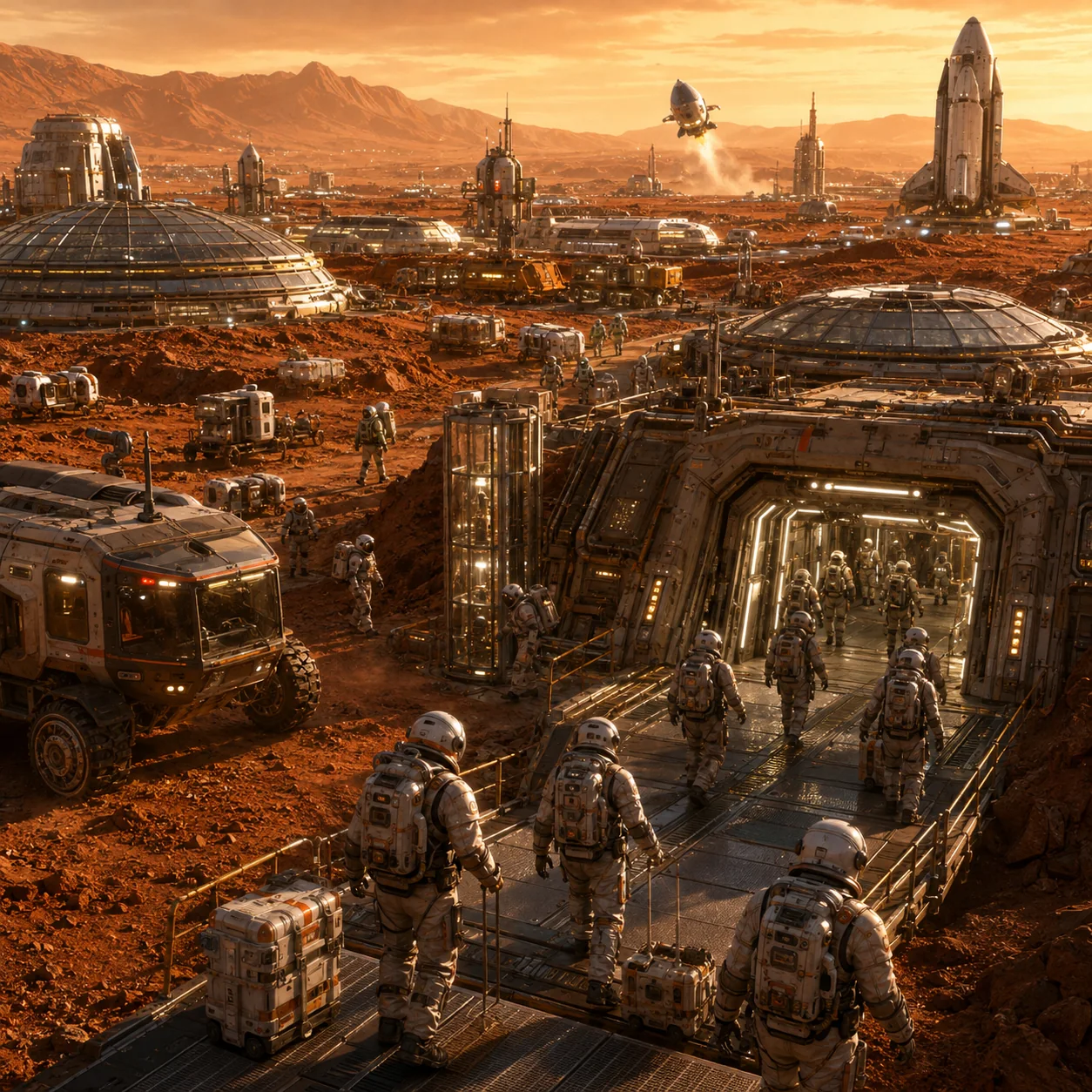
Arcadia is no longer only a survival base. Its tunnels, greenhouses and workshops have expanded, children are growing up on Mars and new arrivals are approaching. The problem is no longer simply how to live on the Red Planet, but who will control the societies taking shape there.
Other formats and editions:
See all editions below
Direct links use confirmed ASINs only. Other published formats are listed without inventing identifiers.
Look inside
Browse selected interior pages from this English edition.
Digital preview. Printed rendering may differ according to the edition.
1 / 6
Arcadia is no longer only a survival base. Its tunnels, greenhouses and workshops have expanded, children are growing up on Mars and new arrivals are approaching. The problem is no longer simply how to live on the Red Planet, but who will control the societies taking shape there.
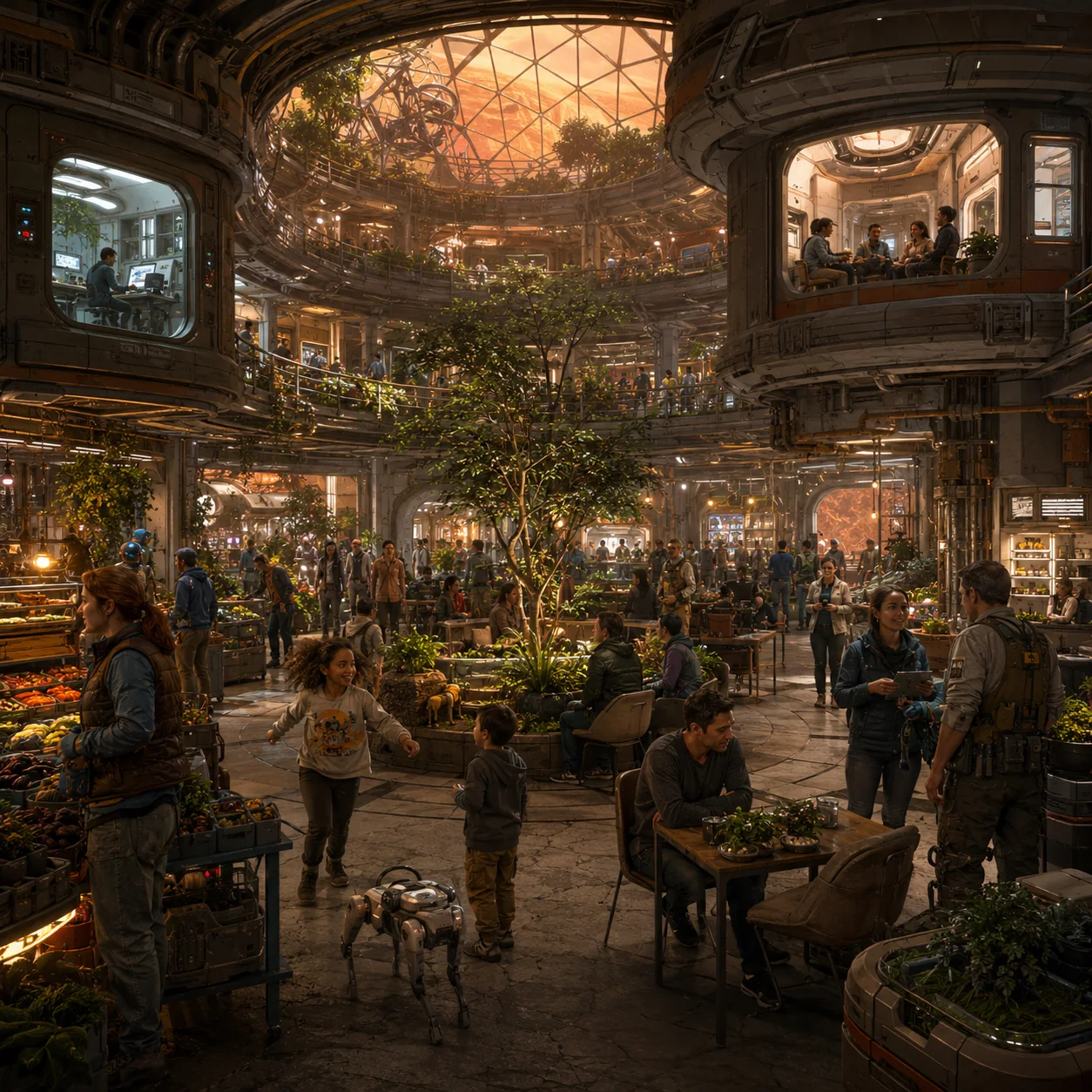
Years have passed since the first sols. The early settlement has become a city with routines, institutions, workshops, greenhouses and families. Machines can expand infrastructure faster than people can agree on how the new space should be used. The success of Arcadia therefore creates a new kind of vulnerability: a community that has something to defend, something to share and something that others may want to control.
In Book 3, this issue is tied directly to the stage being explored: Book Three explores the consequences of growth without pretending that its social or technical choices are predetermined. Fiction is used as a narrative laboratory: it forces technical, human and political constraints to interact instead of being studied in isolation. Whenever the page touches a real-world issue, the linked Mars dossier helps separate documentation from the fictional hypothesis.
As population increases, problems change category. A rule that worked for a few dozen people becomes too informal, a failure in one module can affect a district, and decisions around a single table no longer represent every interest. Book Three focuses on that change of scale. The colony is no longer only a group surviving together; it becomes a network of communities whose priorities can diverge even when everyone still depends on the same planetary environment.
The arrival of new crews changes the meaning of distance. Mars is no longer occupied by one isolated experiment. Different projects, national interests and strategic calculations begin to coexist. Far from Earth, the settlers discover that political rivalries can travel more easily than supplies.
The appearance of Kunlun, a second human settlement thousands of kilometres away, forces Arcadia to decide what solidarity means when authorities on Earth still reason through borders and commands.
This chapter can be extended with local economy, work, exchange and scarcity
The title They Are Coming contains both hope and danger. New people bring skills, culture and continuity. They also bring external loyalties, competing expectations and the possibility that Mars will reproduce the divisions of Earth. The central challenge is to welcome human beings without surrendering the settlement’s capacity to protect itself and decide locally.


New settlements create a real Martian network. Transfers, reserves, emergency routes, vehicle maintenance and movement of people must be organized over distance. Geography begins to carry political weight: whoever controls transport capacity, a rare component or an energy reserve may also possess bargaining power. The story uses those practical constraints to show how the physical layout of Mars can shape relationships among communities just as strongly as ideology or personal rivalry.
What happens when Mars stops being one isolated human outpost and becomes a world shared by several communities?
Book 3 begins as the first age of settlement ends. Arcadia is no longer alone. Thousands of kilometres away, Kunlun brings its own engineers, families, technologies, political loyalties and instructions from Earth. The central problem is therefore no longer only how to survive Mars. The settlers must learn how to live beside other human beings who crossed the same void under a different flag.
At that distance, every decision becomes practical, human and political at once. A failing greenhouse is not merely a Chinese problem. A child running short of oxygen is not a geopolitical abstraction. A medical convoy can become an act of defiance. The novel asks a question no mission architecture can settle in advance: when two settlements depend on the same hostile planet, how far should terrestrial rivalries still determine who is allowed to help whom?
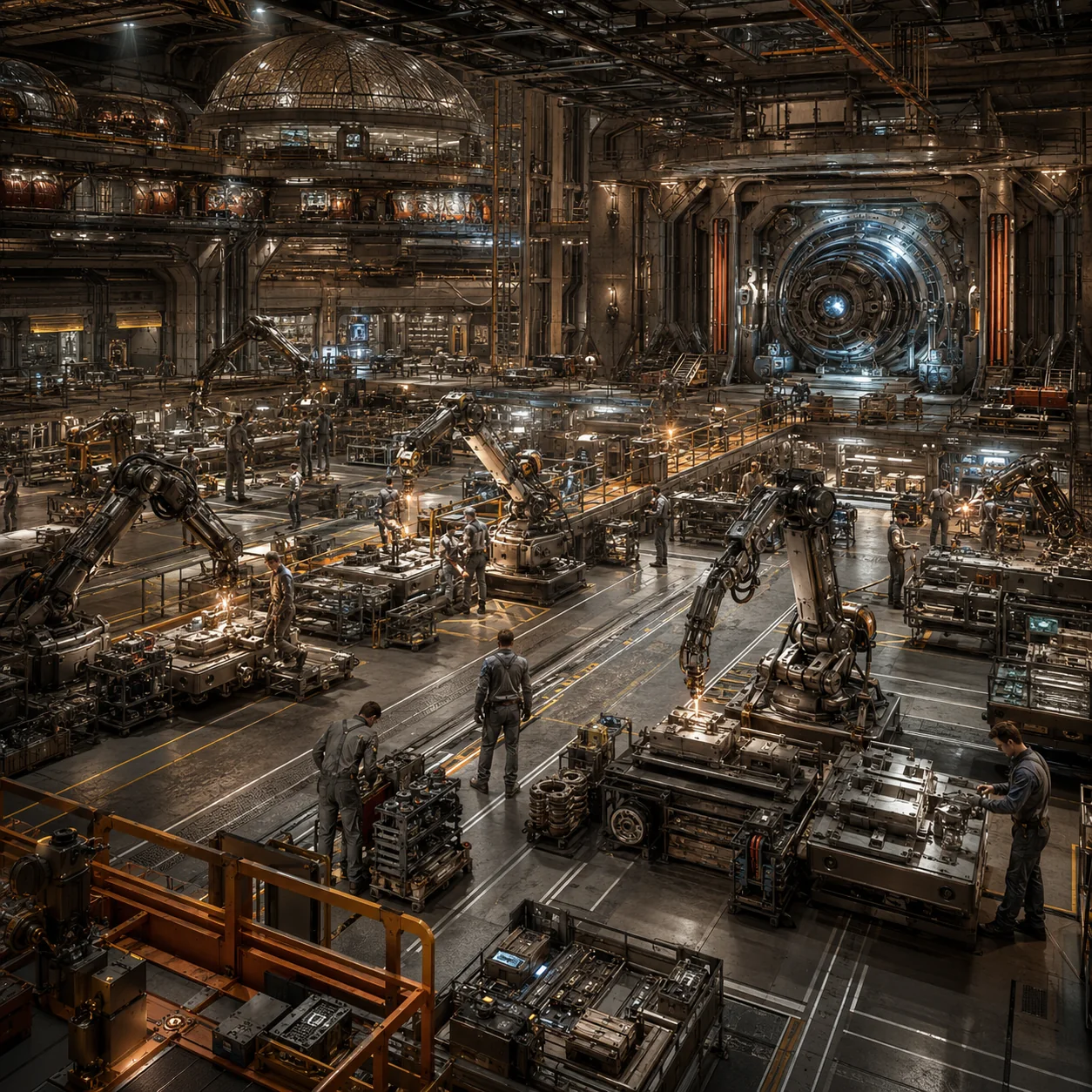
A local economy appears whenever repairing, manufacturing or processing on Mars becomes more rational than waiting for another Earth shipment. That requires priorities, standards, quality control and choices about strategic resources. Book Three therefore treats autonomy as management of dependency rather than a fantasy of instant self-sufficiency. The important question is not whether everything can be made locally, but which dependencies can be reduced first and which must remain visible and deliberately accepted.
Arcadia and Kunlun gradually discover a Martian hierarchy of priorities: air before ideology, water before prestige, demonstrated competence before formal title. Hermes and the Forge-9 robots also acquire a new significance. They do more than automate and build. They expose the dependencies between skills, resources, maintenance and command, forcing the community to ask who controls intelligence, who directs machines and who may reject a distant order when obeying it would endanger lives on Mars.
Book 3 therefore becomes a novel about the birth of a genuinely Martian political problem. Distance does not erase Earth’s sovereignty, but it changes the concrete cost of obedience. A settlement may one day have to say no in order to stay alive; the harder question is who can legitimise that refusal and how emergency authority can be prevented from becoming permanent.
As settlements multiply, political tension no longer comes only from personal disagreement. It can arise from unequal access to transport, energy, strategic equipment or decision-making. Book Three uses that change of scale to ask how a community preserves legitimacy when interests begin to diverge and when choices made for one settlement can impose costs on another.
Demography introduces education, transfer of knowledge, children, life rhythms and collective memory. A generation that did not experience Earth in the same way as the founders may understand risk, authority and the purpose of the settlement differently. The novel uses that generational distance to show that a society does more than enlarge infrastructure. It creates a culture, a set of expectations and eventually an identity that cannot be designed entirely by the people who arrived first.
The settlement becomes a society; society becomes responsibility; responsibility begins to require rules of its own.
For the analytical and prospective layer behind this conflict, continue with Book 3 — The Author’s Vision.
Communication delays and physical distance do not make Earth irrelevant. Governments, companies and agencies still provide equipment, legitimacy and resources. Yet they do not endure the storms, airlock failures or medical emergencies themselves. The book explores the growing gap between those who issue instructions and those who must bear their consequences.
As the settlement grows, distance changes the meaning of authority. Orders from Earth remain powerful, but local knowledge acquires a weight that remote institutions cannot reproduce. Air, shelter and rescue also cross national boundaries whenever lives are at stake, so a city that begins to refuse certain instructions is no longer expressing a merely personal act of disobedience: it is testing the political status of a community that increasingly has to govern the consequences of its own decisions.
Growth introduces questions that emergency command cannot settle indefinitely. Representation, information, labour, family life and the treatment of newcomers all require decisions. Arcadia must remain capable of acting quickly without allowing necessity to become a permanent excuse for unchecked authority.
Years have passed since the first sols of Arcadia. The early base has become a city. Greenhouses have spread, tunnels have multiplied, children have grown up beneath the domes and machines now build faster than people can decide.
Thousands of kilometres away, a second human settlement appears: Kunlun. Isolated, fragile and watched from capitals that still reason in borders and balances of power, it turns what should have been an encounter into a crisis.
When orders from Earth collide with Martian reality, David, Stella, Hawkins and the others understand that surviving is no longer enough. They must choose between obedience and the lives of people whom distance has made politically inconvenient.
They are coming. And with them, Earth returns to knock at the doors of Mars.
For the research context behind these issues, see operational governance and legitimacy of decisions · Earth–Mars relations, dependencies and delays
At this scale governance can no longer remain implicit. Who decides an energy priority, a new investment, movement between settlements or a rule binding several communities? How is an emergency decision reviewed after the emergency ends? Book Three brings geopolitics into daily life through concrete disputes over resources, representation, mobility and security. Political questions emerge not as abstract speeches but as consequences of a settlement that has become too complex for informal authority alone.
At the scale of Book 3, the question becomes concrete: The series uses concrete constraints (travel time, crew training, redundancy, isolation, life-support systems, local resources and delayed communication)to make the human consequences of a Mars mission tangible. It does not claim to reproduce the exact mission that will eventually occur. It asks what such an undertaking would demand from the people, institutions and technologies involved.
Book 3 of David Salvan’s Mars quadrilogy: Arcadia expands, new settlements appear and survival becomes inseparable from geopolitics, authority and solidarity.
Book Three changes scale. Arcadia is no longer only an outpost. New settlers arrive, settlements diverge, children grow up, an economy emerges and Mars becomes a social and geopolitical space.
The role of Book Three is to push the series across the threshold between colonization and society. Technical systems remain essential, but they become the environment in which interests, institutions and identities form. Arcadia stops being only a place where people live and becomes a political space. That transformation prepares the final volume, in which practical autonomy will meet the harder question of sovereignty and the right to decide a separate future.
Choose the language and format directly. When an ASIN is confirmed, the button opens the exact Amazon listing. When a format is published but the ASIN still needs to be copied from KDP, a clearly labelled Amazon search link is provided instead of inventing an identifier.
English / United States — Amazon.com
Kindle
I Walked on Mars — Book 3: They Are Coming
ASIN still needs to be copied from KDP; a search link is provided in the meantime.
Paperback
I Walked on Mars — Book 3: They Are Coming
French — Amazon.fr
Kindle
J’ai marché sur Mars — Tome 3 : Ils arrivent
ASIN still needs to be copied from KDP; a search link is provided in the meantime.
Broché
J’ai marché sur Mars — Tome 3 : Ils arrivent
Spanish — Amazon.es
Kindle
He caminado sobre Marte — Tomo 3: Están llegando
ASIN still needs to be copied from KDP; a search link is provided in the meantime.
Tapa blanda
He caminado sobre Marte — Tomo 3: Están llegando
Direct links use confirmed ASINs only. Other published formats are listed without inventing identifiers.
Arcadia has grown from a fragile settlement into a city with families, institutions and strategic weight.
The title refers broadly to new arrivals and the return of Earth’s rivalries to Mars, without reducing the story to a single group.
It is where the political implications become explicit, while remaining grounded in rescue, survival and human relationships.
The series concludes with I Walked on Mars : Book 4: Enough Is Enough!.
Move between the novel, its illustrated companion, the complete reading order and the engineering of Arcadia.