


Kindle
I Walked on Mars — Book 4: That’s Enough! / Enough Is Enough!
ASIN still needs to be copied from KDP; a search link is provided in the meantime.
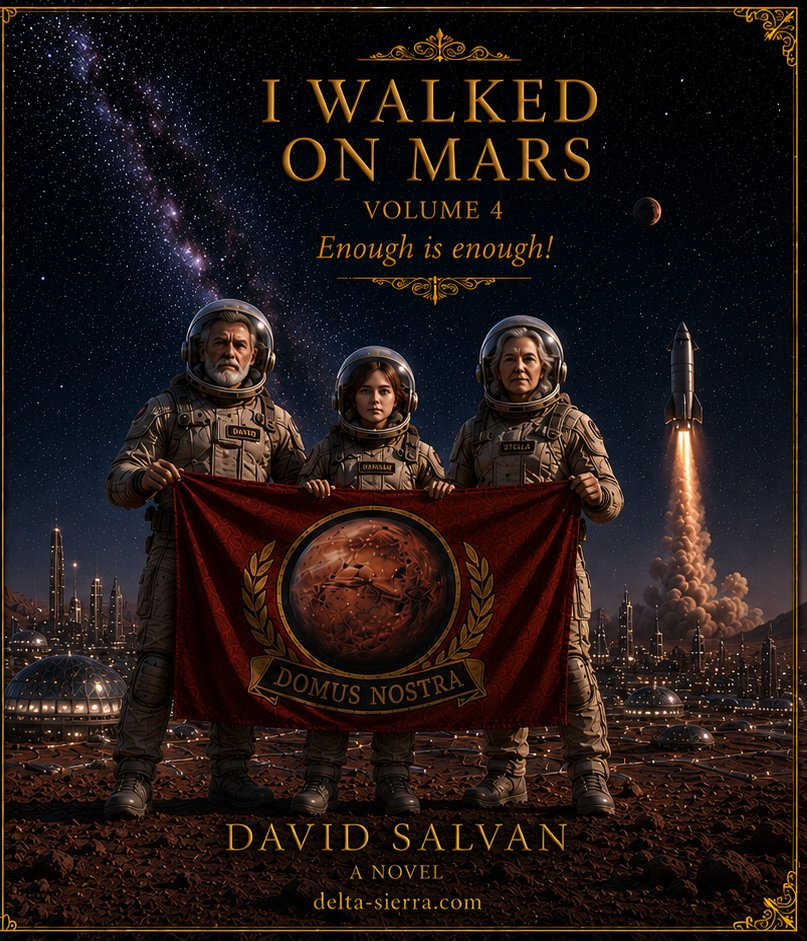
Realistic science-fiction novel : Fourth and final book
Arcadia has become a society with its own memory, families, institutions and strategic resources. Earth still speaks the language of control. Mars has learned the cost of obedience. The final volume asks when a settlement ceases to be an outpost and becomes a people entitled to choose its future.
Other formats and editions:
See all editions below
Direct links use confirmed ASINs only. Other published formats are listed without inventing identifiers.
Look inside
Browse selected interior pages from this English edition.
Digital preview. Printed rendering may differ according to the edition.
1 / 6
Arcadia has become a society with its own memory, families, institutions and strategic resources. Earth still speaks the language of control. Mars has learned the cost of obedience. The final volume asks when a settlement ceases to be an outpost and becomes a people entitled to choose its future.
The final choice is not presented as a slogan. Independence without energy, food, repair capacity, defence and legitimacy can be an illusion. Obedience without local judgment can also become fatal. Arcadia must decide what degree of separation it can actually sustain and what obligations it owes to other Martian settlements.
The final volume treats sovereignty as a practical condition rather than a declaration. Institutions must be able to make legitimate decisions and preserve rights during emergencies, while the settlement also needs enough material autonomy that food, fuel, software and critical parts are not controlled entirely elsewhere. The decisive measure remains human: whether people can protect their families, relationships and dignity instead of becoming instruments of a distant strategy.
In Book 4, this issue is tied directly to the stage being explored: Book Four uses a fictional society to examine autonomy and power; it is not offered as a blueprint for future institutions. Fiction is used as a narrative laboratory: it forces technical, human and political constraints to interact instead of being studied in isolation. Whenever the page touches a real-world issue, the linked Mars dossier helps separate documentation from the fictional hypothesis.
Autonomy is not a condition reached once and for all. It has to be measured function by function: energy, food, critical parts, medicine, software, transport, knowledge and decision-making capacity. A settlement may be highly autonomous in one area and deeply dependent in another. Book Four starts from that uneven reality. Political freedom has meaning only when the community understands which dependencies it can change, which it chooses to keep and which may still be used as leverage from afar.
The final book in David Salvan’s Mars quadrilogy: Arcadia must choose between obedience, autonomy and independence while protecting the people and systems on which its survival depends.
This chapter can be extended with political autonomy and local decision-making capacity · real space law, sovereignty and legal limits
Earth’s governments still speak of jurisdiction, ownership, discipline and restoration of authority. On Mars, these words are measured against airlocks, greenhouses, children, wounded people and machines whose reliability can decide whether a city survives. The book examines the moment when formal authority and lived responsibility diverge too far to remain compatible.


Institutions matter because they organize power before a crisis. Defining who can issue an emergency order, how long that authority lasts, how decisions are reviewed and how leaders can be replaced protects the community in much the same way technical redundancy protects a vital system. The final volume therefore brings law and engineering closer together: both require an organization to anticipate failure, misuse and error rather than invent safeguards only after damage has occurred.
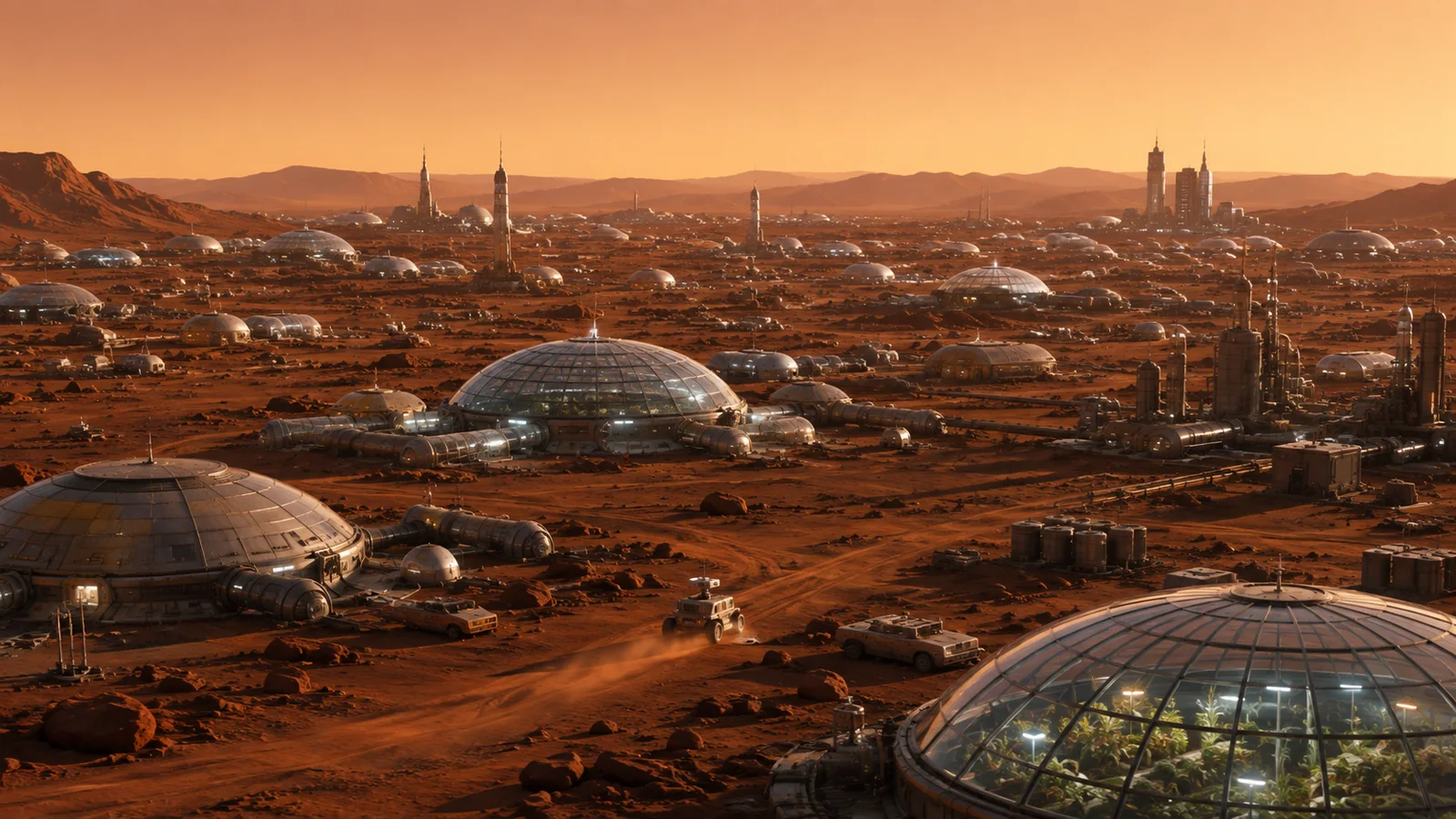
What happens when a settlement no longer depends on Earth for its continued survival?
Years after Arcadia’s fragile beginnings, Mars has changed scale. Children have grown up under the domes, schools exist where survival once occupied every thought, and tunnels and workshops extend beneath the regolith. Arcadia and Kunlun produce an increasing share of their own water, food, metals, machinery and energy. Deuterium, fusion and local industry gradually loosen the dependency that once tied the Martian cities to Earth.
That is precisely when the balance of power begins to change. What was once described as a heroic expense can become a strategic asset to recover, a technology to control or an investment to protect. Domus Nostra explores the moment when technological autonomy becomes a form of political power, without turning Earth into a caricatured enemy or Mars into a utopia.
Defence therefore becomes a political question before it becomes a military one. Forge-9 robots that can dig, repair and transport can also protect a corridor or stop an armed threat. Hermes can simulate thousands of outcomes, yet an intelligence powerful enough to help save a civilisation is also too powerful to be allowed to rule it. Who may command the machines? Who may refuse an order? What limits must remain inviolable even when collective survival is at risk?
Relations with Earth remain structural. Trade can bring technology, medicine, data, people and markets, but those exchanges can also become sources of pressure. The question is not simply whether Mars should cut ties. It is which connections represent chosen cooperation and which amount to political dependency. Local resources, industry and interplanetary transport therefore acquire a strategic dimension that was less visible when the settlement was still fighting primarily for day-to-day survival.
The novel allows a Martian civic order to emerge from concrete physical constraints. Air cannot become punishment. Water cannot become an instrument of submission. A medical bed cannot become an interrogation room. A robot capable of protecting a child cannot become a leader’s private army. On Mars, law must do more than protect the individual from power: it must also protect the living body from the vacuum outside.
This is where Domus Nostra — “Our home” — acquires its full meaning. Not because Mars belongs to its settlers, but because a home creates obligations. The final question of the quadrilogy is therefore not simply who will control Mars, but what kind of civilisation its inhabitants will choose to become once they finally possess the power to decide.
Air before pride. Children before flags. Limits before victory. Responsibility before revenge.
Concentrated power is especially dangerous where some decisions can affect survival immediately. Closing an airlock, cutting energy or restricting movement carries a weight unlike an ordinary administrative measure. Book Four uses that constraint to examine legitimacy, oversight and the danger that permanent emergency conditions can slowly reshape institutions. A system created to protect the colony may become difficult to challenge if exceptional powers are never clearly limited or brought back under normal review.
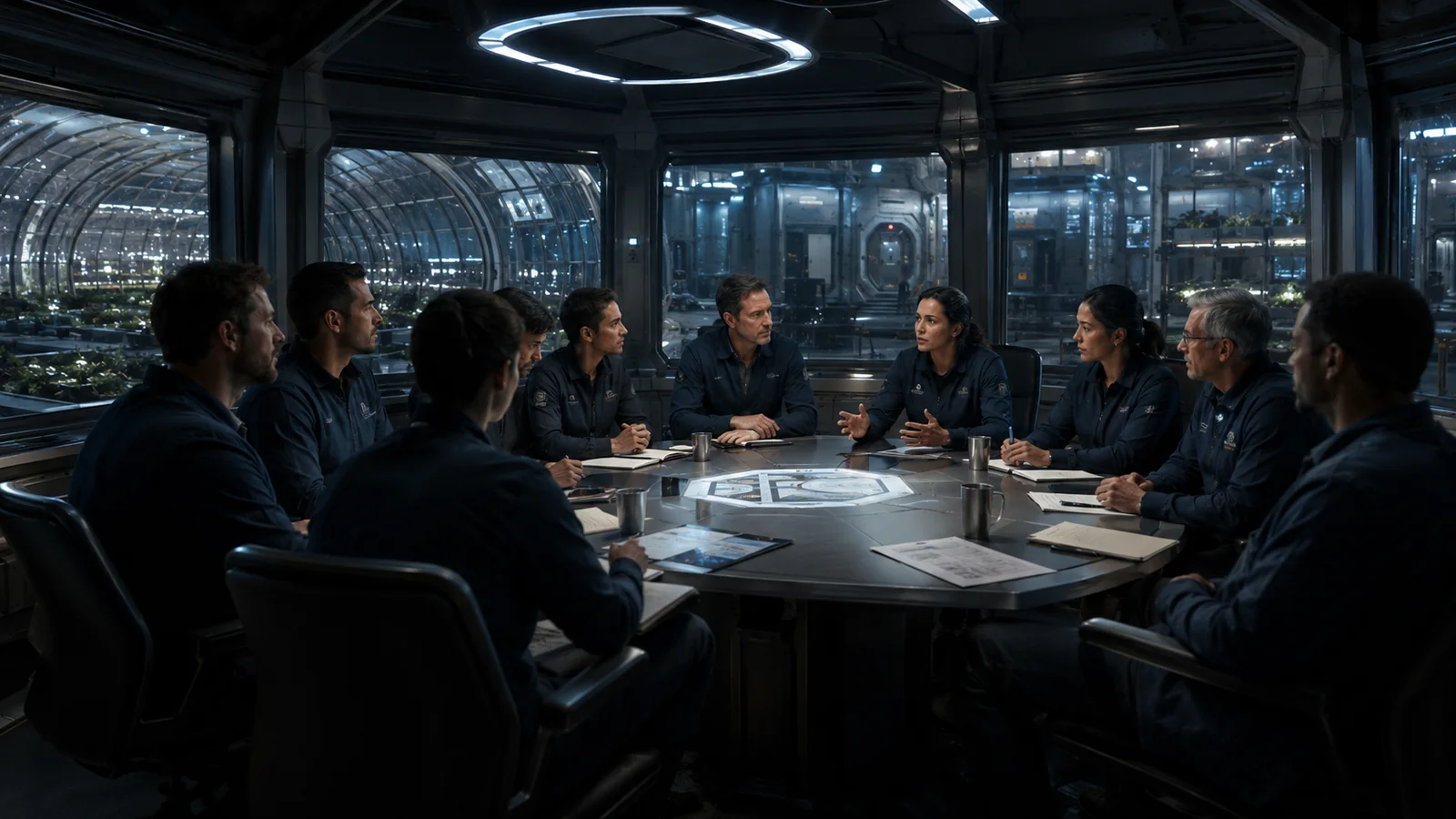
Declarations, negotiations and conflicts affect specific people. Families must decide where they belong. Friends may disagree over acceptable risks. The founders confront the consequences of choices made when Arcadia was only a plan. The conclusion of the series remains centred on David, Stella and the community whose private lives have always been entangled with the survival of the settlement.
At the scale of Book 4, the question becomes concrete: The series uses concrete constraints (travel time, crew training, redundancy, isolation, life-support systems, local resources and delayed communication)to make the human consequences of a Mars mission tangible. It does not claim to reproduce the exact mission that will eventually occur. It asks what such an undertaking would demand from the people, institutions and technologies involved.
Book Four asks the question that eventually appears when a remote outpost becomes a society: who decides, in whose name, through which institutions, with what rights over resources, and with what lasting relationship to Earth?
Ten years have passed. Mars has survived fear. It remains to be seen whether it will survive power.
On Earth, governments still speak of control, sovereignty, discipline and restoration. On Mars, those words carry the weight of airlocks, greenhouses, children, wounded people and machines on which an entire city depends.
After the events that shook Arcadia and Kunlun, the settlements can no longer pretend to be mere terrestrial outposts. They breathe the same rare air, face the same storms and bury their dead in the same dust. Yet Earth has not abandoned the hope of taking control again.
Enough Is Enough! is the final volume of the forward-looking science-fiction quadrilogy I Walked on Mars.
For the research context behind these issues, see local economy, work, exchange and scarcity
Book Four therefore closes the narrative arc by opening a question rather than claiming to solve the future of Mars. Can a society born from a mission become fully adult without reproducing the dependencies and conflicts it hoped to escape? How far should autonomy go, and which ties with Earth remain valuable? The conclusion gives the quadrilogy its political meaning: technical conquest is only one stage; the decisive problem is what human beings choose to build with it.
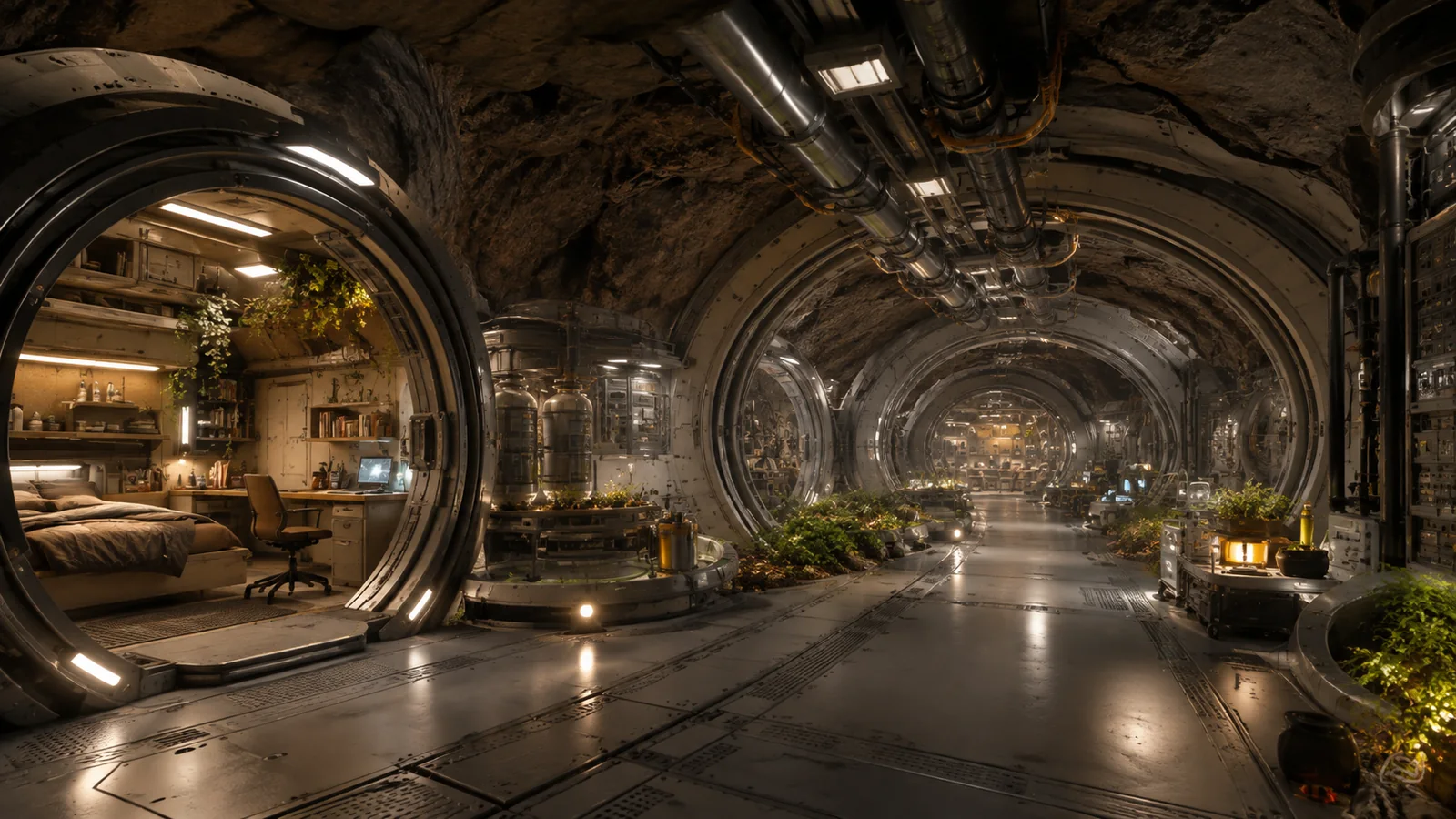
Choose the language and format directly. When an ASIN is confirmed, the button opens the exact Amazon listing. When a format is published but the ASIN still needs to be copied from KDP, a clearly labelled Amazon search link is provided instead of inventing an identifier.
English / United States — Amazon.com
Kindle
I Walked on Mars — Book 4: That’s Enough! / Enough Is Enough!
ASIN still needs to be copied from KDP; a search link is provided in the meantime.
Paperback
I Walked on Mars — Book 4: That’s Enough!
French — Amazon.fr
Kindle
J’ai marché sur Mars — Tome 4 : Ça suffit !
ASIN still needs to be copied from KDP; a search link is provided in the meantime.
Broché
J’ai marché sur Mars — Tome 4 : Ça suffit !
Spanish — Amazon.es
Kindle
He caminado sobre Marte — Tomo 4: ¡Ya basta!
ASIN still needs to be copied from KDP; a search link is provided in the meantime.
Tapa blanda
He caminado sobre Marte — Tomo 4: ¡Ya basta!
Direct links use confirmed ASINs only. Other published formats are listed without inventing identifiers.
The story returns repeatedly to a simple principle: power is not only legal. It is embedded in networks, inventories, knowledge, energy production, communications and the ability to maintain complex systems. Arcadia’s political future therefore depends on years of technical preparation developed throughout the previous books.
Controlling a vital resource also means deciding access to it. Water, power, pressurised volume, machines and raw materials can become objects of negotiation, solidarity or conflict.
Control of resources and collective trade-offs has to be connected with available resources, time, skills, maintenance, health and the ability to make decisions when Earth cannot solve the problem immediately. That interdependence is part of what gives the volume its density.
Yes. It concludes the four-volume narrative arc.
“Domus Nostra” is a visible emblematic phrase within the visual identity of the final volume, while the commercial English title is Enough Is Enough!.
No. Political choices remain constrained by energy, food, logistics, maintenance, communications and local skills.
Yes. The technical companion helps readers revisit the systems that made the fictional city possible.
Move between the novel, its illustrated companion, the complete reading order and the engineering of Arcadia.