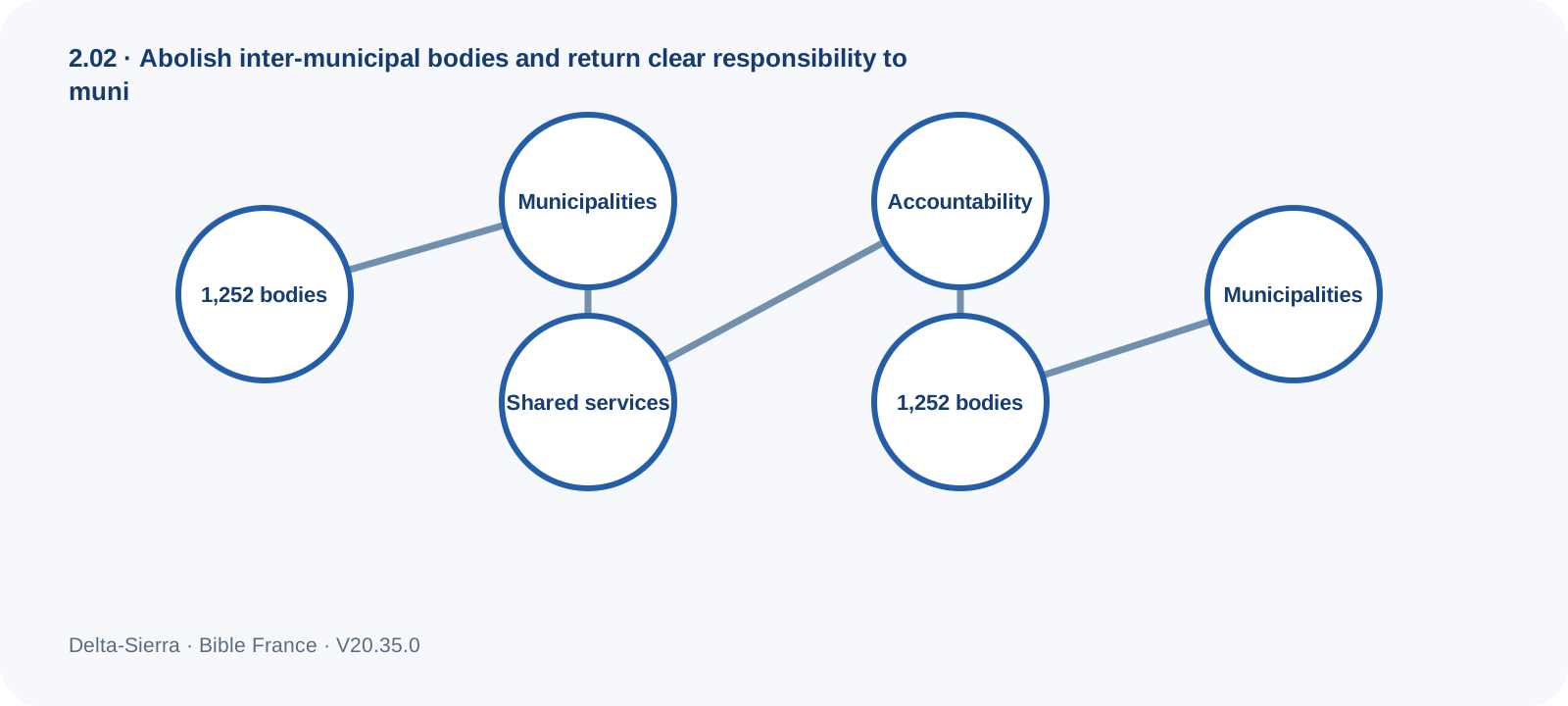
Abolishing 1,252 bodies is a service-transfer project
Official local-government statistics count 1,252 tax-raising inter-municipal bodies on 1 January 2026. They operate services such as waste, water, planning, transport and economic development. The measure must therefore map the actual functions of each body rather than assume that a single administrative template applies everywhere.
Municipal political responsibility can be restored while technical cooperation survives through tightly scoped syndicates, contracts or service agreements. The key distinction is between sharing an infrastructure and maintaining a general-purpose political tier with its own permanent administration.
Debt, taxation and staff need an explicit landing point
Every transfer needs a destination for assets, loans, contracts, taxes, compensation mechanisms, staff and data. A service cannot be handed back to a municipality without the means to operate it, and an abolished body should not survive indefinitely as an empty shell merely to finish legacy contracts.
Savings must be limited to overhead that genuinely disappears after stabilisation. Policy expenditure that continues, and debt assumed by municipalities, remain public costs. Pilot simulations should cover a metropolitan area, an urban community and a rural group before national implementation.
Costing and legal delivery
Primary legislation amending the local-government code, financial statutes and transfer agreements for shared services.
Inter-municipal budgets are not savings; only administrative costs that genuinely disappear after service transfers count.
Transition expenditure is reported separately from recurring savings, and transferred activity remains public expenditure unless the policy itself is discontinued.
What must be proved before implementation
Water, waste, transport and sanitation often cross municipal borders; cooperation must survive without recreating the same institution.
The implementation file should be organised by type of intermunicipal body and by service. It must show how debt, assets, tax revenue, contracts and staff move to municipalities or successor cooperation structures, and reveal any new syndicate created to keep a network operating.
Notes and sources
- DGCL — bilan statistique 2026 de l’intercommunalité — primary/institutional source used for the measure framework.
- CGCT — compétences des communautés de communes — primary/institutional source used for the measure framework.
- CGCT — compétences des métropoles — primary/institutional source used for the measure framework.
- Constitution — libre administration des collectivités territoriales — primary/institutional source used for the measure framework.