Measure 29 / 155

02 — Administration · Measure 2.09 · 29 / 155

Do not replace 30–50% of natural departures while protecting priority services

Turn a national attrition rate into workforce planning: each departure must be tied to workload, skills and a service trajectory.

Bible France · documentary chapterUpdated : 12 August 2026Primary sources prioritised
Measure 2.09 — Do not replace 30–50% of natural departures while protecting priority services
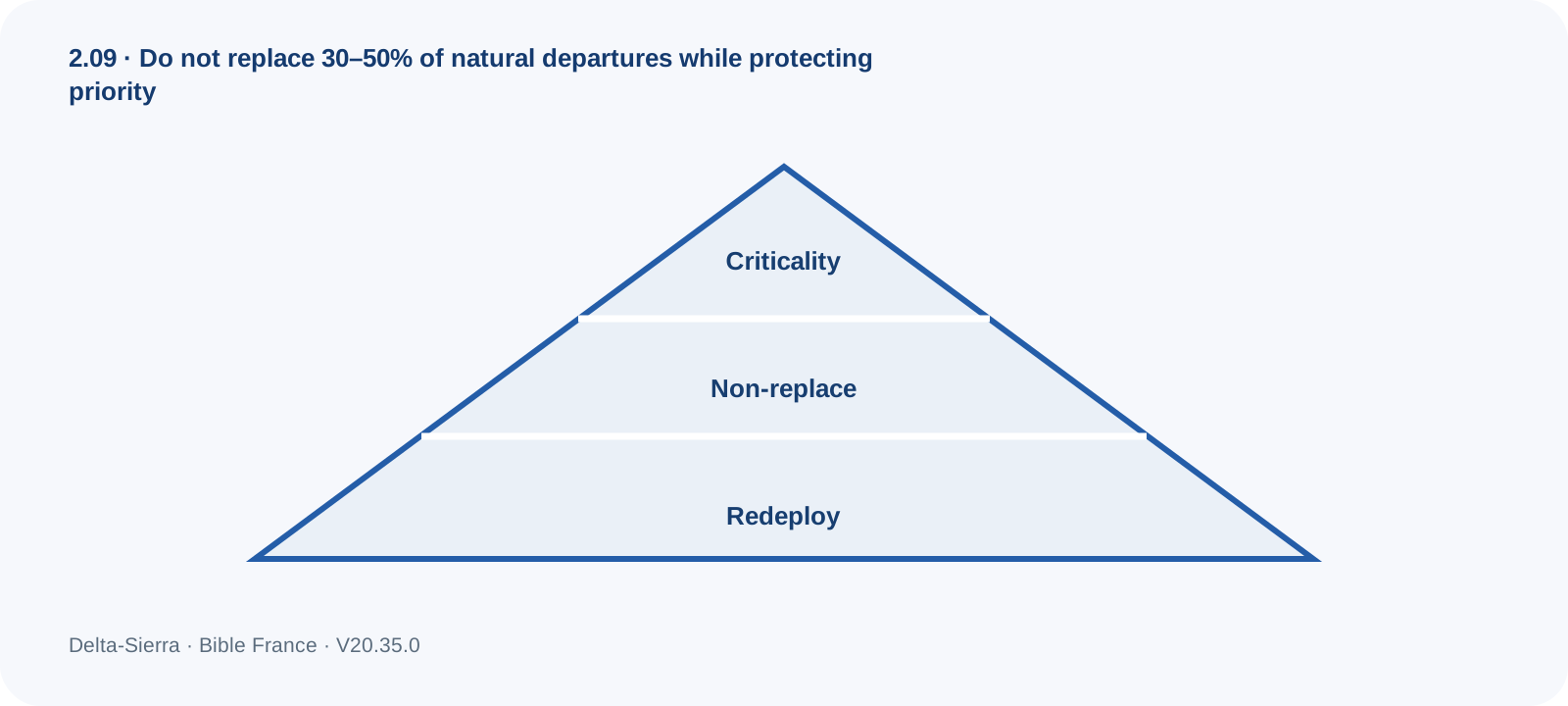
Measure-specific visual explanation 2.09

In 30 seconds

Current positionTurn a national attrition rate into workforce planning: each departure must be tied to workload, skills and a service trajectory.
ProposalDo not replace 30–50% of natural departures while protecting priority services
Legal routeAnnual budgets and staffing ceilings backed by ministry workforce planning, service objectives and protected shortage occupations.
Financial effectPotential budget saving only for positions genuinely eliminated; delayed recruitment and outsourcing must be deducted.
ConfidenceHigh on legal framing and method; financial estimates require consolidation before booking.
Main riskApplying 50% everywhere can remove a critical post from a small team while leaving an oversized team unchanged.

Natural attrition must be workload-based

Public service recorded 136,700 new direct pensions in 2024, but retirement flows are not the same thing as removable positions. A 30–50% national non-replacement objective should therefore be delivered through position-by-position workforce planning.

Critical occupations should be protected by vacancy rates, recruitment difficulty and mission risk. A post in an understaffed court, police unit, cyber team or hospital cannot be treated in the same way as a duplicated back-office function.

Track outsourcing and service quality

A deleted position is not a saving if the same work is purchased from a contractor, covered through overtime or recreated later. The three-year cost should include external services and replacement recruitment.

Each staffing trajectory should sit next to service measures such as backlog, processing time and error rates. Parliament should see posts permanently removed, staff redeployed and cash savings as three separate figures.

Costing and legal delivery

Annual budgets and staffing ceilings backed by ministry workforce planning, service objectives and protected shortage occupations.

Potential budget saving only for positions genuinely eliminated; delayed recruitment and outsourcing must be deducted.

Transition expenditure is reported separately from recurring savings, and transferred activity remains public expenditure unless the policy itself is discontinued.

What must be proved before implementation

Applying 50% everywhere can remove a critical post from a small team while leaving an oversized team unchanged.

The implementation file should classify departures by occupation, territory and service criticality. It must show which posts are not replaced, which are protected, which costs reappear as overtime or contracting, and whether agreed service indicators remain stable.

Notes and sources

  1. DGAFP — Départs à la retraite dans la fonction publique en 2024 — primary/institutional source used for the measure framework.

  2. DGAFP — Rapport annuel sur l’état de la fonction publique 2025 — primary/institutional source used for the measure framework.

  3. DGAFP — Stratégie territoriale RH 2026-2028 — primary/institutional source used for the measure framework.
  4. DGAFP — mobilité des agents 2025 — primary/institutional source used for the measure framework.

Further reading

The author’s books extend the programme but do not replace the primary sources cited in this chapter.

Réforme de l’État book cover

Réforme de l’État — Plan de Rupture

The architecture of the 155-measure programme.

IA : comment transformer la France book cover

IA : comment transformer la France

AI use cases, automation and human oversight in public services.

Calibrate attrition by profession and territory

A national 30-50% non-replacement rule should only be applied after retirement flows are broken down by profession, employer and territory. DGAFP retirement and workforce data provide that baseline. [1] [2]

The Plan should publish a three-way workforce map: roles to reduce, roles to stabilise and roles to reinforce. The 2026-2028 territorial HR strategy can identify areas where a national ratio would create local shortages. [3]

Savings must include substitution effects such as contractors, overtime and emergency recruitment. Mobility data should be monitored in parallel so internal skills can fill priority vacancies. [4]

Implementation evidence to publish

Natural attrition must be controlled at occupation level. A national percentage is only a ceiling for planning; actual non-replacement decisions should depend on workload, automation already delivered, local recruitment difficulty and the criticality of the service.

The post-reform comparison should focus on full staffing cost and service performance, including overtime, contractors and emergency recruitment.

Failure modes to test before national rollout

Natural attrition must be tested against shortages in essential services, skill loss and substitution through contractors or temporary staff.