


Mars Bible — People
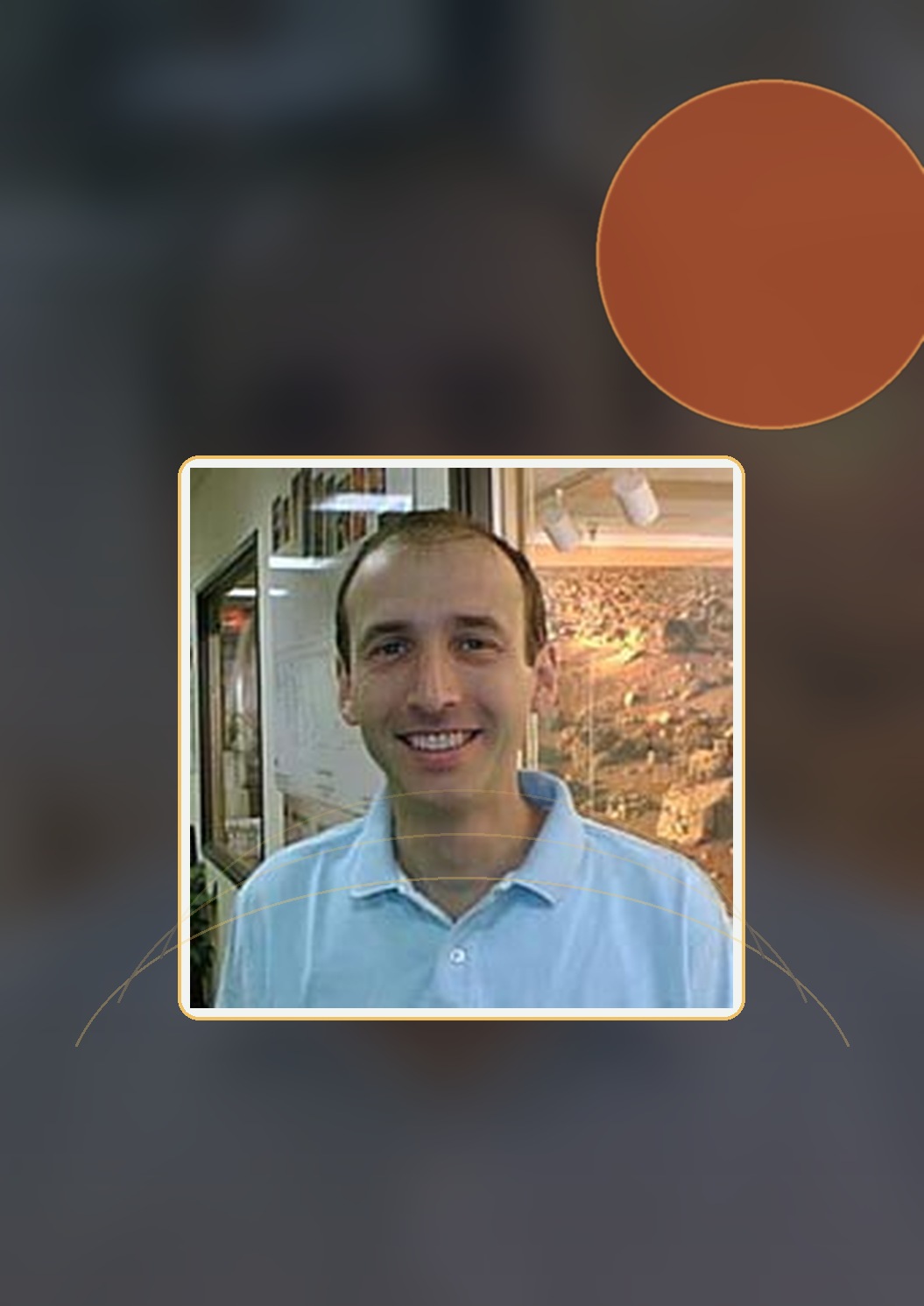
Matthew Golombek
The geologist of Martian faults who became “the landing site dude”: since Pathfinder in 1997, he has chosen where NASA’s Mars missions touch down, from Spirit to InSight and Perseverance, all the way to the 120-meter ellipses of sample return.
JPL geologist
- Education
- Rutgers College (B.A., 1976); University of Massachusetts (M.S. 1978, Ph.D. 1981)
- Role
- Landing site scientist of the Mars Exploration Program, JPL, since 2000
- Missions
- Mars Pathfinder (project scientist), Spirit and Opportunity, Curiosity, InSight, Perseverance and Ingenuity
- Research
- Tectonics of Mars; predicting landing surfaces from orbit
- Link to Mars
- He chooses where to land without sacrificing science
9 chapters and 4 appendices: about 4,300 words, or about 20 minutes of reading. Every fact comes from verified sources, listed at the end of each chapter.
Part One
Pathfinder
1976 – 1999
Chapter 1 · 1976 – 1993 A geologist of Martian faults
Matthew Golombek, whom everyone calls Matt, describes himself as “the landing site dude.” Since 1997 he has helped NASA put every one of its missions on Mars. But before he chose places to land there, he studied the way the planet had cracked.
A geologist’s training
In 1976 he earned a bachelor’s degree in geology from Rutgers College, in New Jersey, with highest distinction. He went on to the University of Massachusetts, where he received a master’s degree in geology and geophysics in 1978, then a Ph.D. in 1981. From 1981 to 1983 he was a postdoctoral fellow and visiting scientist at the Lunar and Planetary Institute in Houston.
Tharsis
At the time, he recalls, he was working on the Tharsis region, the great volcanic plateau of Mars, and on how it formed. He then joined the Jet Propulsion Laboratory in Pasadena. The first colleague he went to see was Bruce Banerdt: he already knew him, because Banerdt’s thesis advisor had been his own postdoctoral advisor, and the two worked on related subjects. They were roughly the same age, arrived at JPL within a few years of each other, and have been, as he puts it, “close colleagues forever.”
His research dealt with the tectonics and structural geology of Mars: faults, compressional ridges, the stresses that deformed the crust. In 1992, with Bruce Banerdt and Kenneth Tanaka, he wrote the chapter on stress and tectonics in the major reference book Mars, and published in Science a prediction of Martian seismicity based on the faults seen at the surface. Thirty years later, Banerdt’s InSight mission would listen to exactly those marsquakes.
Sources: JPL Science, “Matthew Golombek” page (B.A., Rutgers College, 1976; M.S. and Ph.D., University of Massachusetts, 1978 and 1981; Lunar and Planetary Institute, 1981–1983; tectonics and structural geology of Mars; 1992 publications); NASA, oral history interview with M. Golombek conducted by Erik M. Conway, August 9, 2022 (Tharsis, Bruce Banerdt, the shared thesis and postdoctoral advisor, same age, “close colleagues forever”); NASA/JPL, “On a Mission” podcast, episode “Arrival,” November 19, 2018 (“I’m the landing site dude”); NASA, “NASA-JPL Names ‘Rolling Stones Rock’ on Mars,” August 22, 2019 (every Mars mission since 1997). The last sentence links to the chapter on InSight.
Chapter 2 · 1993 – 1996 Choosing Ares Vallis
In October 1993, NASA gave the go-ahead to Mars Pathfinder. It was one of the first missions of the Discovery program: fast, inexpensive, with a lander and a small rover. Matt Golombek became its project scientist, from 1993 to 1998. His first big task: deciding where to land.
The constraints
The engineers set their conditions. The site had to lie near 15 degrees north latitude, under the Sun at the time of landing, for solar power and communications with Earth. It had to be lower than the Martian reference altitude, so that the parachute would have time to slow the craft. The entire landing ellipse, the area where the craft could come down given the uncertainties, about 70 kilometers by 200, had to be free of steep slopes, scarps and hazards visible in Viking images, and to have acceptable radar reflectivity, little dust and a moderate abundance of rocks.
Two open workshops
The selection took place in two phases. The first, from October 1993 to June 1994, culminated on April 18 and 19, 1994, with a workshop open to the whole scientific community at the Lunar and Planetary Institute in Houston: more than sixty participants, from the United States and Europe, proposed more than twenty sites. In June 1994 the project chose a provisional site. The second phase, which ran until March 1996, served to verify its safety: evaluation criteria, tests of the landing system, analysis of every possible site. A second workshop was held in September 1995 in Spokane and Moses Lake, Washington, with field trips to the Channeled Scablands and the Ephrata Fan, landscapes that serve as terrestrial analogs for the Ares Vallis channel and its depositional fan.
A “grab bag”
Only three sites met all the criteria: Ares Vallis, Tritonis Lacus and Isidis. Isidis looked safer. But Ares Vallis won out on its scientific potential. It is a depositional fan at the mouth of a great outflow channel carved by catastrophic floods. The water had carried rocks from far away: from the ancient highlands, from younger ridged plains, from the channel deposits. This “grab bag,” as geologists say, made it possible to analyze a wide variety of rocks in a single place, and to tackle fundamental questions: the differentiation of the crust, weathering, the ancient environment of Mars. The choice was reviewed by an outside committee and approved by NASA Headquarters.
Sources: JPL Science, “Matthew Golombek” page (Mars Pathfinder project scientist, 1993–1998); M. P. Golombek et al., “Selection and Assessment of Predictions of the Mars Pathfinder Landing Site,” 1998 (NTRS 20000112989, abstract: the two phases, October 1993–June 1994 and July 1994–March 1996, the April 18–19, 1994 workshop, the provisional site of June 1994, the second workshop of September 1995, the constraints, the ellipse, the three sites, the choice of Ares Vallis, the approval); M. P. Golombek, R. A. Cook, H. J. Moore and T. J. Parker, “Selection of the Mars Pathfinder Landing Site,” 1997 (NTRS 19990008064: 70 by 200 km ellipse, latitude 10–20° N, Ares Vallis, Tritonis Lacus and Isidis, Isidis safer, scientific potential of Ares); NASA, “Mars Pathfinder Landing Site Workshop,” 1994 (NTRS 19950009761: more than 60 participants, more than 20 sites); NASA, “Mars Pathfinder Landing Site Workshop 2,” 1995 (NTRS 19960015526: October 1993 go-ahead, Discovery mission).
Chapter 3 · 1997 – 1999 The moment of truth
On July 4, 1997, Mars Pathfinder landed in Ares Vallis. For Matt Golombek it was an exam: predictions made from data taken kilometers away were about to be tested against the ground, at the scale of a meter.
What had been predicted
Images from the lander and the rover confirmed the essentials. The site did look like a rocky plain deposited by the catastrophic Ares and Tiu floods: pebbles, rounded boulders and slabs, some tilted in the direction of flow, as on depositional plains left by floods on Earth. The two nearby hills, the Twin Peaks, had a streamlined shape, as deduced from orbital images. Altitude, pressure and winds matched expectations, even though temperatures were about ten degrees warmer than forecast. The proportion of potentially hazardous rocks was close to what Viking’s thermal observations had suggested. The dark gray rocks, less coated with red dust than at the Viking sites, also confirmed what the colors seen from above had hinted.
Kilometer-scale data and a terrestrial analog, his team summed up, had made it possible to predict the site correctly at the meter scale. It was proof that his method worked.
A planet that changed
The site also taught him something about the history of Mars. The Ares Vallis landscape seemed roughly as it was when the floods laid it down, between 1.8 and 3.5 billion years ago. Erosion since then had therefore been extraordinarily slow. With Nathan Bridges, he drew a conclusion in 1999: early Mars had a warmer, wetter environment, with very different erosion rates, followed by a major climate change.
Cheaper than Titanic
The mission also caught the public imagination with its cost. Donna Shirley, then head of the Mars program, liked to point out that it had cost about as much as the film Waterworld, and to repeat Matt Golombek’s quip: the mission had cost less than Titanic and had a happier ending. In 1998 he received NASA’s Exceptional Scientific Achievement Medal and JPL’s award for technical excellence, and published an article on the mission in Scientific American.
Sources: M. P. Golombek et al., “Selection and Assessment of Predictions of the Mars Pathfinder Landing Site,” 1998 (NTRS 20000112989: the flood plain, pebbles and boulders, Twin Peaks, altitude, pressure and winds, temperatures about 10 K warmer, rocks, dark gray rocks); J. T. Schofield et al., “Assessment of Mars Pathfinder Landing Site Predictions,” 1998 (NTRS 20210005512: meter-scale prediction); M. P. Golombek and N. T. Bridges, 1999 (NTRS 20000110340 and 20210002992: 1.8 to 3.5 billion years, erosion, warmer and wetter climate); Donna Shirley interview with the Academy of Achievement, May 23, 1998 (Waterworld and Golombek’s quip, paraphrased); JPL Science, “Matthew Golombek” page (1998 medal, 1998 JPL award, Scientific American article, July 1998). Donna Shirley has her own biography in this collection.
Part Two
The landing site scientist
2000 – 2019
Chapter 4 · 2000 – 2019 The landing site scientist, from Spirit to Curiosity
From 2000 on, Matt Golombek was the landing site scientist of the Mars Exploration Program at JPL. From then on, every NASA Mars mission went through him before it touched the ground.
The twin rovers
For the two rovers Spirit and Opportunity, he led the site selection and published in 2003 the study of how their sites were chosen and an analysis of the distribution of rocks on the surface of Mars, essential for landing safety and for driving the rovers. In 2005 he published in Nature the assessment of the predictions made for those sites. He then took part in the mission as a participating scientist from 2002 to 2019: he chaired the science operations working group, led the long-term planning group and headed the geology theme group. From 2012 to 2019 he was the mission’s project scientist.
Twenty years after the landing, in 2024, he summed up their contribution: “Our twin rovers were the first to prove a wet, early Mars once existed. They paved the way for learning even more about the Red Planet’s past with larger rovers like Curiosity and Perseverance.”
Curiosity and the councils
For Mars Science Laboratory, the Curiosity rover, site selection became a large open process, with workshops where the whole community gave its opinion. Golombek set up, with engineer Devon Kipp, two expert groups: a “Council of Terrains” and a “Council of Atmospheres.” For the first time, he explains, their members were chosen through an open and very specific JPL call: not a request to “study Mars,” but for elevation maps at a given resolution, at a given scale. For Curiosity, the team mapped every rock and every slope in the ellipse; that was, he thought at the time, everything humanly possible. In 2013 he received with the team a NASA group award for the Curiosity landing; in 2012, NASA’s Exceptional Service Medal.
Phoenix, allergic to rocks
He also worked on Phoenix, which landed in 2008 near the north pole. He remembers it with amusement: at the start, the team thought it could land on a Viking 2-type site covered with 20 percent rocks; by the end, he says with a laugh, it wanted none at all, anywhere.
Sources: JPL Science, “Matthew Golombek” page (program landing site scientist since 2000, MER participating scientist 2002–2019 and his roles, MER project scientist 2012–2019, 2003 and 2005 publications, 2012 medal, 2013 MSL group award); NASA, “20 Years After Landing: How NASA’s Twin Rovers Changed Mars Science,” January 17, 2024 (quotation); NASA, oral history interview of August 9, 2022 (the councils, Devon Kipp, the JPL call, the open workshops of MSL and Mars 2020, the MSL mapping, Phoenix and its 20 percent rocks). Phoenix’s landing year (2008) comes from NASA’s catalog (NSSDCA).
Chapter 5 · 2010 – 2016 InSight: one site, and fast
InSight was the mission of his oldest friend at JPL, Bruce Banerdt: a stationary lander meant to listen to the quakes of Mars and measure its internal heat. Matt Golombek joined it in a way all his own.
A deal
He had taken part in the proposals that preceded InSight, including the first one, called GEMS, before NASA required another name. He then offered a deal: InSight was a geophysics mission and he was a geologist, but it would still have to land. “You need a landing site, I’m your guy,” he said, in substance, on condition that he lead the geology part of the mission. In the first proposal, the site took up a single paragraph: Elysium Planitia broadly met the constraints.
Constraints and no science
The constraints were strict: an altitude below minus two kilometers, a latitude close to the equator. Few regions of Mars met them. The ends of Valles Marineris were too rocky and too deep for a 130-kilometer ellipse; the Isidis region had too many rocks and storm tracks; the highlands were riddled with large craters. That left western Elysium Planitia, with few rocks and little wind. Unusually, the team decided as early as the study phase that this was where it would land, so as to design the whole spacecraft around that one site. Another peculiarity: InSight had no scientific site constraint at all. All it needed was flat ground, free of rocks, and loose enough to a depth of five meters for the heat probe, the “mole,” to burrow into it. “I didn’t have to talk to any scientist outside of myself,” he jokes.
On September 4, 2013, NASA announced four candidate sites. “We picked four sites that look safest,” he explained: mostly smooth terrain, few rocks, very little slope. To make sure no boulder would block the heat probe below the surface, the team studied the blocks thrown out around impact craters, which reveal what lies at depth.
Mike Malin’s secret
An unexpected obstacle arose: the area lay due south of Curiosity, on the same orbital tracks as the orbiters that relayed its data, and it took nearly a year of negotiation to get permission to photograph the site with the HiRISE camera on Mars Reconnaissance Orbiter. But one man, Golombek recalls, knew how to do it: Mike Malin, in charge of the CTX camera. Without a word, he covered 90 percent of the area before HiRISE really got started. The team then mapped all the terrain at six meters per pixel and identified the “smooth plains,” almost free of rocks. Each year the choice narrowed: from sixteen ellipses to four, then to two or three, then to one, chosen around September 2016.
A pleasant team
Projects, he says, have personalities. InSight was always pleasant: Bruce Banerdt had chosen good people, and they worked with real camaraderie. At the first science team meeting, at the Institut de Physique du Globe de Paris, he made a faux pas: starting a meeting at 8:30 in the morning, which is simply not done in France.
Sources: NASA, oral history interview with M. Golombek, August 9, 2022 (Bruce Banerdt, GEMS, the deal, “You need a landing site, I’m your guy,” the paragraph in the proposal, the constraints, Valles Marineris, Isidis, the highlands, Elysium, the choice in Phase A, the absence of scientific constraints, the mole and the five meters, “I didn’t have to talk to any scientist outside of myself,” the orbital tracks, the year of negotiation, Mike Malin and CTX, 90 percent, six meters per pixel, sixteen then four ellipses, September 2016, the personality of projects, Paris and 8:30); NASA, “NASA Evaluates Four Candidate Sites for 2016 Mars Mission,” September 4, 2013 (four sites, quotation, blocks around craters); JPL Science, “Matthew Golombek” page (InSight co-investigator, geology and landing site lead since 2012). The identification of CTX as Malin’s instrument comes from the same interview.
Chapter 6 · 2016 – 2019 The wait, then the first image
By late 2016, everything was ready for InSight: the site was chosen, the internal and external reviews were passed, and planetary protection had confirmed there was no water or ice within five meters of the surface. Then, suddenly, everything wobbled.
“Armageddon is coming!”
Around Christmas 2016, the project announced that the seismometer was not ready: it could not hold its vacuum. The launch was called off. Matt Golombek was writing the major paper on the site selection and wondered whether there would still be a mission. Above all, he was worried: the chosen site was barely below minus 2.5 kilometers, and there was no lower place in the region. Yet the atmospheric pressure of Mars varies by 25 percent with the season, and no one chooses the season of arrival. If the atmosphere in 2018 were thinner, everything would have to start over. For several weeks, he recalls, he was “the person screaming about ‘Armageddon is coming!’” It took the atmospheric specialists a week to reassure him: in 2016, the arrival came just before the pressure maximum; in 2018, just after it, at almost exactly the same pressure. The site was kept. The team simply went on photographing it and mapping its rocks.
Praying
On arrival day, he explained in November 2018, there is nothing left to do but pray: once the spacecraft has jettisoned its cruise stage, no one controls anything anymore. InSight landed on November 26, 2018. Everyone jumped for joy on receiving the signal confirming the landing. He waited: he needed the first image, to see whether the surface looked the way he had predicted. When it arrived, he jumped in turn: it was roughly what had been expected. The craft had landed in exactly the type of terrain foreseen.
Rolling Stones Rock
As it landed, InSight kicked a small stone, barely larger than a golf ball, about a meter away. In August 2019 the team informally named it “Rolling Stones Rock,” in honor of the band. “I’ve seen a lot of Mars rocks over my career,” Golombek said. “This one probably won’t be in a lot of scientific papers, but it’s definitely one of the coolest.”
He likes to describe what the site would be like for a visitor: a very dry desert, grains that crunch underfoot, sand with rocks poking out of it, a temperature that reaches no more than about 60 degrees Fahrenheit at the warmest and swings by a hundred degrees between day and night, and, of course, the need to wear a spacesuit.
Sources: NASA, oral history interview of August 9, 2022 (the reviews, planetary protection and the five meters, the cancellation around Christmas 2016 and the seismometer vacuum, the paper in progress, minus 2.5 km, 25 percent variation, “Armageddon is coming!,” one week, the pressure in 2016 and 2018); NASA/JPL, “On a Mission” podcast, episodes “We Are the World,” November 19, 2018 (praying, jettisoning the cruise stage) and “Arrival,” November 19, 2018 (the description of the site, 60 °F maximum, swings of a hundred degrees Fahrenheit, spacesuit); episode “Bonus: InSight’s Insights,” October 1, 2019 (the first image, the predicted terrain); NASA, “NASA-JPL Names ‘Rolling Stones Rock’ on Mars,” August 22, 2019 (landing on November 26, 2018, the stone kicked about a meter, the golf ball, the informal name, the quotation).
Part Three
Ever more precise
2014 – 2022
Chapter 7 · 2014 – 2021 Perseverance: a map of every meter
With InSight, Matt Golombek thought he had reached the limit of what could be done to choose a site. Perseverance would prove him wrong. “Even if you do the same task again a second time,” he says, “there’s always surprises.”
Better tools
For InSight, his team had developed a far more elaborate method for stitching together the digital terrain models made from CTX camera images, without the artificial “cliffs” at the seams that would have made a spacecraft believe it was landing at the edge of a precipice. It divided the ellipse into squares 150 meters on a side, measured the distribution of slopes and rocks in each, and computed the probability of a successful landing. A simulation of every possible touchdown point produced a single number: the probability of success across the whole ellipse.
Betting on terrain-relative navigation
For Mars 2020, the target was nearly a circle about ten kilometers across, the smallest ever attempted. The spacecraft carried a new system, terrain-relative navigation: on the way down, it recognizes where it is and can divert a few hundred meters toward the safest spot. But it has no real-time hazard avoidance: it goes where the map prepared in advance says it is safe. Everything therefore rested on the geologists. The chosen site, Jezero, contains cliffs: without this system, no one would ever have targeted it.
The work demanded the best-registered base maps ever produced for Mars, and a hazard map at the scale of a meter. “If I screwed up and said it was safe, and they land there and it’s not,” he says, “then whose head’s gonna roll, right? … It’s Golombek’s.” The result: 90 percent of the ellipse had at least 10 percent hazards. Perseverance landed in the 8 percent judged safe, after work no one had ever done before, with interns examining locations one by one. Without the intermediate step of InSight, he believes, they would not have managed it.
Airfields for a helicopter
Since 2014 he has also been in charge, for the Ingenuity helicopter carried with Perseverance, of leading the selection of the “airfields” where the craft lands between flights.
Sources: NASA, oral history interview of August 9, 2022 (quotations, the CTX models and their seams, the 150 m squares, the probability of success and the simulation, the circle of about 10 km, terrain-relative navigation, the diversion of a few hundred meters, the absence of hazard avoidance, the cliffs, the maps, 90 and 10 percent, the 8 percent, the interns, the InSight step); JPL Science, “Matthew Golombek” page (Ingenuity airfield selection lead since 2014). The name of the Mars 2020 site, Jezero, comes from NASA’s announcement of November 19, 2018.
Chapter 8 · Since 2021 One hundred and twenty meters
Since 2021, Matt Golombek has chaired the science “Council of Terrains” of the Mars Sample Return program. And this time, the precision required goes beyond anything he has known.
Harder every time
“Don’t even ask me about sample return,” he said with a laugh in 2022, “because those ellipses are 120 meters!” One might think that good news. But then he has to find, within 120 meters, a safe place when the dangerous rocks are too small to be seen even in HiRISE images. The basic tools, he explains, have not changed much; it is the requirements, pushed to the extreme, that make the task harder every time.
Passing it on
He also teaches: since 2012 he has been a visiting associate and lecturer in planetary science at the California Institute of Technology. He was a visiting professor at the Institut de Physique du Globe de Paris in 2001. His numbers serve well beyond geologists. Marleen Martinez Sundgaard, who counted Martian rocks during internships at JPL before working on InSight, says that to set up the lander’s workspace she starts from the rock probabilities given by Matt Golombek: when he announces “a 10 percent coverage of rocks,” she knows exactly what that means, and that it is not a lot.
At the end of his 2022 interview, he thanked historian Erik Conway for his work: at JPL, he said, things disappear once people are done with them, and people move on.
Honors
He received the G. K. Gilbert Award of the Planetary Geology Division of the Geological Society of America in 2015, of which he is an elected fellow, as well as distinguished alumni awards from the University of Massachusetts and Rutgers.
Sources: JPL Science, “Matthew Golombek” page (chair of the Sample Return Council of Terrains since 2021, Caltech since April 2012, IPGP from March to June 2001, 2015 Gilbert Award, GSA fellow, 1998 and 2014 alumni awards); NASA, oral history interview of August 9, 2022 (quotation, 120 meters, HiRISE, the requirements, the thanks to E. Conway); NASA/JPL, “On a Mission” podcast, episode “True Grit on the Road to Mars,” November 5, 2018 (M. Martinez Sundgaard, her internships and rock counting, the workspace, M. Golombek’s probabilities, the 10 percent).
Epilogue
Matt Golombek and Mars
Chapter 9 · The lesson What Matt Golombek leaves to Mars
No science gets done on Mars without a successful landing. Matt Golombek has spent his career on that simple truth. It will hold for the first crews as much as for the robots.
Safety first, then science
A site must first allow a safe landing. But it must also be interesting: at Ares Vallis, he chose a site slightly less safe than Isidis because it promised more. The whole art is finding the place where the two demands meet.
Predict, then verify
His method rests on quantified predictions made from orbit and on terrestrial analogs, then on checking them once on the ground. Each mission improves the tools of the next: without Pathfinder, no method for the rovers; without InSight, no meter-scale map for Perseverance.
Humans will need him
A Martian crew will have to land at an even more precise site, with habitats, power and resources. The terrain will have to be mapped to the meter, and perhaps more finely still, before the first crewed landing. The profession Matt Golombek invented will be one of the first links in that chain.
This lesson is a reflection by the author of this book, based on the facts reported in the preceding chapters, where their sources are given.
Appendices
Further reading
Appendix Understanding Matt Golombek’s work
A few ideas, explained simply, to follow this book.
The landing ellipse
No one can aim at an exact point on Mars. Uncertainties in navigation, in the planet’s position and in the state of the atmosphere mean the craft can come down anywhere within an elongated, ellipse-shaped zone. All the terrain in that ellipse must be safe, not just its center.
The project scientist
The scientific lead of a mission within the project itself: the link between the engineers who build and fly the craft and the scientists who use it.
Tectonics
The study of the forces that deform a planet’s crust and of the structures they leave behind: faults, folds, ridges. It is Matt Golombek’s original specialty.
The outflow channel and the depositional fan
On Mars, immense valleys were carved by sudden, gigantic floods. Where the water slowed, at their mouths, it dropped the rocks it had torn away upstream, forming a depositional fan.
The terrestrial analog
A landscape on Earth that resembles a Martian site and makes it possible to understand, in the field, what is seen from orbit. The Channeled Scablands of Washington State, carved by enormous floods, served as an analog for Ares Vallis.
The digital terrain model
A relief map computed from two images of the same place taken from different angles. It gives the altitude of every point, and therefore the slopes.
CTX and HiRISE
Two cameras on the Mars Reconnaissance Orbiter. CTX photographs large areas at a resolution of a few meters; HiRISE sees much finer detail, but over small areas.
Terrain-relative navigation
A system that lets a descending craft compare what its camera sees with an onboard map, know where it is, and divert toward an area judged safe in advance.
These explanations are general notions. Facts specific to Matt Golombek are sourced in the corresponding chapters; the definition of the ellipse follows his team’s 1997 abstract (navigation, ephemeris and atmospheric uncertainties), and that of terrain-relative navigation follows his 2022 interview.
Appendix Timeline
The dates of Matt Golombek’s career, in order, as far as the sources allow them to be established.
1976. B.A. in geology, Rutgers College.
1978. M.S. in geology and geophysics, University of Massachusetts.
1981. Ph.D., University of Massachusetts.
1981 – 1983. Postdoctoral fellow at the Lunar and Planetary Institute, Houston.
1992. Chapter on the tectonics of Mars with B. Banerdt and K. Tanaka; paper on Martian seismicity in Science.
October 1993. Go-ahead for Mars Pathfinder; he becomes its project scientist (until 1998).
April 18 – 19, 1994. First landing site workshop, in Houston.
June 1994. Provisional choice of Ares Vallis.
September 1995. Second workshop, in Spokane and Moses Lake.
March 1996. End of the second selection phase.
July 4, 1997. Mars Pathfinder lands in Ares Vallis.
1998. NASA Exceptional Scientific Achievement Medal; JPL award; distinguished alumni awards from Rutgers and the University of Massachusetts.
1999. Paper with N. Bridges on erosion and the ancient climate of Mars.
2000. Landing site scientist of the Mars Exploration Program.
March – June 2001. Visiting professor at the Institut de Physique du Globe de Paris.
2002 – 2019. Participating scientist on the Spirit and Opportunity rovers.
2003. Studies on the rovers’ site selection and rock distribution.
2005. Assessment of the rover site predictions, in Nature.
2006. Senior Research Scientist at JPL.
2012. InSight co-investigator; rover project scientist (until 2019); teaching at Caltech; Exceptional Service Medal.
2013. Group award for the Curiosity landing.
September 4, 2013. Announcement of InSight’s four candidate sites.
2014. Ingenuity airfield selection lead; distinguished alumni award from the University of Massachusetts geosciences department.
2015. G. K. Gilbert Award.
Around September 2016. A single ellipse chosen for InSight.
Around Christmas 2016. InSight’s launch postponed.
November 19, 2018. Jezero crater chosen for Mars 2020.
November 26, 2018. InSight lands.
August 22, 2019. Announcement of the name “Rolling Stones Rock.”
2021. Chair of the Sample Return Council of Terrains; Perseverance lands in Jezero.
August 9, 2022. Oral history interview with Erik Conway.
January 17, 2024. Remarks for the twin rovers’ twentieth anniversary.
Sources: those of the chapters. The year of Perseverance’s landing, 2021, comes from NASA’s catalog (NSSDCA).
Appendix The people
The people who appear in this book, with the role the sources give them.
Bruce Banerdt. JPL geophysicist, Matt Golombek’s friend and colleague since their early days, scientific lead of the InSight mission.
Kenneth Tanaka. Geologist, coauthor with him and Banerdt of the 1992 chapter on the tectonics of Mars.
Nathan Bridges. Coauthor of the 1999 study on erosion at the Pathfinder site.
Donna Shirley. Head of JPL’s Mars program at the time of Pathfinder; she liked to quote his Titanic quip. She has her own biography in this collection.
Devon Kipp. Engineer with whom he set up the councils of terrains and atmospheres.
Mike Malin. Head of the CTX camera, which photographed the InSight area before anyone else.
Marleen Martinez Sundgaard. InSight engineer who set up the lander’s workspace using his rock forecasts.
Erik M. Conway. JPL historian, interviewer for the 2022 oral history.
Sources: those of the chapters in which each appears.
Appendix Sources and method
This book contains no invented dialogue and no thought attributed to anyone without a text to support it. This appendix shows where the facts come from and what the sources do not allow us to establish.
A living person
Matt Golombek is alive at the time of writing. We have kept to his public life. The sources consulted give neither his date nor his place of birth, nor the exact year he joined JPL; we have not invented them.
The main sources
The backbone of the book is the oral history interview he gave on August 9, 2022, to historian Erik M. Conway, published by NASA. To it we added his researcher page on JPL’s science website (education, positions, honors, publications), the abstracts of his papers on the Mars Pathfinder site held in NASA’s technical archives (NTRS, 1994 to 1999), four episodes of the NASA/JPL “On a Mission” podcast (2018 and 2019), and NASA releases (2013, 2018, 2019, 2024). His Titanic quip is known to us through Donna Shirley’s interview with the Academy of Achievement, in 1998.
What does not agree
Two abstracts by his team on the Mars Pathfinder site, in NASA’s archives, give different dimensions for the landing ellipse: 70 kilometers by 200 in one, 100 by 200 in the other, which speaks of “target ellipses” used to compare all possible sites. We kept the first value, presented as that of the spacecraft itself, while noting the discrepancy. Likewise, the latitude constraint is stated sometimes as a band from 10 to 20 degrees north, sometimes as “within 5 degrees of 15 degrees north”: the two amount to the same thing.
Length
This book runs to about four thousand four hundred words. The goal set for this collection was one hundred thousand. We did not reach it, and we prefer to say so. The public sources on Matt Golombek mostly describe his work; they say very little about his life before JPL. As it stands, the text contains only facts we were able to tie to a source.
The portrait
The portrait at the top of this book appears to be a composite illustration; we were unable to verify its provenance.
Online sources
- NASA, oral history interview with Matthew Golombek, by Erik M. Conway (August 9, 2022)
- JPL Science — Matthew Golombek
- M. P. Golombek et al., “Selection and Assessment of Predictions of the Mars Pathfinder Landing Site” (NTRS)
- M. P. Golombek et al., “Selection of the Mars Pathfinder Landing Site” (NTRS)
- NASA/JPL, On a Mission, “Arrival” (2018)
- NASA/JPL, On a Mission, “We Are the World” (2018)
- NASA/JPL, On a Mission, “True Grit on the Road to Mars” (2018)
- NASA/JPL, On a Mission, “Bonus: InSight’s Insights” (2019)
- NASA, “NASA Evaluates Four Candidate Sites for 2016 Mars Mission” (2013)
- NASA, “NASA-JPL Names ‘Rolling Stones Rock’ on Mars” (2019)
- NASA, “20 Years After Landing: How NASA’s Twin Rovers Changed Mars Science” (2024)
Facts checked against these sources on October 10, 2026.
Go further
Mars Library
This book extends the page with a complete settlement architecture. The dossier above remains deliberately self-contained: Arcadia is optional further reading, not a prerequisite for understanding it.
 Arcadia — Master Plan of the First Martian City