


Mars Bible — People
Michael Hecht
Thirty years at JPL studying what Martian soil holds in store for humans, the discovery of perchlorates with Phoenix, then MOXIE, the first device to make oxygen on another planet.
researcher, MIT Haystack Observatory
- Institutions
- Jet Propulsion Laboratory (thirty years); MIT Haystack Observatory since 2012
- Role
- Principal investigator of MECA (Phoenix) and MOXIE (Perseverance)
- Discovery
- Perchlorates in Martian soil, in 2008
- Demonstration
- The first oxygen produced on Mars, April 20, 2021
- Link to Mars
- Preparing the survival and return of the first crews
5 chapters and 4 appendices: about 2,100 words, or about 10 minutes of reading. Every fact comes from verified sources, listed at the end of each chapter.
Part One
The explorers’ soil
1980s – 2008
Chapter 1 · 1980s – 2001 Thirty years at JPL, the explorers’ dust
Michael Hecht grew up in the Boston area. Before returning to Massachusetts, he spent thirty years at the Jet Propulsion Laboratory in California, preparing for what future explorers of Mars would find under their feet.
A Boston childhood
He tells it himself when explaining the name of his best-known instrument: when he was growing up in the Boston area, the soft drink of choice was called Moxie. It had been invented in Lowell, a few miles from the observatory where he works today. The word “moxie” came to mean pluck and spirit.
MECA, a laboratory for humans
At JPL, where he spent thirty years, he led in the late 1990s the design of MECA, the Mars Environmental Compatibility Assessment, planned for the Mars Surveyor Program 2001 lander. The instrument was sponsored by NASA’s human exploration enterprise: its primary goal was to evaluate the chemical and environmental hazards that Martian soil and dust might pose to future explorers, and to help make realistic Mars soil simulants on Earth. It combined a small wet-chemistry laboratory, which mixes soil with water to analyze its composition, a microscopy station meant to take the first microscopic images of Martian soil, an electrometer to measure static electricity, and arrays of material patches to study abrasion and dust adhesion. He designed it with Thomas Meloy of West Virginia University.
The 2001 lander never went to Mars. But MECA’s heritage would be, as he wrote in 1999, all-important for future low-cost missions.
Sources: NASA, “Small Steps, Giant Leaps” podcast, episode 71, October 20, 2021 (the Boston area, the Moxie drink invented in Lowell, thirty years at JPL); M. H. Hecht (JPL) and T. P. Meloy (West Virginia University), “The MSP 2001 Mars Environmental Compatibility Assessment (MECA),” 1999 (NTRS 20000110352 and 20000025371: human exploration sponsorship, hazards to explorers, simulants, wet chemistry, microscopy, electrometer, patches); same authors, “Soil Analysis Micro-Mission Concepts…,” 1999 (NTRS 20000025372: heritage). The cancellation of the 2001 lander is recounted in Steve Squyres’s biography in this collection.
Chapter 2 · 2007 – 2008 Two teaspoons of soil and perchlorates
MECA came back to life on the Phoenix lander, which touched down near the north pole of Mars in May 2008. Michael Hecht was its principal investigator. There he would make a discovery that changed how people think about life on Mars.
Phoenix’s laboratory
On Phoenix, the instrument became the Microscopy, Electrochemistry, and Conductivity Analyzer. Alongside the wet-chemistry lab and the microscopes, it included a probe stuck into the soil to measure its temperature, thermal conductivity and heat capacity, and to detect any mobile water molecules throughout the polar summer.
An “intimate” mission
He remembers Phoenix as a “small intimate” mission: half a billion dollars, he admits, does not sound small to most people, but it was a small team co-located in one place, with somewhat looser rules and very focused goals. His greatest excitement, he said at the time, came from the wet-chemistry experiment.
Perchlorates
The lab dissolves soil in water brought from Earth and “tastes” the ions with electrodes. On June 25, 2008, and again on July 6, in two samples from different trenches, it detected an unexpected signal: perchlorate, an ion made of one chlorine atom surrounded by four oxygen atoms. On Earth it is found in Chile’s Atacama Desert, and in rocket fuel and fireworks. On August 5, 2008, Hecht presented the discovery cautiously. “Finding perchlorates is neither good nor bad for life, but it does make us reassess how we think about life on Mars.” The result is exciting, he added, if “our two teaspoons of soil” are representative of all of Mars. These very stable salts do not destroy organic material under normal conditions.
Sources: A. P. Zent and M. H. Hecht, “The Thermal Electrical Conductivity Probe (TECP) for Phoenix,” 2009 (NTRS 20090033138: instrument name, probe measurements); NASA Ames, biography for the February 11, 2021 lecture (MECA principal investigator on Phoenix in 2008); NASA, “Small Steps, Giant Leaps” podcast, episode 71, October 20, 2021 (“small intimate missions,” half a billion dollars, co-located team); NASA/JPL, “Phoenix Mars Team Opens Window on Scientific Process,” August 5, 2008 (samples of June 25 and July 6, Dodo-Goldilocks and Snow White, definition of perchlorate, Atacama, fuel and fireworks, quotations, stability); NASA, “NASA Selects ‘MAVEN’ Mission to Study Mars Atmosphere,” September 2008 (Phoenix landed May 25, 2008, near the north pole); contemporary press summarized by a web search (“My greatest excitement came from the wet chemistry experiment,” the electrode method).
Part Two
MOXIE
2012 – 2026
Chapter 3 · 2012 – 2021 Making oxygen from Martian air
In 2012, Michael Hecht left JPL for the Massachusetts Institute of Technology’s Haystack Observatory. Two years later he was chosen to lead a new kind of instrument on Perseverance: not a science instrument, but a small factory.
A local name
On July 31, 2014, NASA presented the principal investigators of the Mars 2020 instruments; he was one of them. His instrument was called MOXIE, for Mars Oxygen ISRU Experiment. The acronym contains another: ISRU, in-situ resource utilization, essentially living off the land. And Moxie was also the drink of his childhood.
A fuel cell in reverse
Mars’s air is very thin, about 1 percent of Earth’s, but more than 95 percent carbon dioxide. MOXIE draws it in, compresses it, then passes it through a ceramic heated to 800 degrees Celsius, a solid oxide electrolysis cell. “The technology is actually very similar — it may be identical — to that of a fuel cell,” he explains. “You just run the voltage in the opposite direction and the whole reaction reverses itself.” The cell pulls one oxygen atom off each carbon dioxide molecule and leaves carbon monoxide behind. It must not go too far: if both oxygen atoms were removed, carbon would remain and coat the ceramic.
To build it, he chose two companies that had never built anything for flight: the company now called OxEon Energy, for the cell, and Air Squared, for the compressor. Better, he believes, to take people who know the technology and teach them how to make a space instrument than the other way around.
What a rocket needs
“What people typically ask me is whether MOXIE is being developed so astronauts have something to breathe,” he said in 2020. “But rockets breathe millions of times as much oxygen as people.” To lift four astronauts off Mars would take about seven metric tons of fuel and twenty-five metric tons of oxygen; a crew spending a year on the surface might use one ton. Bringing all that oxygen from Earth would be, he says, horrendously complicated and horrendously costly.
April 20, 2021
Perseverance landed on February 18, 2021. On April 20, its sixtieth Martian day, MOXIE ran for the first time on Mars: after a two-hour warm-up, it produced about 5.4 grams of oxygen in an hour, enough to keep an astronaut breathing for about ten minutes. It was the first time an instrument had produced oxygen on another world.
Sources: NASA Ames, biography for the February 11, 2021 lecture (MIT since 2012, Haystack Observatory, thirty years at JPL); NASA, “NASA Hosts 3 p.m. EDT Teleconference with Mars 2020 Principal Investigators,” July 31, 2014; NASA, “Small Steps, Giant Leaps” podcast, episode 71, October 20, 2021 (the name, ISRU, 1 percent, over 95 percent, the reversed fuel cell and quotation, 800 degrees, carbon, OxEon Energy and Air Squared, “horrendously complicated, horrendously costly”); NASA, “MOXIE Could Help Future Rockets Launch Off Mars,” November 24, 2020 (quotation); NASA, “NASA’s Perseverance Mars Rover Extracts First Oxygen from Red Planet,” April 21, 2021 (April 20, sol 60, two-hour warm-up, 5.4 grams, ten minutes, 7 and 25 metric tons, one metric ton).
Chapter 4 · 2021 – 2026 Sixteen runs and what comes next
MOXIE cannot run all the time. Each test drains the rover’s batteries. Michael Hecht and his team had to learn as much as possible from every session.
Once a month
When MOXIE runs, he explained in October 2021, nothing else runs that day; the rover then has to recharge its batteries. So the team ran it about once a month, each time in somewhat harsher conditions: at night, then in daytime when the air is even thinner, at different temperatures, with different compressor speeds. Each heat-up to 800 degrees followed by a cool-down wears the ceramic; a real plant, running continuously, would have an easier job.
He also drew management lessons. The requirement was to produce six grams of oxygen per hour, which calls for constant current; yet the safety of the ceramic would rather call for constant voltage. “Design your instrument for operations, and don’t design it for requirements”: he remembers being taught that a long time ago.
Twice the goal
On August 7, 2023, MOXIE ran for the sixteenth and final time and produced 9.8 grams of oxygen. In all it made 122 grams, about what a small dog breathes in ten hours. At its best it reached 12 grams per hour, twice NASA’s original goal, at 98 percent purity or better. “MOXIE has clearly served as inspiration to the ISRU community,” Hecht said. “It showed NASA is willing to invest in these kinds of future technologies.” The next step, in his view, is not a MOXIE 2.0 but a full-scale system that produces oxygen, liquefies it and stores it. That will take 25 to 30 kilowatts of power, needed for a human base anyway, and a unit of about a ton, the size of a small chest freezer.
Other horizons
For most of 2020 he also served as deputy director of the Event Horizon Telescope, which revealed the first image of a black hole in April 2019. In 2025, NASA selected for a study in its innovative concepts program his project to explore Venus with electrolysis. Having always considered himself a planetary scientist, he finds it “exhilarating” to work toward human exploration, and to imagine perhaps one day his grandchildren landing on Mars.
Sources: NASA, “Small Steps, Giant Leaps” podcast, episode 71, October 20, 2021 (once a month, batteries, conditions, thermal cycles, six grams per hour, current and voltage, quotation, 25 to 30 kilowatts, one ton, the chest freezer, planetary scientist, “exhilarating,” grandchildren); NASA, “NASA’s Oxygen-Generating Experiment MOXIE Completes Mars Mission,” September 6, 2023 (16th run on August 7, 9.8 g, 122 g, the small dog, 12 g/h, 98 percent, quotation, full-scale system); NASA Ames, biography for the February 11, 2021 lecture (Event Horizon Telescope deputy director in 2020, April 2019 image); NASA, “NIAC 2025 Phase I and Phase II Selections,” January 10, 2025 (“Exploring Venus with Electrolysis”).
Epilogue
Michael Hecht and Mars
Chapter 5 · The lesson What Michael Hecht leaves to Mars
Michael Hecht devoted most of his Mars career to a practical question: what awaits humans on Mars, and how can they survive there? Three lessons emerge.
Living off the land
Bringing a crew back from Mars takes dozens of tons of oxygen. Producing it on site, from Martian air, changes the equation of a crewed mission. MOXIE showed, on a small scale, that it can be done.
Know the ground before walking on it
With MECA he was already looking for the hazards of soil and dust for future explorers. The discovery of perchlorates was a reminder that Mars’s chemistry can surprise, and that it matters as much for crew health as for the search for life.
Prepare long in advance
An oxygen plant will have to reach Mars months before the crew, with a powerful energy source, and run on its own. Human missions will be won through such patient demonstrations, carried out years earlier by robots.
This lesson is a reflection by the author of this book, based on the facts and words reported in the preceding chapters, where their sources are given; the idea of a plant arriving before the crew is explained by Michael Hecht in the 2021 podcast.
Appendices
Further reading
Appendix Understanding Michael Hecht’s work
A few ideas, explained simply, to follow this book.
ISRU
In-situ resource utilization: turning what is found on another planet, air, ice, soil, into useful products such as oxygen, water or building materials.
Electrolysis
Using electricity to break a molecule into simpler elements. MOXIE breaks carbon dioxide into oxygen and carbon monoxide.
The fuel cell
A device that produces electricity by combining a fuel and an oxidizer. Run in reverse, it consumes electricity to split molecules.
Perchlorate
An ion made of one chlorine atom and four oxygen atoms. Salts containing it are very stable and readily absorb water.
The principal investigator
The scientist who proposes an instrument to NASA, answers for it and leads its team.
These explanations are general notions. Electrolysis and the fuel cell follow Michael Hecht’s explanations in the 2021 podcast; perchlorate follows JPL’s release of August 5, 2008.
Appendix Timeline
The dates of Michael Hecht’s career, in order, as far as the sources allow them to be established.
1999. Presentation of MECA, planned for the 2001 Mars lander.
May 25, 2008. Phoenix lands near the north pole of Mars.
June 25 and July 6, 2008. MECA detects perchlorates.
August 5, 2008. Public announcement of the perchlorates.
2012. Leaves JPL for MIT’s Haystack Observatory.
July 31, 2014. Presented among the principal investigators of the Mars 2020 instruments.
2015. “A Tall Ship and a Star to Steer Her By” study for NASA’s innovative concepts program.
2020. Deputy director of the Event Horizon Telescope.
April 20, 2021. First oxygen produced on Mars by MOXIE.
August 7, 2023. MOXIE’s sixteenth and final run.
January 2025. Study on exploring Venus with electrolysis.
Sources: those of the chapters; NASA, “NIAC 2015 Phase I and Phase II Selections,” May 7, 2015, for the 2015 study.
Appendix The people
The people who appear in this book, with the role the sources give them.
Thomas Meloy. West Virginia University researcher, coauthor of the 1999 MECA presentations.
Aaron Zent. NASA Ames researcher, lead author of the presentation of Phoenix’s conductivity probe.
William Boynton. Lead scientist of Phoenix’s TEGA instrument, whose data did not contradict the perchlorate finding.
Trudy Kortes. NASA director of technology demonstrations, which funded MOXIE.
Sources: those of the chapters in which each appears; NASA releases of August 5, 2008 (Boynton) and April 21, 2021 (Kortes).
Appendix Sources and method
This book contains no invented dialogue and no thought attributed to anyone without a text to support it. This appendix shows where the facts come from and what the sources do not allow us to establish.
A living person
Michael Hecht is alive at the time of writing. We have kept to his public life and to what he has said himself about his childhood. The sources consulted give neither his date of birth, nor his degrees, nor the date he joined JPL.
The main sources
The core of the book is episode 71 of NASA’s “Small Steps, Giant Leaps” podcast, from October 20, 2021, in which he talks at length about MOXIE, Phoenix and his management lessons; to it we added his biography released by NASA Ames in 2021, NASA and JPL releases from 2008 to 2025, and abstracts of his work in NASA’s technical archives (NTRS). A 2008 quotation about wet chemistry is known only from the contemporary press.
What does not agree
The amount of oxygen needed to lift a crew off Mars varies by source: about 25 metric tons in the 2020 and 2021 releases, “more than 25 tons” in the description of his lecture, 25 to 30 tons, or even 27, in the 2021 podcast. MOXIE’s planned maximum output is 10 grams per hour in the April 2021 release, and 6 grams per hour as a requirement in the podcast; it eventually reached 12.
Length
This book runs to about two thousand two hundred words. The goal set for this collection was one hundred thousand. We did not reach it, and we prefer to say so. Public sources on his life are scarce. As it stands, the text contains only facts we were able to tie to a source.
The portrait
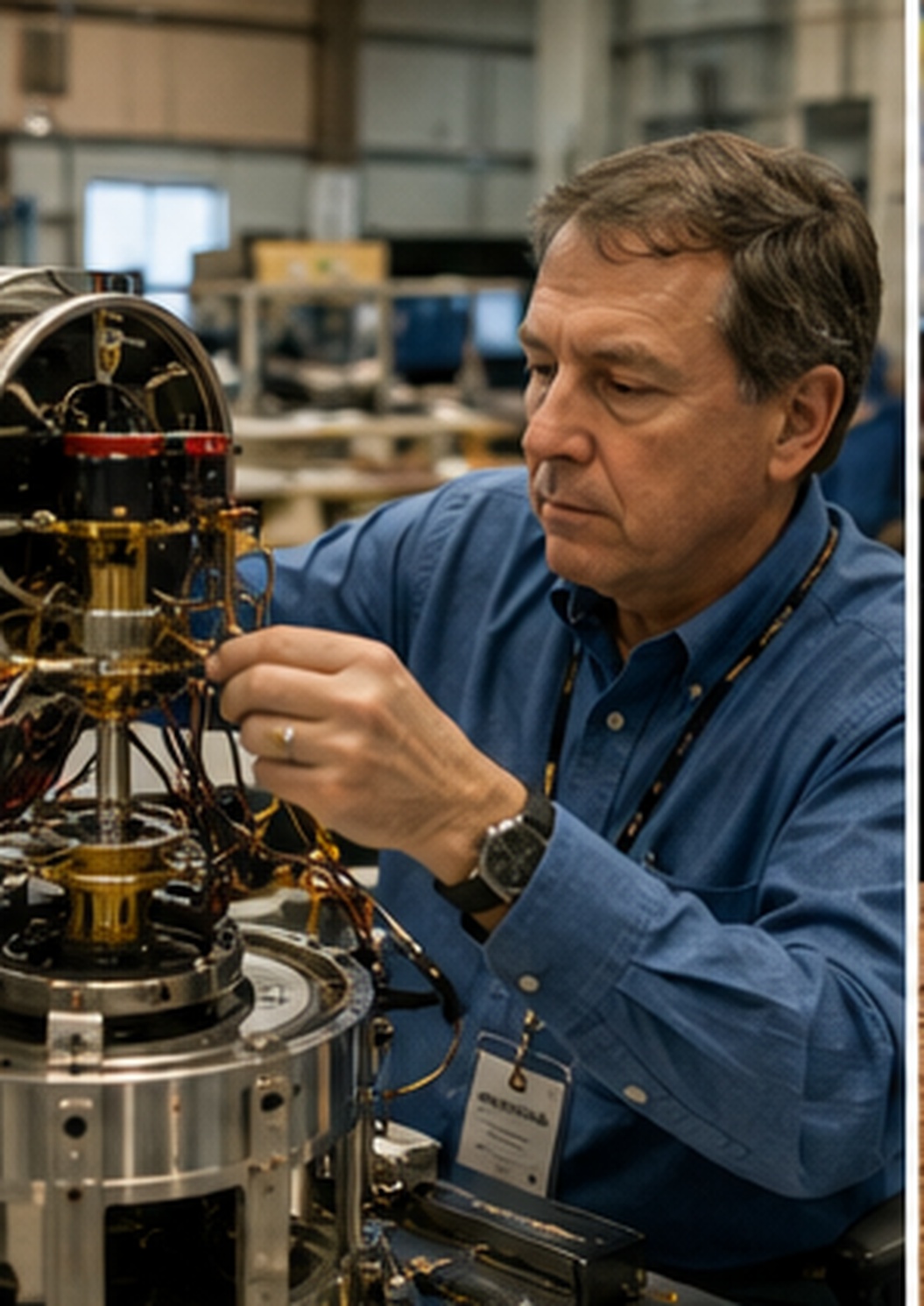
The portrait at the top of this book is an image whose exact provenance we were unable to verify.
Online sources
- NASA, Small Steps, Giant Leaps, episode 71: MOXIE (2021)
- NASA Ames, “The Mars Oxygen ISRU Experiment (MOXIE)” (2021)
- NASA/JPL, “Phoenix Mars Team Opens Window on Scientific Process” (2008)
- NASA, “MOXIE Could Help Future Rockets Launch Off Mars” (2020)
- NASA, “NASA’s Perseverance Mars Rover Extracts First Oxygen from Red Planet” (2021)
- NASA, “NASA’s Oxygen-Generating Experiment MOXIE Completes Mars Mission” (2023)
- M. H. Hecht and T. P. Meloy, MECA (1999, NTRS)
Facts checked against these sources on October 10, 2026.
Go further
Mars Library
This book extends the page with a complete settlement architecture. The dossier above remains deliberately self-contained: Arcadia is optional further reading, not a prerequisite for understanding it.
 Arcadia — Master Plan of the First Martian City