


Mars Bible — People
Rob Manning
The Navy kid who dreamed of JPL became the engineer who landed Pathfinder, the twin rovers and Curiosity on Mars, from bouncing airbags to the sky crane, before leading the laboratory’s engineering.
engineer, Jet Propulsion Laboratory
- Education
- Whitman College; Caltech (engineering and applied physics; math-physics)
- Institution
- Jet Propulsion Laboratory, since 1980 according to one profile
- Roles
- Chief engineer of Mars Pathfinder, of Mars Science Laboratory, then of JPL
- Specialty
- Entry, descent and landing; systems engineering
- Link to Mars
- Had a hand in all five of NASA’s Mars rovers
6 chapters and 4 appendices: about 2,300 words, or about 10 minutes of reading. Every fact comes from verified sources, listed at the end of each chapter.
Part One
Toward JPL
1960 – 1997
Chapter 1 · 1960s – 1980 A Navy kid who read about JPL
Rob Manning first read the name of the Jet Propulsion Laboratory at about twelve, in a book. The place seemed out of reach. He would spend his whole career there.
From base to base
A “Navy brat,” he moved from state to state before his family settled near Puget Sound, in Washington State. He lived on Whidbey Island, then attended Burlington Edison High School in Burlington. The Mercury, Gemini and Apollo programs fascinated him. He devoured National Geographic, Life and the monthly Time Life science books. He imagined becoming an inventor and built many model NASA rockets and space capsules.
Among his inspirations he names the curious enthusiasm for space of newsman Walter Cronkite, the science fiction authors Isaac Asimov, Arthur C. Clarke, Robert A. Heinlein and Ray Bradbury, and teachers who pushed him to think beyond his limits.
From Whitman to Caltech
He went to Whitman College, in Walla Walla, then transferred to the California Institute of Technology, in Pasadena. He graduated with a B.S. in engineering and applied physics, with an electrical engineering focus, and a B.A. in math-physics. At Caltech he watched Voyager’s images of Jupiter arrive. JPL then offered him a part-time job: drafting schematics of the Galileo spacecraft. One profile says he has been at JPL since 1980.
Sources: NASA Science, “Rob Manning” page (Navy brat, Puget Sound, Whidbey Island, Burlington Edison, Mercury, Gemini and Apollo, magazines and Time Life books, models, Walter Cronkite, science fiction authors, teachers, Whitman College, Caltech, degrees, reading about JPL at 12, Voyager, Galileo draftsman); web search summarizing a conference profile (at JPL since 1980).
Chapter 2 · 1980 – 1997 Pathfinder’s chief engineer
For nearly fifteen years, Rob Manning moved from one JPL organization to another to broaden his skills and contacts. Then he was handed the engineering of a daring mission: landing on Mars a lander wrapped in airbags.
Learning everywhere
He worked on spacecraft such as Galileo to Jupiter, Magellan to Venus and Cassini to Saturn. He describes himself as a systems engineer specializing in autonomous interplanetary robotics. His advice to young people: “Spend a decade in your career doing real work. Be patient, be curious and be willing to learn from the best.”
Airbags
In the early 1990s he became chief engineer of Mars Pathfinder and led its entry, descent and landing team. JPL proposed something new: as the lander dangled from its parachute, giant airbags would inflate around it; retrorockets would bring it to a halt above the surface, then the bundle would drop about twenty meters and bounce, sometimes as high as fifteen meters, before coming to rest. Pathfinder landed that way on July 4, 1997, and released the little Sojourner rover: the first airbag lander and the first rover on another planet.
The pump without freon
He likes to tell the story of the biggest hardware damage he ever inflicted. With Guy Beutelschies, he was testing Pathfinder’s launch sequence. In the airlock, the spacecraft was spread out in pieces, connected by extension cords so it thought it was assembled. They switched on the pump that circulates the freon coolant. A technician came running: an awful sound was coming from the cruise stage. The pump had no freon, and it needs freon for its own lubrication. The tubes had to be cut and a spare pump welded in. The lesson, he says: for key tests, insist that all the key people who know the equipment are there.
Sources: NASA Science, “Rob Manning” page (nearly 15 years in various organizations, systems engineer, career quotations, Pathfinder on July 4, 1997); NASA, NESC Academy biography (Galileo, Magellan, Cassini, Pathfinder chief engineer and EDL lead in the early 1990s, first airbag lander and first rover); NASA, “Here’s How Curiosity’s Sky Crane Changed the Way NASA Explores Mars,” August 7, 2024 (the airbag method, 20 m, bounces up to 15 m); NASA/JPL, “On a Mission” podcast, season 4, episode 12, “Secrets of the Mars Rovers,” March 8, 2023 (the pump, Guy Beutelschies, the lesson).
Part Two
Landing on Mars
1998 – 2024
Chapter 3 · 1998 – 2004 Testing parachutes after launch
After Pathfinder, Rob Manning helped propose adapting the lander and the small rover into two big rovers: Spirit and Opportunity. He led the rovers’ systems engineering and the landing team.
Sojourner inside
Spirit and Opportunity, he explains, were born of a direct melding of the functional capability of Sojourner and the Pathfinder system: you add to what you know instead of starting over. But each time, everything has to be retested, because the hardware, configuration and mass properties change.
Two rovers without a destination
As launch approached in the summer of 2003, a review board questioned both planned sites. At Gusev the winds might be too strong; Meridiani was too high for the timeline margin the parachute offered, tested only up to a certain pressure in the wind tunnel. “So we had two vehicles that were on the rocket, ready to go, and we hadn’t officially selected a landing site for either one of them,” he recalls with a laugh. Steve Squyres implored him to find a way to prove they could get there.
The team decided to test, in the summer after launch, the parachutes at higher pressures, the retrorockets to fight the wind better, and, at Dara Sabahi’s request, the airbags at higher horizontal speeds. “So we’re testing airbags, rockets and parachutes – all after launch.” The backup sites, safe but less interesting, remained available if the tests failed. They succeeded; the landing site selection committee approved Gusev and Meridiani, and the trajectory correction maneuvers aimed for those destinations. Both rovers landed in January 2004.
The sky crane
During those years, in February 2000, he also worked on the initial concept of an entirely new landing system for rovers too heavy for airbags: a kind of robotic jetpack lowering the rover on ropes. “People were confused by that,” he remembers. “They assumed propulsion would always be below you, like you see in old science fiction with a rocket touching down on a planet.” Putting the engines on top keeps them away from the ground, avoids digging a hole the rover could not drive out of, and lets the wheels act as landing gear.
Sources: NASA, NESC Academy biography (MER proposal, systems engineering and EDL, co-conception of the sky crane); NASA/JPL, “On a Mission” podcast, season 4, episode 12, March 8, 2023 (“direct melding,” retests, the review board, Gusev and Meridiani, quotations, Steve Squyres, the post-launch tests, Dara Sabahi, backup sites, approval); NASA, “Here’s How Curiosity’s Sky Crane Changed the Way NASA Explores Mars,” August 7, 2024 (February 2000, quotation, the reasons). Steve Squyres has his own biography in this collection.
Chapter 4 · 2004 – 2014 Seven minutes for Curiosity
After the twin rovers, Rob Manning became Mars Program chief engineer, then, in 2007, chief engineer of Mars Science Laboratory. He would land on Mars the heaviest rover ever sent, with the sky crane he had helped imagine.
Program chief engineer
As Mars Exploration Program chief engineer, he helped plan and integrate missions such as the Phoenix lander, Mars Reconnaissance Orbiter and Mars Science Laboratory. In 2004, SpaceNews named him one of the hundred people who made a difference in civil, commercial and military space since 1989.
A whiner on the ground
Curiosity was too big and heavy for airbags. The sky crane delivered it: a robotic jetpack brought it over the site, lowered it on nylon ropes, cut them, then flew off to crash at a distance. Engineers had to learn to keep the rover from swinging, as huge cargo helicopters do on Earth. On the ground, Manning says, the rover complained about everything: “My radar’s too hot. This is too hot. I don’t like it here. Gravity’s too strong.” It had been designed to be happy on Mars, not on Earth.
On August 5, 2012, the team waited in mission control, seeing nothing, for seven agonizing minutes, then erupted in joy when the signal came: Curiosity had landed. In 2014 he published with science writer William L. Simon an inside account, Mars Rover Curiosity: An Inside Account from Curiosity’s Chief Engineer, with Smithsonian Books.
Sources: NASA, NESC Academy biography (program chief engineer, Phoenix, MRO, MSL, SpaceNews in 2004, MSL chief engineer in 2007, landing on August 5, 2012, the book); NASA, “Here’s How Curiosity’s Sky Crane Changed the Way NASA Explores Mars,” August 7, 2024 (the maneuver, nylon ropes, controlled crash, swinging, cargo helicopters, the seven minutes); NASA/JPL, “On a Mission” podcast, season 4, episode 12, March 8, 2023 (“Curiosity was… oh, what a whiner,” quotation, “we designed them to be happy on Mars”); web search summarizing the Smithsonian Institution release (coauthor William L. Simon, Smithsonian Books, October 21, 2014). We have not read the book.
Chapter 5 · 2015 – 2024 “Yes! Yes! Yes!”
Having become JPL’s chief engineer, Rob Manning had a hand in all five of NASA’s Mars rovers. He drew from them a humility he likes to pass on.
Parachutes that tear
He was, among other roles, chief engineer of the LDSD project, devoted to new supersonic decelerators. In tests off Kauai, Hawaii, parachutes more than thirty meters across tore themselves apart at nearly twice the speed of sound. “We realized that our parachutes were just barely working,” he says: since Pathfinder, the margin had been smaller than believed. Watching slowed-down films, experts saw a parachute open as it does on Earth; at real speed, it goes from closed to open in a single frame. The lesson: engage with people who are not pushovers and are willing to criticize you.
February 18, 2021
For Perseverance’s landing, he provided commentary on the descent. “There’s 79 pyrotechnic devices; each have to work perfectly. One critical wire short, or one key mechanism that doesn’t work or breaks, and it’s mission over.” Around half of the missions to Mars have failed, he reminded listeners. “I have to admit I am quite anxious, but very hopeful.” When the parachute opened: “Yes! Yes! Yes!” Then: “We got it. We’re there.”
In 2021, the National Space Society gave him, along with Bobby Braun, a Space Pioneer Award for their entry, descent and landing contributions. In April 2024, Howard Eisen succeeded him as JPL chief engineer; he remained in the Office of the Chief Engineer to put his experience at the service of missions.
“We are human first”
A Mars spacecraft, he sums up, must transform itself from an interplanetary traveler into a hypersonic pilot, a parachutist, a rocketeer, a lander, then drive and take pictures without putting itself in danger. Its complexity is almost fractal: the closer you look, the more detail there is. More than half the time, defects found are worked around rather than fixed, because Mars allows a launch only every twenty-six months. “We are human first, robots last.” Outside work, he plays jazz trumpet, paints and skis.
Sources: NASA, NESC Academy biography (LDSD chief engineer); NASA/JPL, “On a Mission” podcast, season 4, episode 12, March 8, 2023 (the Kauai parachutes, quotation, slow motion, critics, the transformation, the fractal, more than half of defects, 26 months); NASA/JPL, “On a Mission” podcast, season 4, episode 6, “The Promise of Perseverance,” June 8, 2022 (quotations); NASA/JPL, “National Space Society Honors Bobby Braun, Rob Manning,” July 1, 2021; NASA/JPL, “NASA’s Jet Propulsion Laboratory Announces 3 Personnel Appointments,” April 11, 2024; NASA Science, “Rob Manning” page (quotation, trumpet, painting, skiing).
Epilogue
Rob Manning and Mars
Chapter 6 · The lesson What Rob Manning leaves to Mars
Rob Manning landed ever heavier machines on Mars. Human crews will be heavier still. His stories carry three lessons.
Landing is the first test
Airbags, sky crane, terrain-relative navigation: each generation had to invent its own way of landing. A crewed mission will need a new method, and just as many tests.
Mars is not Earth
Testing “like you fly” is nearly impossible, since testing happens on Earth. The Kauai parachutes showed that a margin thought to be solid could be thin. For humans, those margins will have to be known, not assumed.
Thick-soled shoes
Martian rocks, carved by the wind, are often sharp. If he were a Martian astronaut, he says, he would insist on thick-soled shoes, with steel between him and those points. The seemingly modest details revealed by robots are the ones that will protect humans.
This lesson is a reflection by the author of this book, based on the facts and words reported in the preceding chapters; the remark about sharp rocks and shoes comes from the “On a Mission” podcast of March 8, 2023.
Appendices
Further reading
Appendix Understanding Rob Manning’s work
A few ideas, explained simply, to follow this book.
The chief engineer
The technical lead of a project: they make sure all parts of a spacecraft work together and settle hard engineering questions.
Systems engineering
The art of designing a complex whole as a whole: power, mass, heat, software, mechanisms, and how each depends on the others.
Entry, descent and landing
The few minutes in which a spacecraft goes from about 13,000 miles per hour to a stop on the Martian ground: heat shield, parachute, retrorockets, then airbags or sky crane.
The sky crane
A powered descent stage that hovers above the ground and lowers the rover on ropes, before flying off to crash at a distance.
Margin
The safety reserve built into a design to allow for what is not known: environment, design mistakes, manufacturing. Rob Manning speaks of overdesigning by 20 to 50 percent.
These explanations are general notions. The entry speed (about 13,000 miles per hour) and the 20 to 50 percent margin come from the “On a Mission” podcast of March 8, 2023; the sky crane from NASA’s release of August 7, 2024.
Appendix Timeline
The dates of Rob Manning’s career, in order, as far as the sources allow them to be established.
Around age twelve. He discovers JPL in a Time Life book.
1980. At JPL, first as a part-time draftsman for Galileo (according to a profile).
Early 1990s. Chief engineer of Mars Pathfinder and landing lead.
July 4, 1997. Pathfinder and Sojourner land.
February 2000. First sky crane concept.
Summer 2003. Parachute, rocket and airbag tests after the twin rovers’ launch.
January 2004. Spirit and Opportunity land.
2004. Named by SpaceNews among the hundred people who made a difference in space since 1989.
2007. Chief engineer of Mars Science Laboratory.
August 5, 2012. Curiosity lands.
2014. Mars Rover Curiosity, with William L. Simon.
February 18, 2021. Perseverance lands; he provides commentary.
2021. National Space Society Space Pioneer Award.
April 2024. Howard Eisen succeeds him as JPL chief engineer.
Sources: those of the chapters.
Appendix The people
The people who appear in this book, with the role the sources give them.
Guy Beutelschies. Pathfinder engineer with whom he tested the launch sequence.
Steve Squyres. Principal investigator of Spirit and Opportunity. He has his own biography in this collection.
Dara Sabahi. Engineer working on key mechanical issues for the twin rovers, who asked for new airbag tests.
William L. Simon. Science writer, coauthor of his book on Curiosity.
Bobby Braun. JPL director for planetary science, honored with him in 2021.
Howard Eisen. His successor as JPL chief engineer in 2024.
Swati Mohan. Perseverance engineer whose voice, in mission control, followed the descent. She has her own biography in this collection.
Sources: those of the chapters in which each appears; “On a Mission” podcast, season 4, episode 6 (Swati Mohan in mission control).
Appendix Sources and method
This book contains no invented dialogue and no thought attributed to anyone without a text to support it. The dialogues reported are given as Rob Manning himself told them. This appendix shows where the facts come from and what the sources do not allow us to establish.
A living person
Rob Manning is alive at the time of writing. We have kept to his public life and to what he himself has told about his youth. The sources consulted give neither his date of birth nor the dates of his degrees.
The main sources
The book rests on his personal page on NASA’s science website, his NASA NESC Academy biography, three episodes of JPL’s “On a Mission” podcast (2022 and 2023) in which he recounts episodes from his career, and NASA and JPL releases from 2019 to 2024. He wrote a book on Curiosity with William L. Simon, which we have not used.
What does not agree
His NESC Academy biography presents him as Mars program engineering manager and LDSD chief engineer; the 2021 and 2024 releases present him as JPL chief engineer. These profiles reflect different moments of his career, whose dates we do not always know.
Length
This book runs to about two thousand three hundred words. The goal set for this collection was one hundred thousand. We did not reach it, and we prefer to say so. As it stands, the text contains only facts we were able to tie to a source.
The portrait
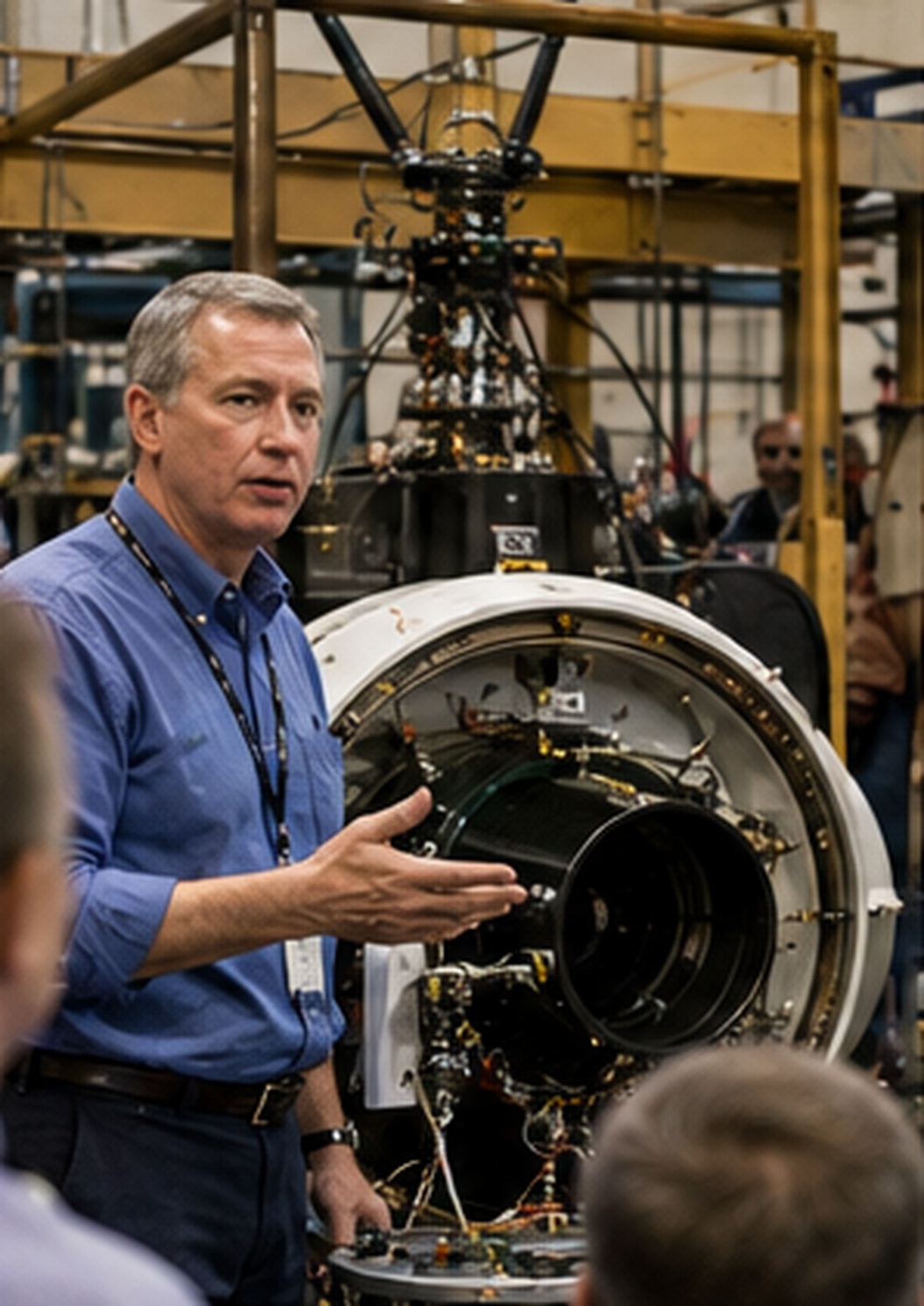
The portrait at the top of this book is an image whose exact provenance we were unable to verify.
Online sources
- NASA Science — Rob Manning
- NASA, NESC Academy — Robert M. Manning
- NASA/JPL, On a Mission, “Secrets of the Mars Rovers” (2023)
- NASA/JPL, On a Mission, “The Promise of Perseverance” (2022)
- NASA, “Here’s How Curiosity’s Sky Crane Changed the Way NASA Explores Mars” (2024)
- NASA/JPL, “National Space Society Honors Bobby Braun, Rob Manning” (2021)
- NASA/JPL, “NASA’s Jet Propulsion Laboratory Announces 3 Personnel Appointments” (2024)
Facts checked against these sources on October 10, 2026.
Go further
Mars Library
This book extends the page with a complete settlement architecture. The dossier above remains deliberately self-contained: Arcadia is optional further reading, not a prerequisite for understanding it.
 Arcadia — Master Plan of the First Martian City