


MARS BIBLE — RISK & RESILIENCE
Rationing a critical resource on Mars: calculations, priorities, and emergency governance
Rationing is not merely “use less”; it is deciding what can be reduced, by how much, and for whom without turning scarcity into catastrophe.
An isolated settlement must prepare for cases where a resource still exists but no longer supports all normal uses. Rationing requires reliable measurements, forecasts, technical priorities, and governance rules so decisions are neither arbitrary nor too late.
Start with a balance: stock, production, consumption, loss
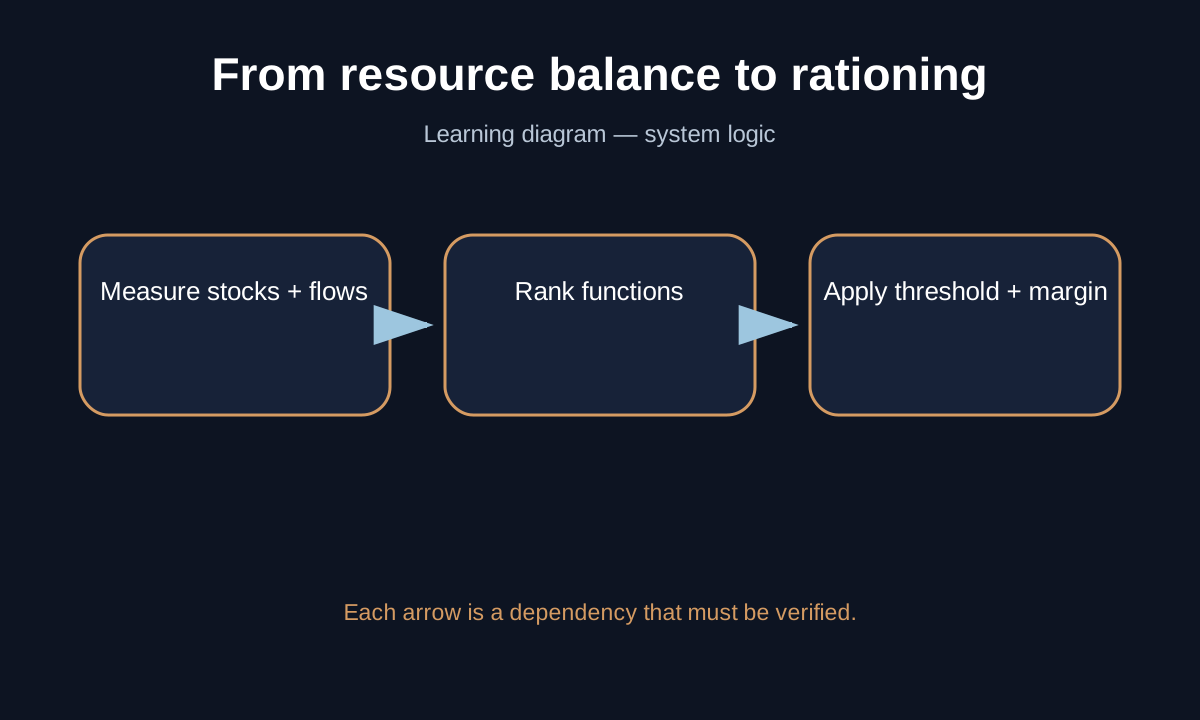
The first question is not “how much should we cut?” but “what is the real balance?” A tank may contain known inventory, partial production may continue, and invisible loss may exist. Counting stock without measuring flows creates fictional endurance.
The dashboard should distinguish life-critical demand, technical demand needed to produce another resource, deferrable uses, and loss. Turning off a pump to save power can increase water loss or stop oxygen production; resources are coupled.
Define thresholds before the crisis
A plan can use levels such as watch, nonessential reduction, degraded mode, severe rationing, and life-threatening emergency. Each threshold should trigger on a measurement or forecast rather than intuition.
Thresholds need repair time and uncertainty. If a machine needs ten days to restore, waiting until eleven days of stock remain leaves almost no margin. Action must begin early enough to absorb delay.
Priority should follow functions, not social status
Power for ECLSS ventilation or water for medical treatment may have greater operational value than a comfort use. Priority matrices should describe functions and consequences of loss rather than hierarchy of the person requesting the resource.
Human consumption can still vary with medical need, workload, or temperature. Equity therefore does not always mean identical quantity; it means known, justified, reviewable criteria.
Dynamic rationing: recalculate after every important change
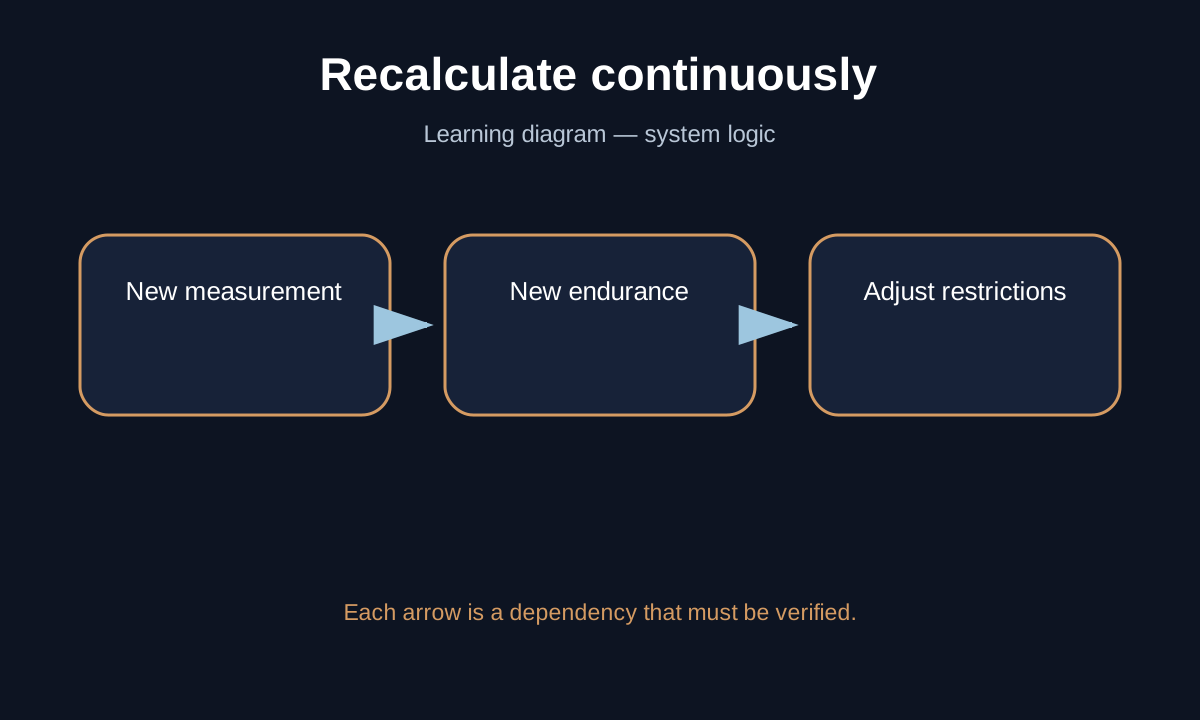
If a pump is repaired, a leak is found, or weather improves solar output, endurance changes. A number calculated in the morning should not become a ten-day truth. The system should recalculate from measured data.
Forecasts should display at least nominal case, adverse case, and protected reserve. That presentation reveals whether survival depends on an optimistic assumption and forces sensitivity to become visible.
Calculate the reduction needed for a target endurance
LEARNING CALCULATION — ASSUMPTIONS ARE EXPLICIT
Exercise: 1,200 usable units remain. Current use is 60 units/day. Current endurance is 1,200 ÷ 60 = 20 days.
Repair is estimated at 24 days and doctrine requires 6 additional days of margin, so target endurance is 24 + 6 = 30 days. Maximum compatible consumption is 1,200 ÷ 30 = 40 units/day.
Demand must therefore fall by 60 − 40 = 20 units/day, or 20 ÷ 60 ≈ 33.3%. The reduction comes from an explicit endurance objective rather than an arbitrary percentage.
Governance should make the decision auditable
A serious restriction should state measured stock, production, assumptions, next review date, and authority for changing the rule. Transparency prevents rationing from becoming an indefinite instruction disconnected from physical reality.
After the crisis, decisions should be audited: which forecasts were right, what could have been cut earlier, and what dependencies were missed? The objective is to improve the next survival model rather than merely assign blame.
Decision questions specific to this hazard
- What inventory is genuinely usable, and what portion is protected for a second emergency?
- Which demand is life-critical, which demand supports another resource, and which can be deferred?
- What threshold triggers each restriction level, and how much margin remains beyond estimated repair time?
- Which special needs justify different allocation, and by what medical or operational criteria?
- When will the calculation be repeated with new measurements instead of extended automatically?