


MARS BIBLE — RISK & RESILIENCE
Slow leak or rapid depressurization on Mars: detect, isolate, survive
Pressure is not merely a number on a display: it represents breathing reserve, time, and decision capacity.
A Mars settlement survives inside pressurized envelopes. Loss of containment can begin as a few grams of gas per minute or become a rapid depressurization. Those cases demand different sensors, doors, suits, evacuation paths, repair methods, and rules for deciding whether to save a module or protect the crew.
A slow leak and a fast rupture are different emergencies
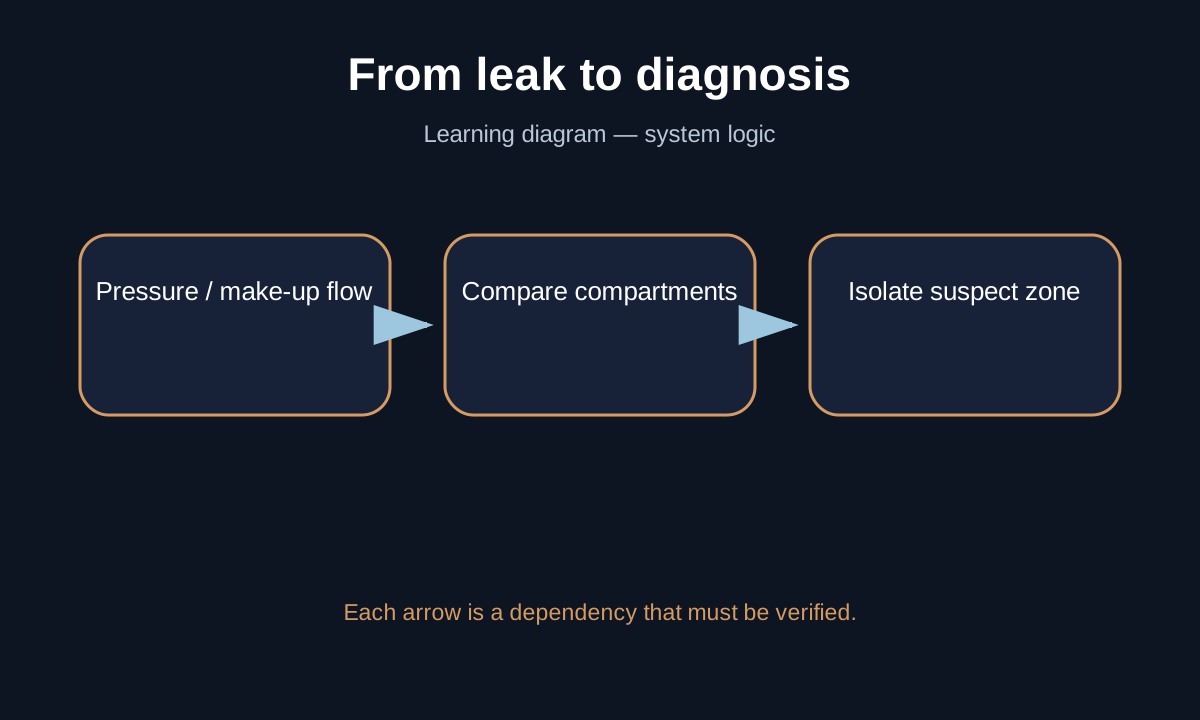
A slow leak is dangerous because it can remain hidden. Total pressure may decline gently while automatic atmosphere control adds replacement gas. If the controller compensates without making cumulative make-up flow visible, abnormal reserve depletion may be the first obvious clue. Pressure, make-up flow, gas composition, and trend over time must therefore be considered together.
A fast rupture becomes a seconds-to-minutes problem. Pressure gradient drives flow toward the opening and may move debris or injure people. The task changes from careful troubleshooting to detection, closure, crew accounting, compartment isolation, and respiratory protection.
How do we know a leak exists?
One pressure sensor is not enough. It can drift, fail, or sample a volume that hides the real event. A robust architecture combines absolute pressure, pressure-rate change, make-up gas consumption, acoustic or ultrasonic evidence, differences between compartments, and gas mass balance.
Pressure also changes with temperature. Cooling a fixed volume reduces pressure even when no gas escapes, so diagnostics must separate loss of matter from a thermodynamic change. Alarm logic that is too sensitive creates nuisance alarms; logic that is too tolerant can miss a developing accident.
Locate before repairing
Knowing that the habitat is losing gas does not identify the breach. Isolation valves or doors can be closed by zones while engineers compare which volume stops losing pressure. A single giant pressurized room would be far harder to save than a deliberately compartmented settlement.
Localization should not require needless human exposure. Distributed microphones, differential pressure sensors, cameras, internal or external robots, and section tests can narrow the search. Procedures must also cover leaks hidden behind panels, under floors, or in inaccessible fluid lines.
Compartmentation turns catastrophe into a recoverable event
A pressure door is useful only if it still closes when main power is lost, its seal is clear, and crew location on each side is known. Hidden dependencies matter: two doors powered by the same electrical bus are not two independent barriers.
Once a compartment is isolated, it may remain unavailable for hours or days. Engineers must immediately ask what else was lost with it: batteries, toilet, medicines, computers, food, spare parts, or access to an airlock. Resilience therefore depends on spatial distribution of functions as well as hull strength.
Estimate a first-order time margin
LEARNING CALCULATION — ASSUMPTIONS ARE EXPLICIT
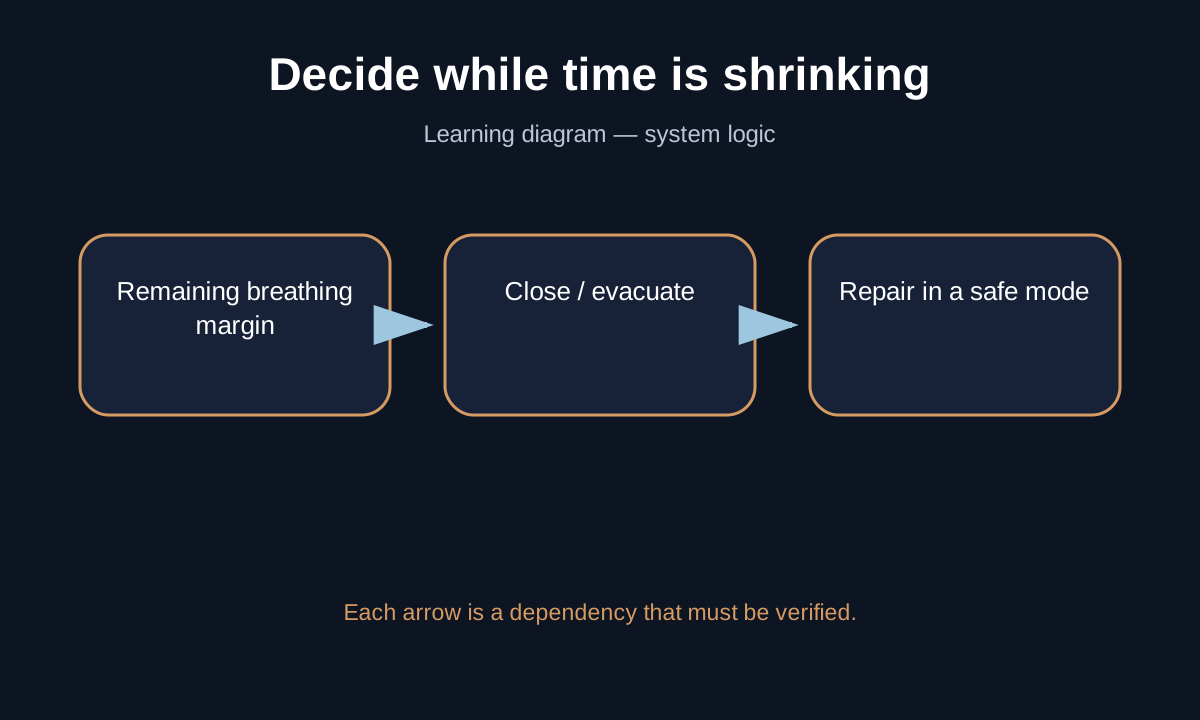
Use a deliberately simplified exercise. A compartment has 24 kilograms of usable breathing-gas reserve before reaching an evacuation threshold. Net leakage removes 0.20 kilogram per minute.
We seek a duration, so divide available mass by loss per minute: 24 kg ÷ 0.20 kg/min = 120 min. Kilograms cancel, leaving minutes. That is 2 hours.
Why is this only a learning model? Real depressurization does not necessarily have constant flow. Flow changes with pressure, breach geometry, temperature, and flow regime. The calculation is useful because it teaches reserve-versus-loss reasoning and unit checking.
Repair without turning the rescuer into the next casualty
Sealing may require an internal patch, external plate, resin, mechanical closure, or robot. Before opening a door toward the damaged volume, the crew needs to know residual pressure, debris conditions, possible fire or contamination, and suit endurance.
A sound procedure also includes a repair-abort criterion. On Mars, improvised heroics can disable the very crew needed to restore the settlement. Engineering must define in advance what can be recovered, what may remain sealed off, and how the settlement survives the loss of that compartment.
Decision questions specific to this hazard
- Can automatic pressure control hide a leak by continuously replacing lost gas?
- What is the smallest volume that can be isolated without losing a life-critical function?
- How many minutes remain before the selected physiological or operational threshold?
- Do isolation doors have independent power, sensing, and control paths?
- Can the breach be located and sealed without exposing a crewmember to the hazardous volume?