


MARS BIBLE — RISK & RESILIENCE DOSSIER
Power failure + ECLSS: how an electrical outage becomes a life-support emergency
Breathable air depends on machinery; power safety and life support therefore form one survival system.
Inside a closed habitat, loss of electricity is not just loss of lighting. Ventilation, carbon-dioxide removal, water pumps, sensing and thermal control may all depend on power, so survival time must be calculated function by function.
Break ECLSS into vital functions
ECLSS means Environmental Control and Life Support System. Its functions do not all have the same time constant: ventilation, CO₂ removal, oxygen supply, water, humidity, temperature and monitoring can degrade at different rates.
A power failure must therefore become a physical timeline. Which function stops immediately? Which variable drifts slowly? Which limit becomes dangerous first? The answer depends on volume, crew size, temperature, activity and reserves.
Inertia buys time — if quantified
Pressurized air volume, stored water and thermal mass may provide temporary margin. But uncalculated margin is belief, not engineering. Conservative estimates and real-time measurements are needed.
The emergency table should show, for each function: time to limit, confirming sensor, load-reduction action, backup equipment and condition for returning to normal.
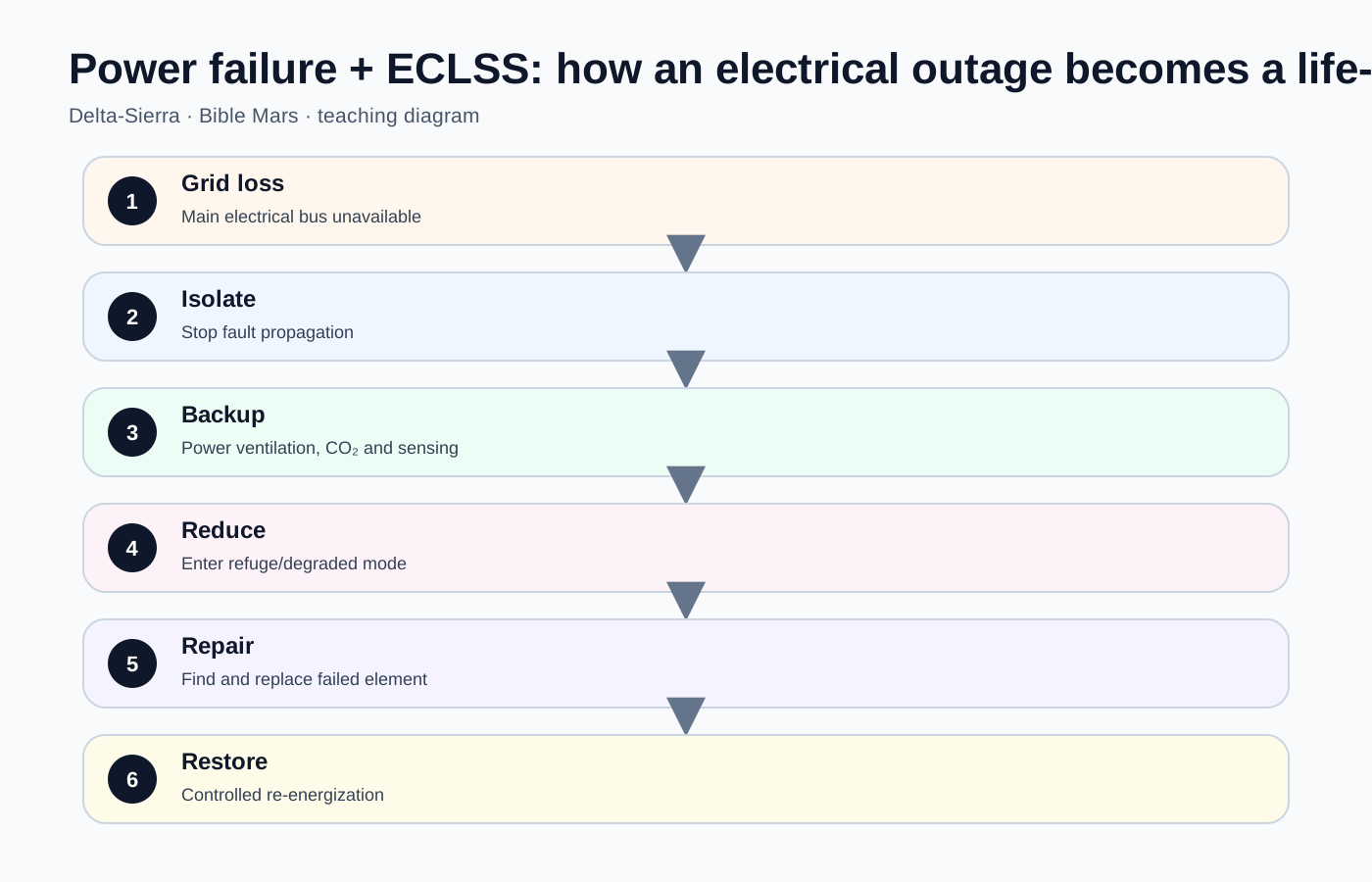
Prevent the electrical cascade
A trap is protecting ECLSS with a battery that still depends on one converter, common bus or common software. The power chain must be traced down to genuinely shared components.
A small independently powered emergency fan can be more valuable than a third identical large machine if all large machines share the same power electronics.
Refuge mode
The settlement can temporarily shrink its inhabited volume: close districts, group the crew in a smaller refuge and run a backup ECLSS. Reducing maintained volume and active equipment can turn a total-grid failure into a survivable degraded mode.
The refuge must already exist, with access, sleeping, hygiene, medicines, communications and enough endurance to repair the main system.
Multi-failure drills
The useful test is not simply switching mains power off and on. Simulate main-bus loss + aged battery + false sensor + unavailable technician, then measure what the crew can actually do.
- measure time to physiological limits;
- test backup power independently;
- provide safe manual control;
- store tools and spares near vital functions;
- train priorities: air, thermal control, water.
Calculate time to threshold
The operational value of the calculation is prioritization: a function with two hours to limit must be restored before one with twenty hours, unless repairing the second is required to recover the first.
The same calculation should always be repeated with an adverse assumption, followed by the question: what real measurement could confirm or reject that assumption? A calculation teaches as much through its limits as through its numerical result.
The dossier keeps measured data, published values, design assumptions and teaching scenarios visibly separate. Mixing those statuses would create false precision.
From calculation to action
Measurement itself needs resilience: backup sensing, independent confirmation, calibration range and a defined response when data are missing. An alarm with no strategy for sensor failure can increase risk.
What must be tested before depending on it
Run the scenario using real hardware or a representative twin, then repeat it with one additional failure. Measure diagnosis time, human errors, consumable use and ability to return to nominal conditions.
Results then update inventory, procedures and design. Safety becomes a learning loop rather than a document frozen before departure.
Questions never to skip
- What event actually starts the failure chain?
- Which functions are lost immediately, then after 10 minutes, 1 hour and 24 hours?
- Which redundant units still share power, software, location or maintenance?
- What degraded mode remains genuinely habitable?
- What must be repairable locally without waiting for Earth?
This dossier in the settlement
Scientific and technical sources
The sources below support the physical phenomena and safety building blocks; settlement architecture remains an explicitly identified prospective synthesis.