


MARS BIBLE — RISK & RESILIENCE
Loss of oxygen production on Mars: reserves, consumption, and restart
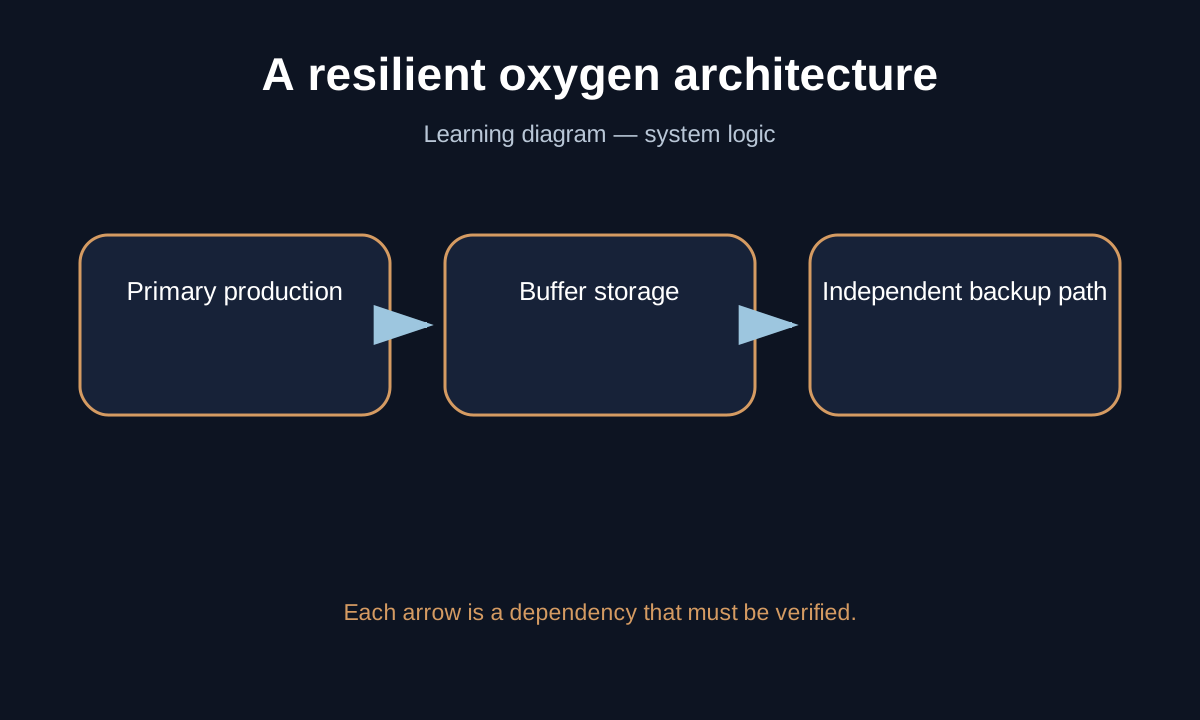
Oxygen is life-critical, but a resilient settlement does not depend on one machine or one production pathway.
A Mars settlement may produce oxygen from water by electrolysis, process Martian carbon dioxide through ISRU, and maintain compressed-gas or liquid-oxygen stores. Resilience asks not only “can we produce oxygen?” but “how long can we operate if production stops now?”
Separate human consumption, industrial use, and propulsion
Oxygen has multiple uses: breathing, selected industrial processes, and potentially propulsion oxidizer. Those users should not draw blindly from the same reserve without priority rules.
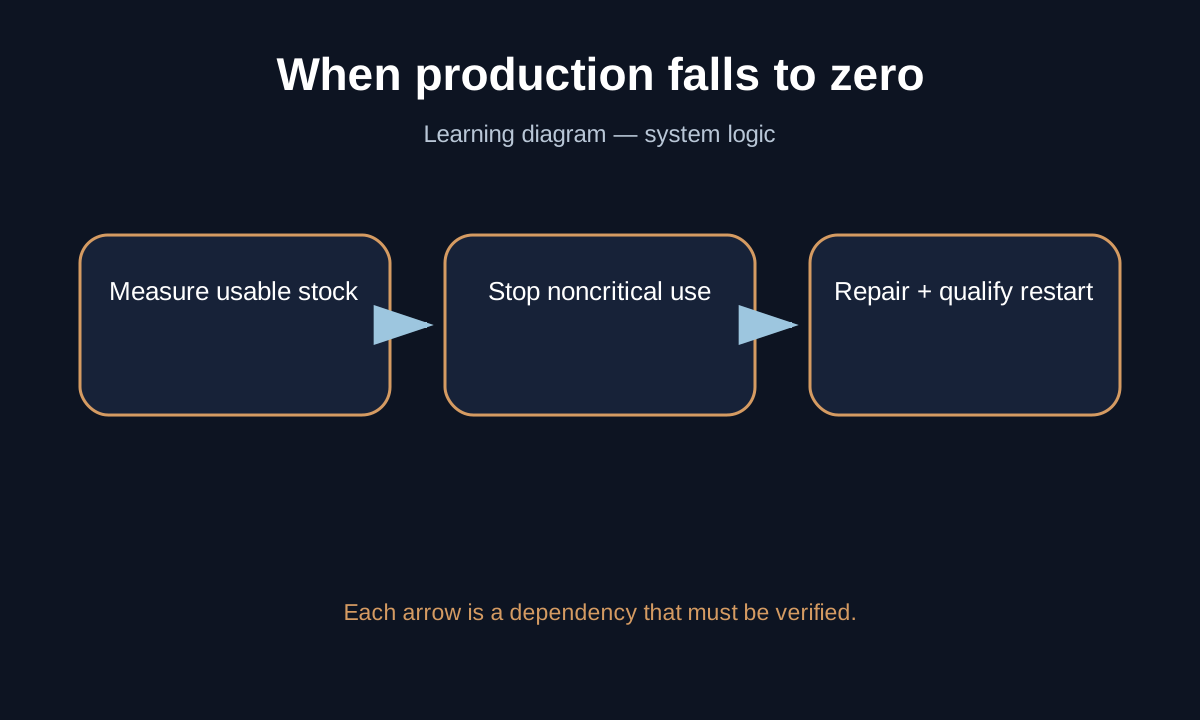
The first emergency task is to know current consumption by category. A leaking industrial line or propellant transfer can exceed crew metabolic demand. Operations therefore need stock, production, consumption, and endurance forecasts on one dashboard.
Usable reserve is not the same as total inventory
Some oxygen may be physically inaccessible, protected for a rescue vehicle, trapped behind an isolated line, or below usable delivery pressure. Endurance must be calculated from stock that can actually be mobilized in the scenario.
Tanks and regulators can also fail. Ten tonnes of oxygen behind a valve that cannot open is not operational reserve. Procedures need periodic verification of withdrawal paths and manual recovery methods.
Why multiple technologies may be safer
Two identical electrolysers increase capacity but can share software, water contamination, or parts failure. Partial diversity—storage, electrolysis, and a distinct ISRU path—can reduce selected common dependencies, although it increases maintenance complexity.
MOXIE demonstrated oxygen production from the Martian CO₂ atmosphere at small scale. That does not make a demonstrator colony-scale equipment, but it validates a technological chain that could become an additional production route after industrial scaling.
Reduce consumption without creating a new crew hazard
When production stops, non-life-critical uses can be suspended, tasks postponed, some pressurized volume consolidated, or occupancy patterns changed. The objective is to reduce demand while keeping atmosphere quality inside human-safe limits.
Breathing-oxygen rationing cannot be improvised as a simple percentage. Partial pressure, total pressure, physical workload, fire risk, and spacesuit requirements impose constraints. Safe degraded modes must be designed before the emergency.
Calculate a simplified breathing-oxygen endurance
LEARNING CALCULATION — ASSUMPTIONS ARE EXPLICIT
Learning exercise: 20 people consume 0.84 kilogram of oxygen per person per day under the course assumption. Total demand is 20 × 0.84 = 16.8 kg/day.
If the genuinely usable operating stock is 504 kilograms, gross endurance is 504 ÷ 16.8 = 30 days. If 20% is protected for a rescue vehicle, planned stock is 504 × 0.80 = 403.2 kg, or 403.2 ÷ 16.8 = 24 days.
This is not a complete ECLSS mass balance. It omits leakage and variable workload, but it teaches why total inventory and usable endurance are different concepts.
Restart is a safety operation
After repair, oxygen equipment must restart with purity, pressure, temperature, and performance checks. Sending out-of-spec product directly into the breathing network could turn a mechanical failure into contamination.
Return to nominal output should therefore be staged, with the ability to reject initial production until qualified. Buffer storage makes this possible without making crew survival depend on the first minute after restart.
Decision questions specific to this hazard
- How much oxygen is actually usable without consuming protected rescue reserves?
- How much demand is breathing, and how much is industrial or transfer demand?
- Does backup production share water, software, or power with the primary system?
- How many repair days remain after margins and protected reserves?
- What measurements prove restarted oxygen is again suitable for use?