


MARS BIBLE — RISK & RESILIENCE
Multi-compartment fire on Mars: smoke, isolation, and cascading loss
Inside a closed habitat, fire changes atmosphere, visibility, materials, and system availability at the same time.
NASA created the Saffire spacecraft-fire experiments because fire behavior in space cannot simply be treated as terrestrial fire. A Mars settlement adds isolation and the absence of rapid outside emergency response.
Flame is only part of the emergency
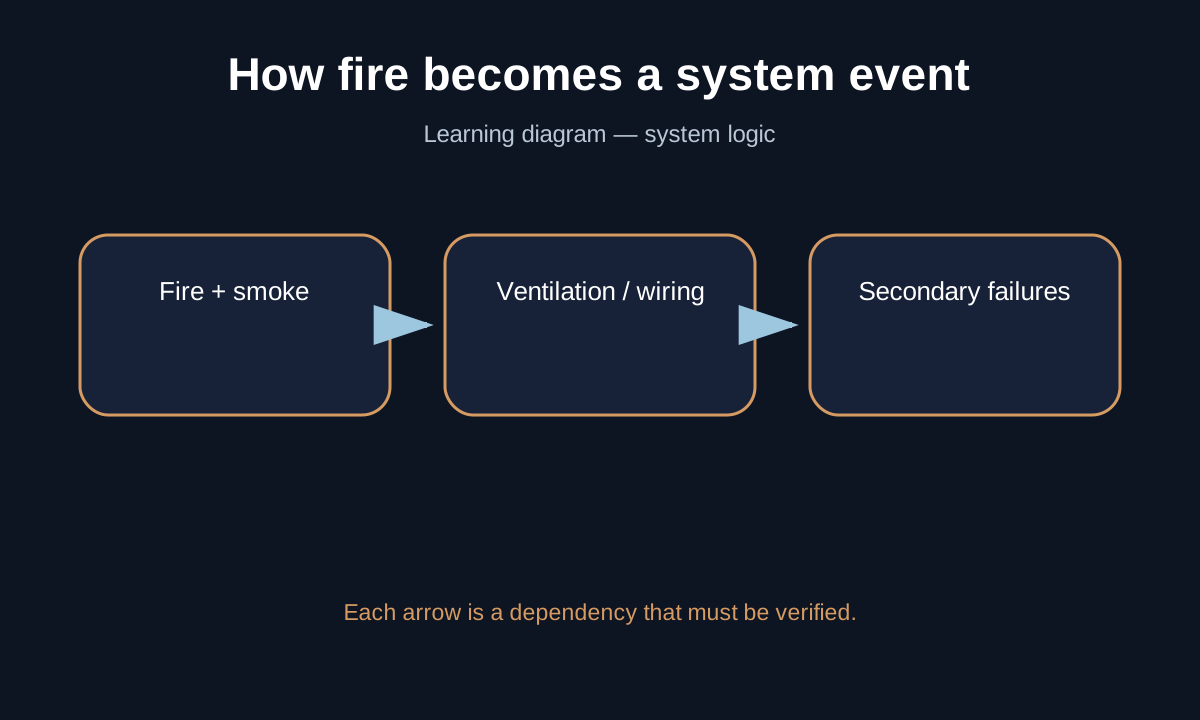
Fire produces heat, smoke, combustion gases, particles, and degraded materials. In a closed habitat, ventilation can carry those products far from the ignition point, and a detector outside the actual flow path may respond late.
The first task is to detect, identify the compartment, remove relevant energy or fuel sources, control ventilation, and prevent spread. Each action has secondary effects: stopping ventilation changes CO₂ and thermal control; isolating a module may remove a critical function.
Why ventilation is both friend and enemy
Ventilation mixes the atmosphere and helps sensors sample what the crew breathes, but it can also transport smoke and oxygen toward a fire. Fire modes therefore need designed dampers, zones, and flow rates.
Detector placement should be validated against airflow tests and models rather than simple geometric rules. NASA studies flame spread, smoke production, and material behavior in reduced gravity specifically to improve human-spacecraft safety.
Fire can become an electrical failure and then a life-support failure
Damaged wiring can short; de-energizing a sector can stop pumps, sensors, or servers. The dangerous consequence may therefore appear after the flame is out: lost thermal control, atmosphere processing, or local communications.
Dependency maps need to show which services cross each compartment. A technical-room fire should not eliminate both main and backup power because their cables share the same route.
Extinguish, confine, ventilate: sequence depends on the case
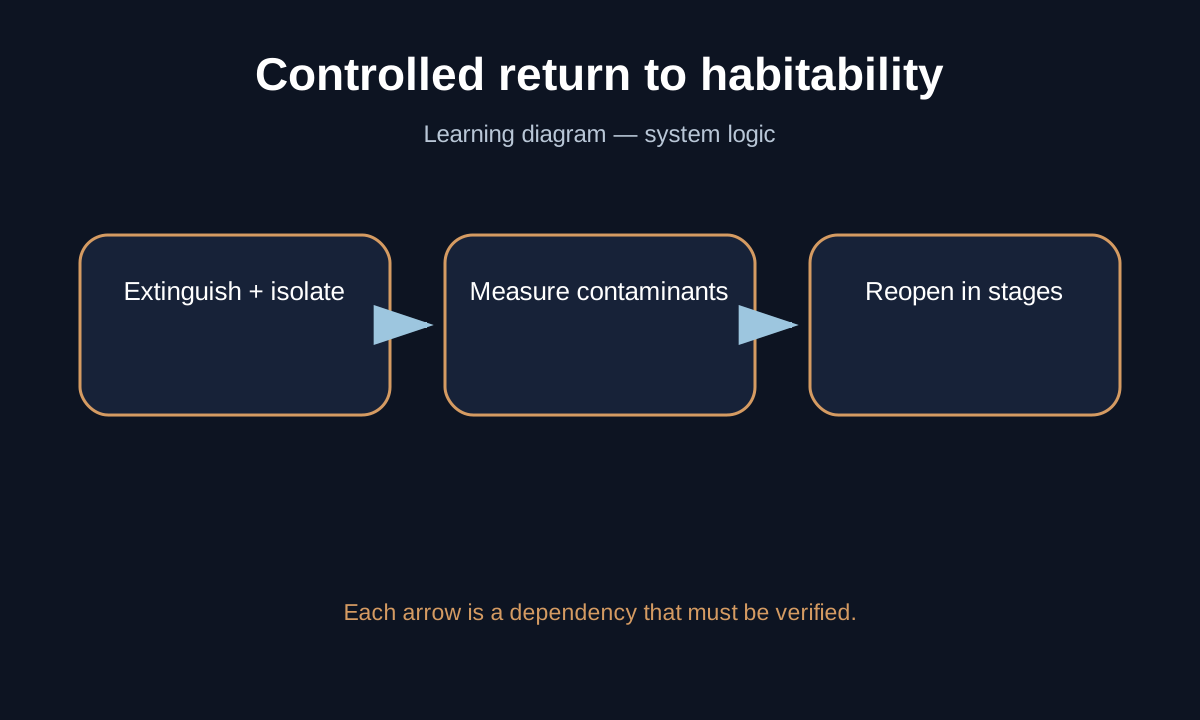
Extinguishment attacks the fire, but crews must then verify residual temperature, reignition risk, and contaminant concentration. Reopening a zone too early can reintroduce oxygen or distribute combustion products.
A settlement needs an atmosphere-reconfiguration plan: which loops recirculate, which are isolated, which filters are sacrificed, how clean air is verified, and where residents from a sealed compartment can live.
Estimate filtered-air endurance after isolation
LEARNING CALCULATION — ASSUMPTIONS ARE EXPLICIT
Learning scenario: after a fire, a refuge volume has 12 filter cartridges. Each cartridge provides 6 hours under the exercise conditions.
Gross endurance: 12 × 6 = 72 hours. If doctrine requires 25% to remain as unplanned reserve, usable planned capacity is 72 × 0.75 = 54 hours. The factor 0.75 comes from 1 − 0.25.
This is not a real filter sizing calculation. It teaches the difference between nominal capacity and operational capacity after an explicit margin.
After the fire: find the cause, not only the damage
The event should trigger technical investigation: electrical origin, material, procedure, contamination, maintenance error, or combination. Replacing a burnt cable without understanding why it overheated prepares the next failure.
Equipment exposed to smoke or heat also needs inspection even if it still operates. Sensors, polymers, or connectors may have lost life margin and become the origin of a later event.
Decision questions specific to this hazard
- What path does smoke actually follow with ventilation in each operating mode?
- Which power, fluid, or data services cross the fire compartment and disappear when it is isolated?
- How is extinguishment and absence of hidden hot spots verified?
- What refuge or filtration capacity remains after operational margins?
- Which measured criteria allow a contaminated compartment to be reopened?