


MARS BIBLE — RISK & RESILIENCE
Food crisis on Mars: greenhouse loss, stocks, and nutritional continuity
A settlement is not food-secure when it harvests its first crop; it becomes resilient when it can lose a crop without endangering the crew.
NASA studies deep-space food systems that preserve nutrition, quality, and variety without frequent resupply. Mars food production adds a powerful local capability and new dependencies: light, water, nutrients, seeds, climate control, pollination, and biosafety.
Local production is not the same as food security
A highly productive greenhouse can be vulnerable if every crop shares the same nutrient solution, room, or genetics. Disease, contamination, or pump failure could then affect much of production at once.
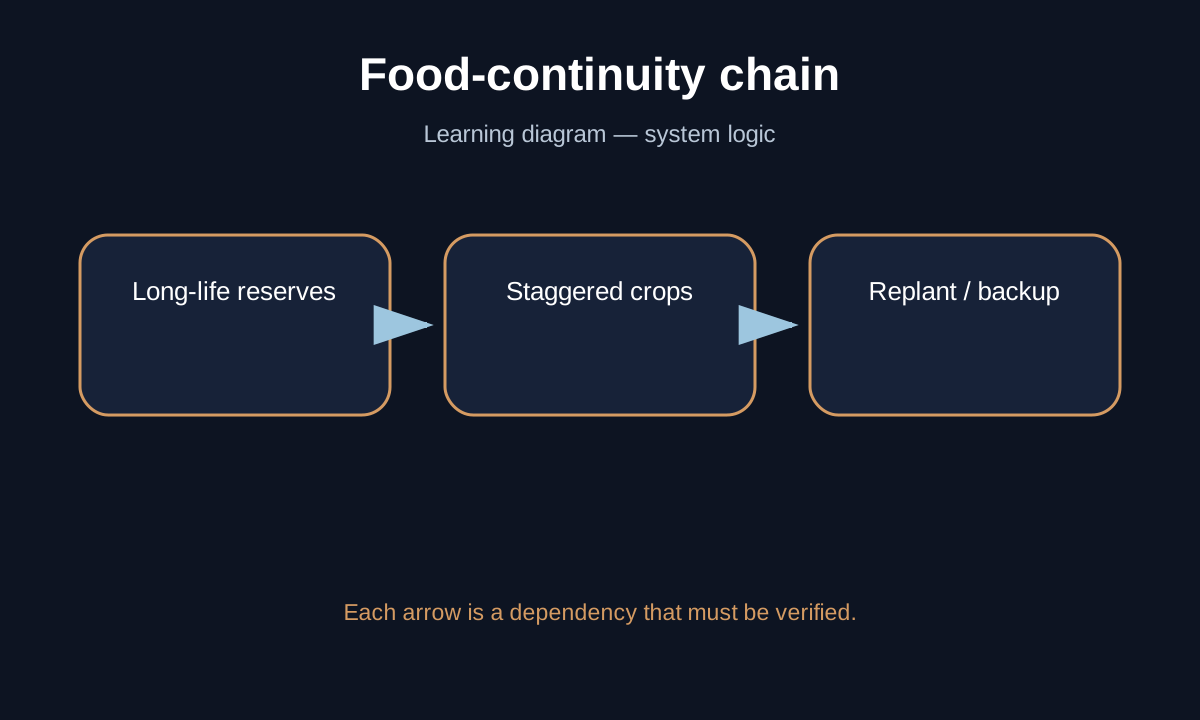
Food resilience combines long-life stored food, crops with different cycles, seed reserves, replanting capacity, and processing. Calories alone are insufficient; protein, fats, micronutrients, and menu acceptability must also be tracked.
Biological time is slow
A repaired machine may restart in an hour; a lost crop may need weeks or months before the next harvest. That biological inertia requires food reserves far longer than the technical repair time.
Planning should use harvest calendars. If several crops mature in the same week, they can create a peak followed by a gap. Staggered planting spreads risk and makes future food coverage measurable.
Light, water, and nutrient failures cascade differently
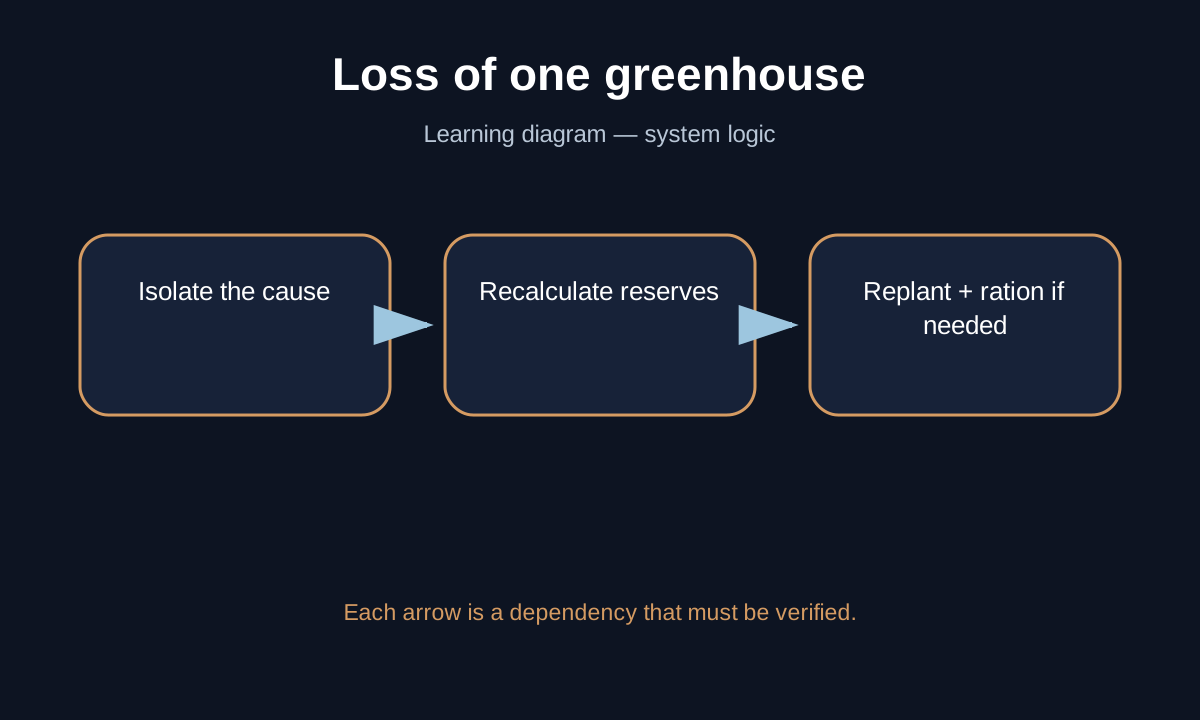
Electrical failure reduces lighting and may stop pumps and thermal control. Water contamination can isolate a loop. Nutrient-formulation error may harm plants without immediate alarm. Each scenario needs different sensing and reserves.
Food systems therefore belong in energy-shedding plans. Turning off a greenhouse for two hours is not equivalent to ten days. Decisions must reflect crop state and whether the biological cycle can recover.
Diversify crops and physical locations
Diversity is not only culinary. Different species and varieties have different diseases, cycles, temperatures, and needs. Separating production across volumes reduces the chance that one physical event destroys everything.
Diversity also increases skills, seeds, and maintenance complexity. The trade must be explicit: how many crop families are needed for nutrition and resilience without making agriculture unmanageable?
Convert food inventory into days of coverage
LEARNING CALCULATION — ASSUMPTIONS ARE EXPLICIT
Simplified exercise: 20 people have 7,200 person-day food rations in storage. One ration-day represents one person’s food for one day in the model.
Endurance: 7,200 ÷ 20 = 360 days. If 15% must remain protected for a second emergency, planned inventory is 7,200 × 0.85 = 6,120 person-days, or 6,120 ÷ 20 = 306 days.
This says nothing about nutritional completeness, shelf life, or variety. It teaches nominal quantity versus usable endurance after reserve.
Operational data must update the agricultural model
Every harvest produces data: actual yield, crew time, water, energy, disease, waste, taste, and storage performance. Those observations should progressively replace early assumptions.
The settlement can then use realistic margins instead of repeating theoretical yield. One unusually good season should not become the design baseline without considering variability and adverse cases.
Decision questions specific to this hazard
- How many days of nutritionally complete food remain if one greenhouse is lost today?
- Which nutrients become limiting before total calories?
- Do greenhouses share water, atmosphere, seed stock, or control software?
- How many days separate replanting from the next usable harvest?
- Which measured crop-yield data have replaced original design assumptions?