


MARS BIBLE — RISK & RESILIENCE
Outbreak and habitat microbiome on Mars: isolate disease without disabling the settlement
A Mars settlement is also a closed microbial ecosystem: humans, water, air, surfaces, and waste continuously exchange microorganisms.
NASA studies microorganisms in space environments because closed habitats change interactions among microbes, humans, and materials. On Mars, transmissible disease or microbial drift can threaten both health and availability of the people who operate critical systems.
Separate one illness from a collective event
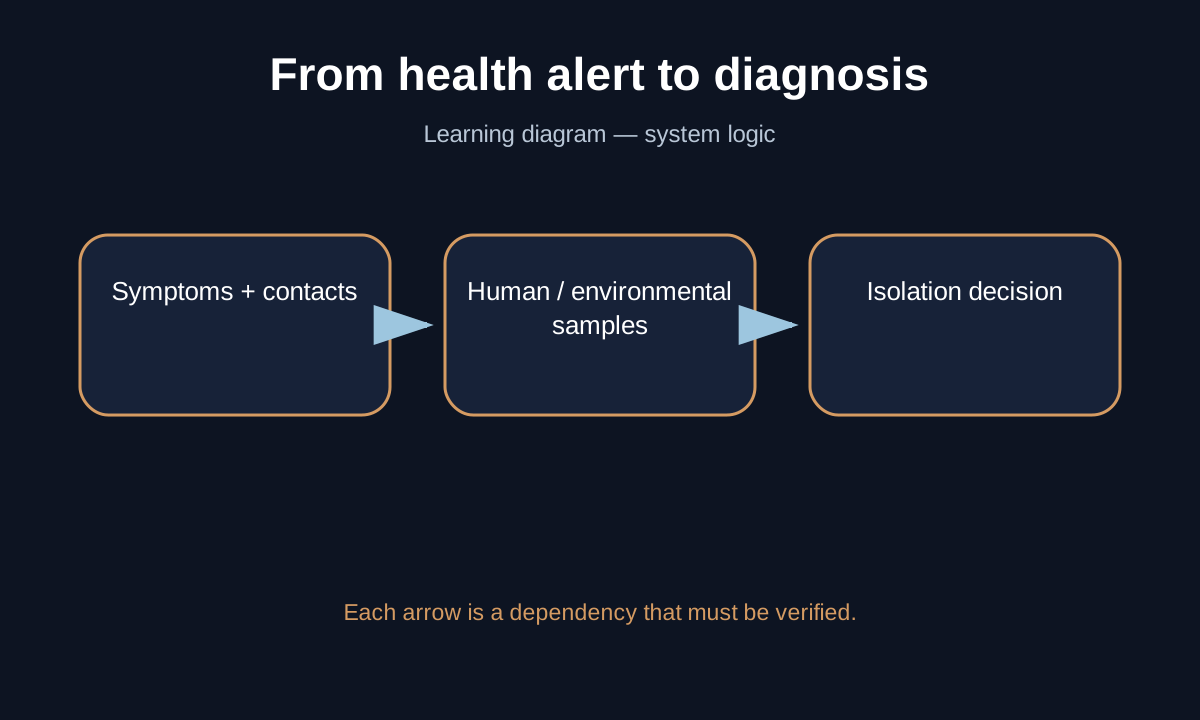
One fever is not automatically an outbreak. The first task is to define symptoms, timing, contacts, locations, and common exposures. Contaminated water, food, surfaces, or ventilation can produce several cases without direct person-to-person transmission.
Diagnosis must therefore combine medicine and environment. Water, surface, and air samples can complement clinical tests. The settlement needs enough local laboratory capability to make first decisions before Earth advice arrives.
Medical isolation can create a workforce failure
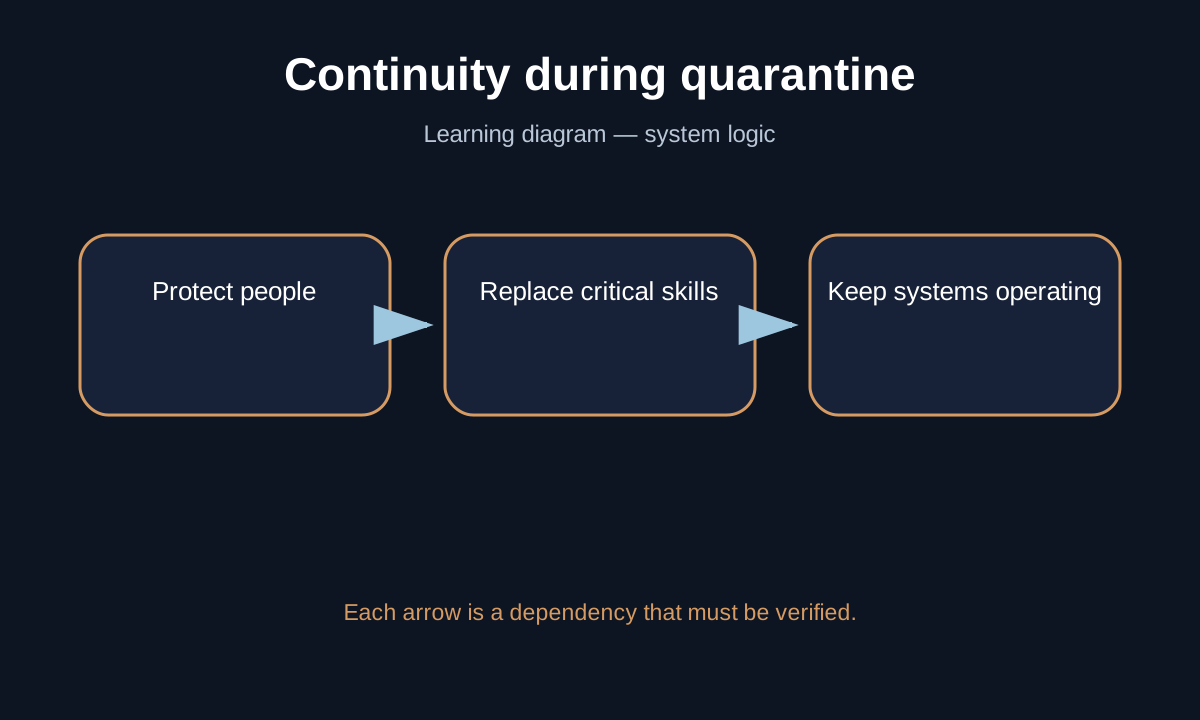
In a 20-person crew, isolating five specialists removes 25% of personnel. If those people share the same critical skill, operational consequence can be much worse than the percentage.
Biosafety planning should therefore connect to a skills matrix: who can operate ECLSS, power, medicine, software, or maintenance when the primary expert is sick? Human cross-training is a safety function.
Track the habitat microbiome over time
A habitat is never sterile. Microbial communities occupy surfaces, water systems, and human environments. The objective is not to eliminate everything but to detect concerning change, pathogens, and locations where moisture or materials promote unwanted growth.
A time series is more informative than one isolated sample. If a species or marker rises gradually in a duct, filter, or wet area, maintenance can intervene before crew symptoms appear.
Quarantine without breaking life-critical operations
An isolation area needs air, water, waste handling, communications, medication, and monitoring while minimizing contacts. Full separation may require clean circuits or transfer procedures that ordinary habitats do not have.
Engineering must define how food and equipment enter, waste leaves, medical examinations occur, and a critical patient transfers without contaminating the rest of the base. Clean and dirty routes should exist before the first emergency.
Measure quarantine impact on staffing
LEARNING CALCULATION — ASSUMPTIONS ARE EXPLICIT
Exercise: 24 people live in the base and six must isolate. Unavailable fraction is 6 ÷ 24 = 0.25, or 25%.
Now suppose three of those six are the only qualified operators of one system. Risk can no longer be summarized as “25% of staff”; that function may fall to zero capability.
The simple calculation is only the entrance. A useful model links people to qualifications and tests functional redundancy.
Learn from each episode without over-reacting
After the event, the settlement should identify what actually reduced risk: filtration, cleaning, isolation, treatment, procedural change, or simply the natural end of the event. Otherwise burdensome measures may become permanent without evidence.
Medical and microbiological data are sensitive. Governance needs rules for access, anonymization when aggregate data are enough, and the balance between community health and individual rights.
Decision questions specific to this hazard
- Do cases share a person, water source, food, room, or ventilation path?
- Which critical skills disappear when affected people are isolated?
- What independent sample distinguishes human transmission from an environmental source?
- Can quarantine operate for days without frequent physical exchange with the rest of the base?
- What measured criteria end isolation and prevent open-ended quarantine?