


MARS BIBLE — RISK & RESILIENCE
Stranded rover far from base: endurance, rescue radius, and return on Mars
The farther a rover extends human reach, the farther the settlement must extend recovery capability at the same time.
Pressurized vehicles and EVA rovers enable exploration and maintenance far from base, but wheel, battery, software, collision, or terrain failures can immobilize them. Distance travelled then becomes a rescue liability rather than a performance achievement.
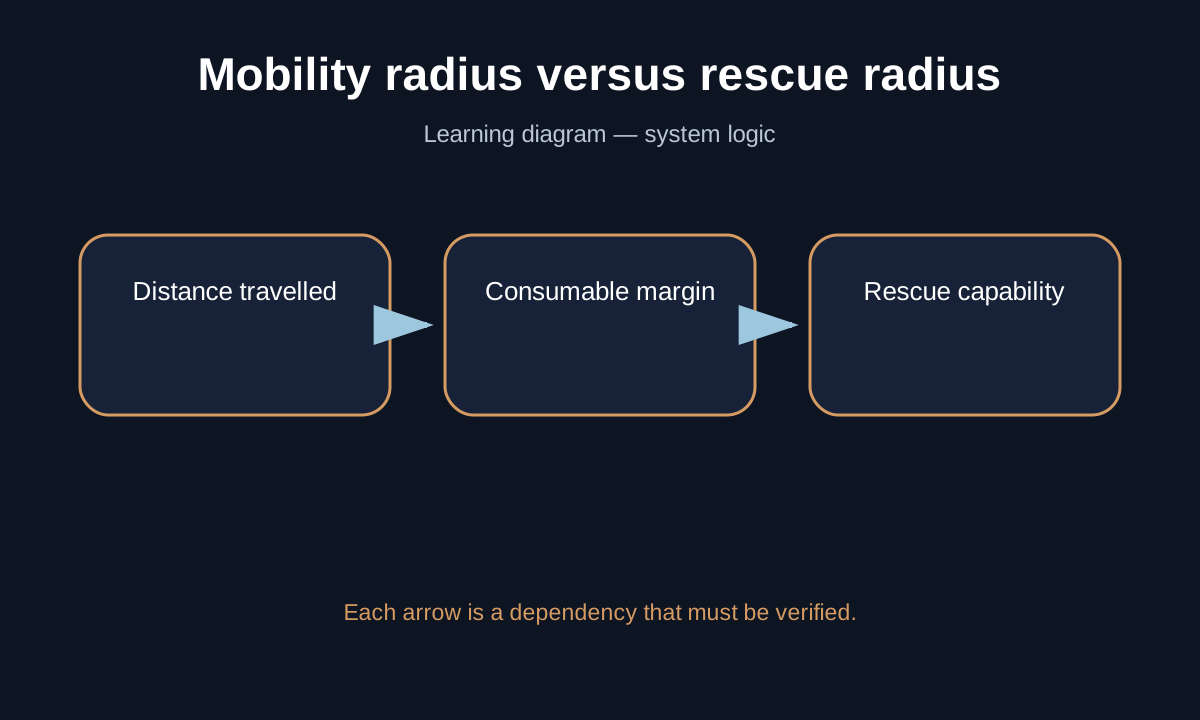
Operational radius should be smaller than maximum range
A rover capable of 200 kilometres should not simply be allowed 200 kilometres from base if no rescue can reach it or consumables cannot support the wait. Planning separates mechanical range, energy endurance, and human endurance.
Safe radius depends on the assumed failure: return in a second vehicle, wait for rescue, partial EVA walk, robotic delivery, or field repair. Each mode needs different reserves and routes.
Why “battery at 60%” is not enough
State of charge does not directly tell remaining distance. Terrain, heating, speed, payload, degradation, and temperature change energy use. Reserve energy therefore needs to be translated into hours or kilometres under adverse planning conditions.
A pressurized rover adds life-support loads that continue even when the wheels stop. Loss of traction can therefore become an atmosphere or thermal emergency hours later unless survival power is protected.
Cross rescue: a second rover must reach the first
Two identical vehicles travelling together on the same route may share terrain or software failure. The rescue vehicle may need to remain separated, use another route, or have meaningful architectural diversity.
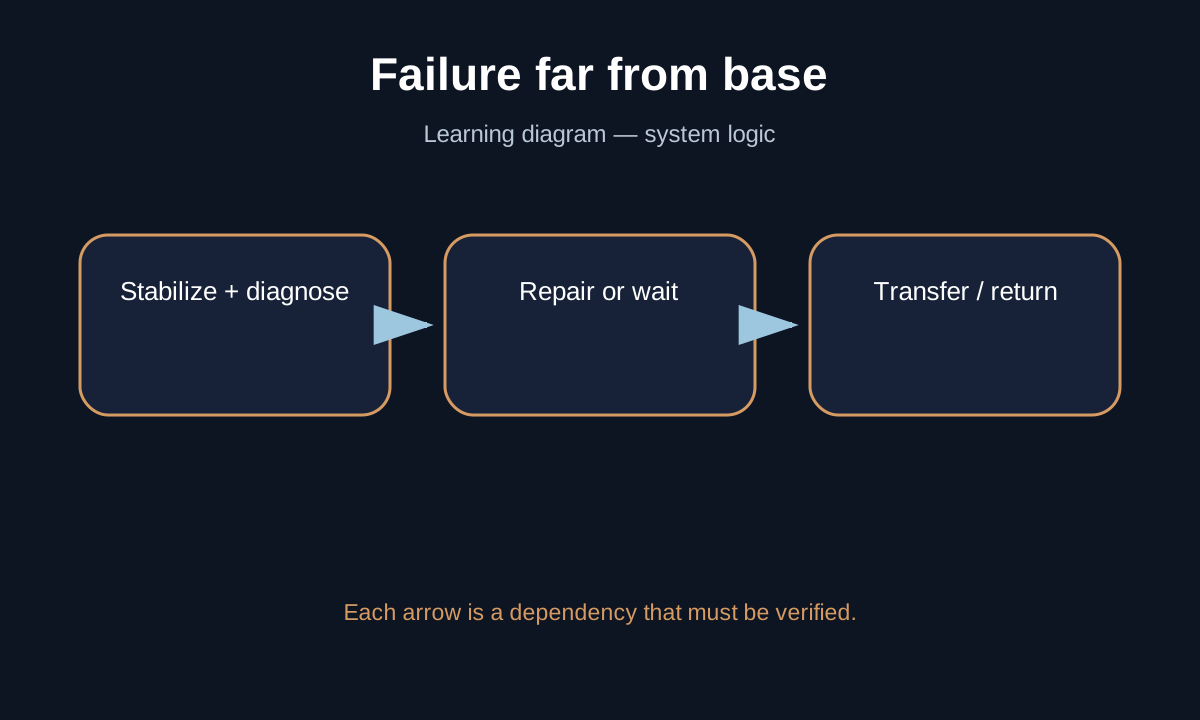
Recovery may mean transferring the crew and temporarily abandoning the failed rover. The rescue vehicle must then have seats, volume, life support, and energy for additional people.
Repair in place or evacuate?
Field repair consumes EVA time, tools, parts, and portable life support. A long troubleshooting attempt can use the margin that once made safe return possible. Doctrine needs a point where repair stops and rescue mode begins.
Remote diagnosis can help through telemetry, fault codes, cameras, electrical measurements, and digital twins, but local autonomy remains necessary when Earth-Mars communications are delayed or interrupted.
Calculate a simple rescue radius
LEARNING CALCULATION — ASSUMPTIONS ARE EXPLICIT
Exercise: a rescue rover can travel 160 km under the selected adverse conditions. To reach the stranded crew and return, it must make an out-and-back trip. Without margin, the failure point can be at most 160 ÷ 2 = 80 km away.
If 25% of range is protected for detours, heating, degradation, and uncertainty, planned total distance becomes 160 × 0.75 = 120 km. The one-way rescue radius becomes 120 ÷ 2 = 60 km.
This shows how margin converts catalogue performance into operational capability. A real mission adds terrain, energy profile, time, redundancy, and human consumption.
Caches and refuges can reduce critical distance
Surface strategy may pre-place batteries, oxygen, water, parts, beacons, or small shelters at known points. A stranded rover then does not have to survive entirely from its onboard stock.
Caches must themselves be maintained, inventoried, and protected. A resource deposited five years earlier is not automatically available: aged batteries, degraded seals, or inaccessible terrain can make it fictitious.
Decision questions specific to this hazard
- Is the authorized radius based on one-way range or on round-trip rescue range with margin?
- How many hours does life support operate if main traction is completely lost?
- Can the rescue rover carry the additional crew without exceeding its own resources?
- At what point must field repair stop to preserve return margin?
- Have emergency caches been physically verified recently rather than merely listed in software?