


MARS BIBLE — RISK & RESILIENCE
EVA accident on Mars: rescue a crewmember who cannot walk
An EVA is truly safe only when the team can bring back a person who can no longer participate in their own rescue.
NASA-STD-3001 requires resources for incapacitated suited-crewmember rescue. On Mars, gravity, terrain, distance, suit stiffness, and portable life-support endurance make that requirement a practical design problem.
The critical scenario: the casualty cannot help
Many normal procedures assume the astronaut can walk, hold a handle, answer the radio, or manage the suit. Serious injury removes those assumptions; the casualty may be conscious but unable to move, or completely unresponsive.
The rescue plan therefore sizes handles, harnesses, sleds, winches, rovers, consumables, and staffing for the selected worst case. Equipment must work with gloves and without unrealistic human strength.
Time is constrained by life support and physiology
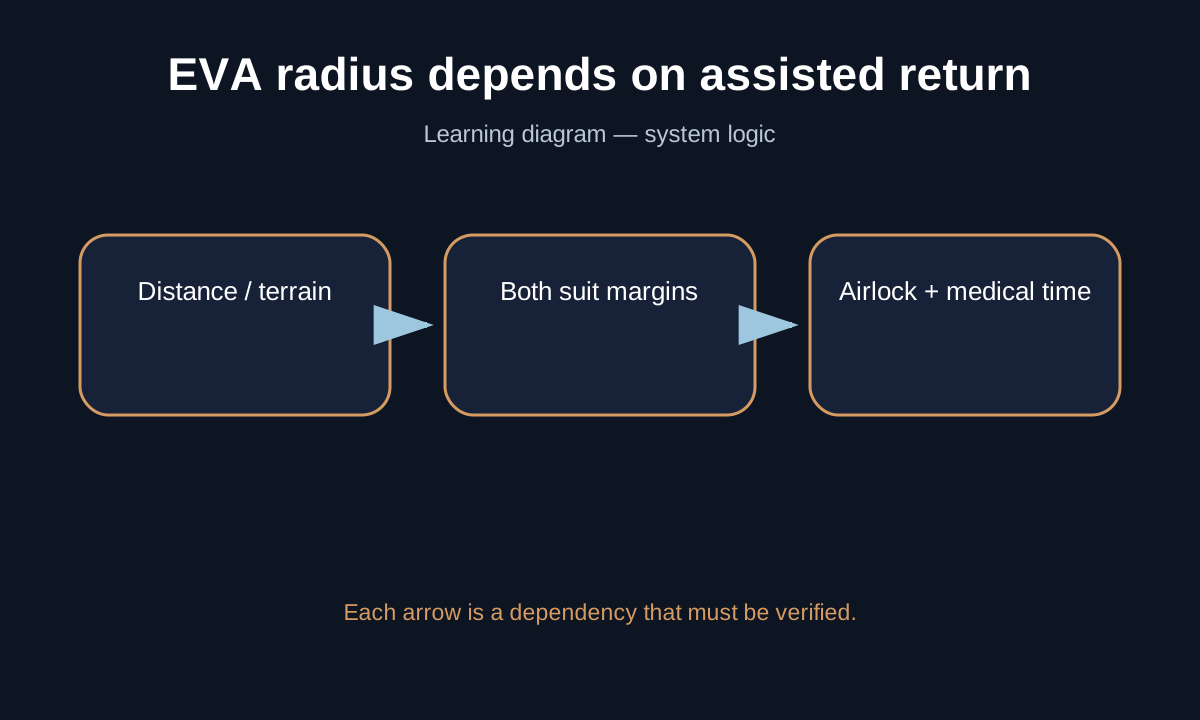
Suit endurance is a clock. Rescue effort raises the rescuer’s consumption, while the casualty may have a leak, abnormal cooling, or different metabolic demand. Both margins need to be tracked.
Maximum EVA distance should therefore not be based only on a healthy astronaut’s endurance. It must include return with an incapacitated person, airlock time, suit doffing, and time to medical stabilization.
Mars terrain: a few hundred metres can become a major problem
Slopes, rocks, soft soil, or obstacles make manual transport costly. A route that is easy outbound can be nearly unusable with an inert casualty. EVA planning should map fallback routes and places where a rover or lifting device can reach.
Robotics may help: logistics rover, teleoperated winch, beacon, or another local mobility aid. But no device should count as rescue capability until it has been tested with realistic mass and terrain.
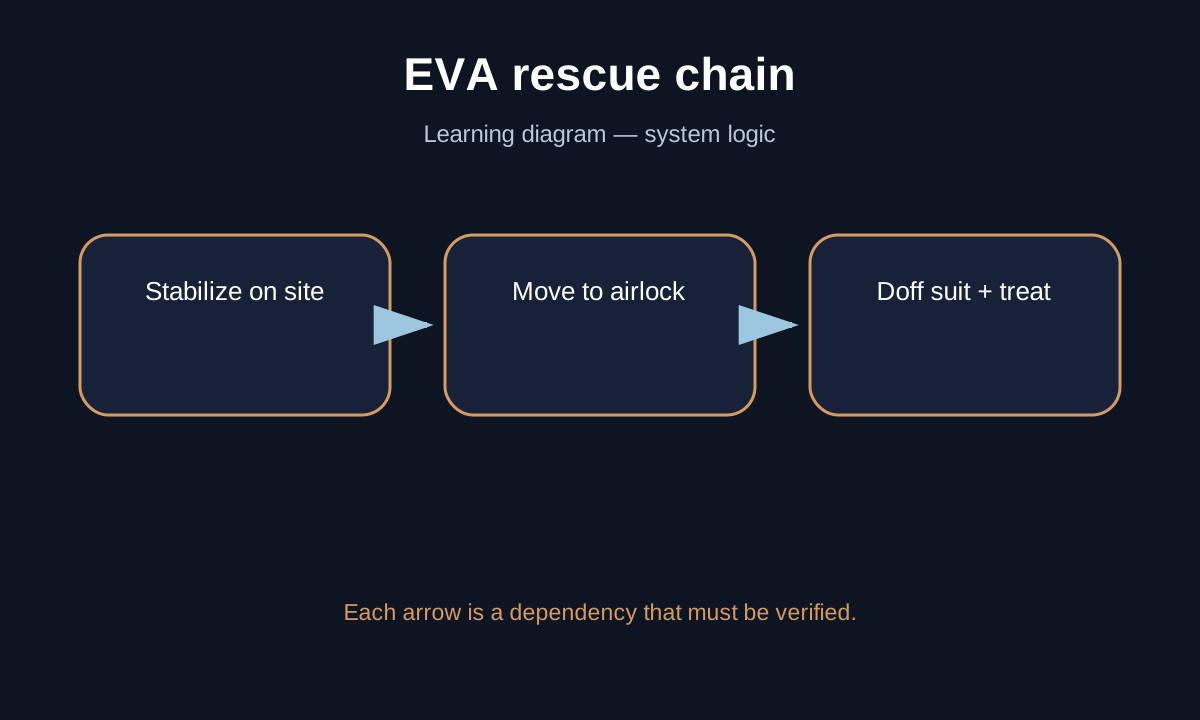
From accident site to medical care: one continuous chain
Rescue does not end at the airlock door. The casualty must enter the chamber, repressurize, be removed from the suit without worsening injury, and reach medical care. Every interface can become the bottleneck.
Airlock and corridor geometry should support stretchers, lifting points, and transfer devices. A base that discovers during an emergency that a stretcher cannot turn a corner has a design failure, not merely an operational inconvenience.
Compare normal walk time with casualty-return time
LEARNING CALCULATION — ASSUMPTIONS ARE EXPLICIT
Exercise: the team is 1.8 kilometres from base. Normal walking speed is assumed to be 3 km/h. Return time is 1.8 ÷ 3 = 0.6 h, or 0.6 × 60 = 36 minutes.
With an incapacitated casualty, suppose tested transport speed is represented in the exercise as 0.9 km/h. Time becomes 1.8 ÷ 0.9 = 2 h, or 120 minutes.
The value 0.9 km/h is not universal; it is a learning assumption. Real mission planning needs measured performance from representative rescue trials.
Train the worst case, not just demonstrate hardware
A winch stored on a shelf is not rescue capability. Crews need drills with a simulated casualty, degraded communications, gloves, reduced visibility, and a real airlock configuration.
Tests reveal the small details that break procedures: unreachable connector, undersized handle, insufficient battery, rescuer fatigue, or omitted repressurization time. Each drill should feed hardware or procedural changes.
Decision questions specific to this hazard
- What maximum distance still allows recovery of a completely unresponsive crewmember?
- How much suit endurance remains for the rescuer after casualty transport?
- Has the rover, winch, or harness been tested with representative mass?
- Can the casualty pass through the airlock and corridors without unsafe repositioning?
- How many minutes separate the accident from actual medical stabilization?