


SPACEX — TRANSPORT, REUSE AND SCALE
Elon Musk, SpaceX and Mars: from reusable rockets to a city
Musk’s distinctive place in modern Mars history is not inventing the idea of settlement. It is the attempt to make heavy space transport reusable, refuelable and frequent enough to change the economics of building an off-world industrial society.
Transport economics comes before urban economics
A rare science mission can tolerate very high cost per kilogram. A city cannot. It must move habitats, power systems, people, machines and industrial seed cargo for decades. SpaceX therefore made reusability central to its strategy, first demonstrated operationally with Falcon 9 first stages and pursued at much larger scale with Starship.
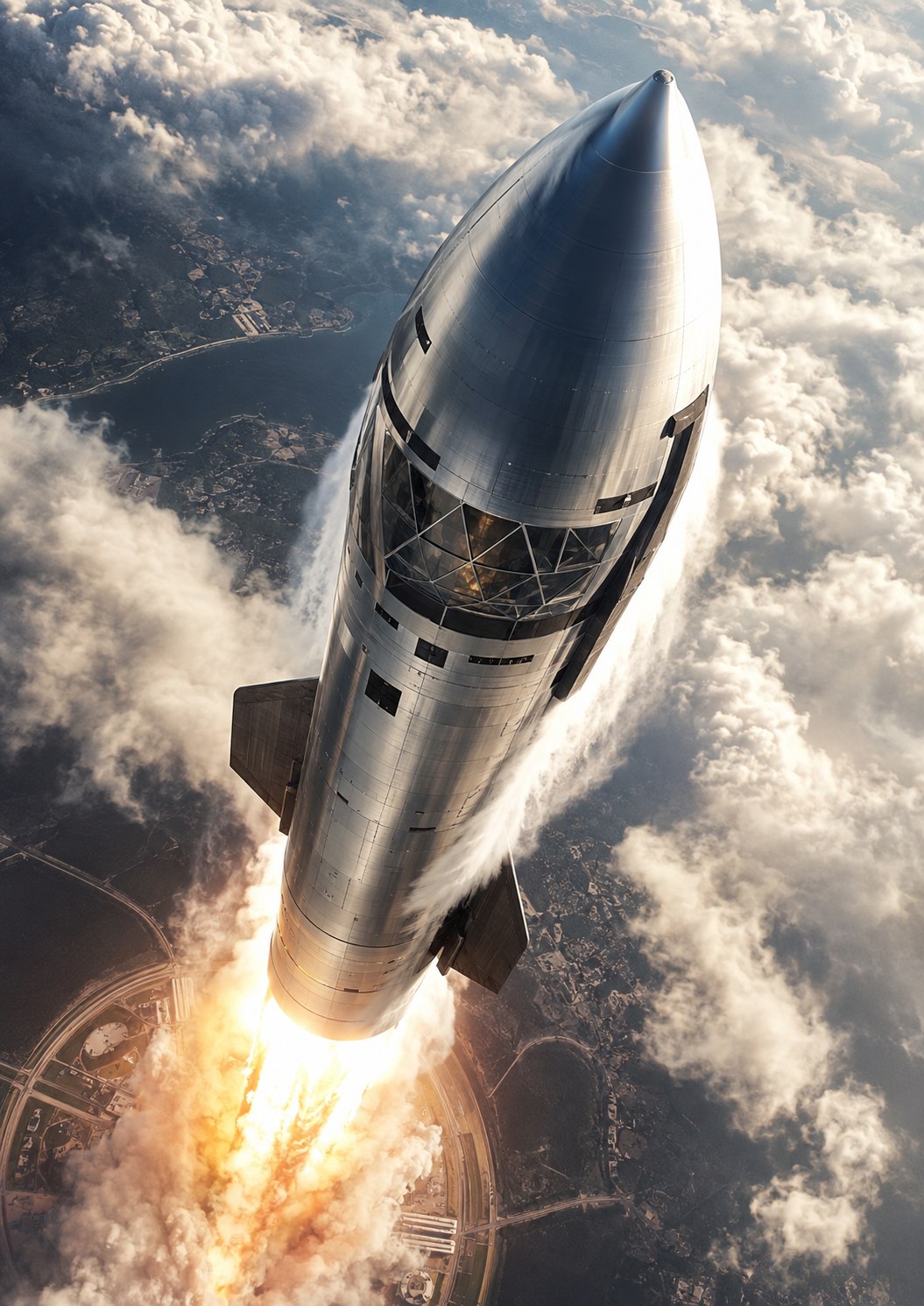
Starship: separate demonstrated milestones from the full objective
Integrated Starship testing demonstrates individual development milestones. An operational Mars transport chain additionally requires human-rated reliability, high flight rate, large-scale orbital refilling, long-duration cruise, Mars heavy EDL, surface operations and return capability. One successful test does not validate the full chain; one development failure does not automatically invalidate the architecture.
Orbital refilling is a core architecture function
A heavy spacecraft reaching Earth orbit may not retain enough propellant for interplanetary departure. SpaceX therefore plans multiple tanker flights and cryogenic propellant transfer in orbit. That turns “one Mars rocket” into a coordinated launch campaign with rendezvous, fluid transfer, boil-off control and schedule dependencies.
Methane and oxygen made on Mars
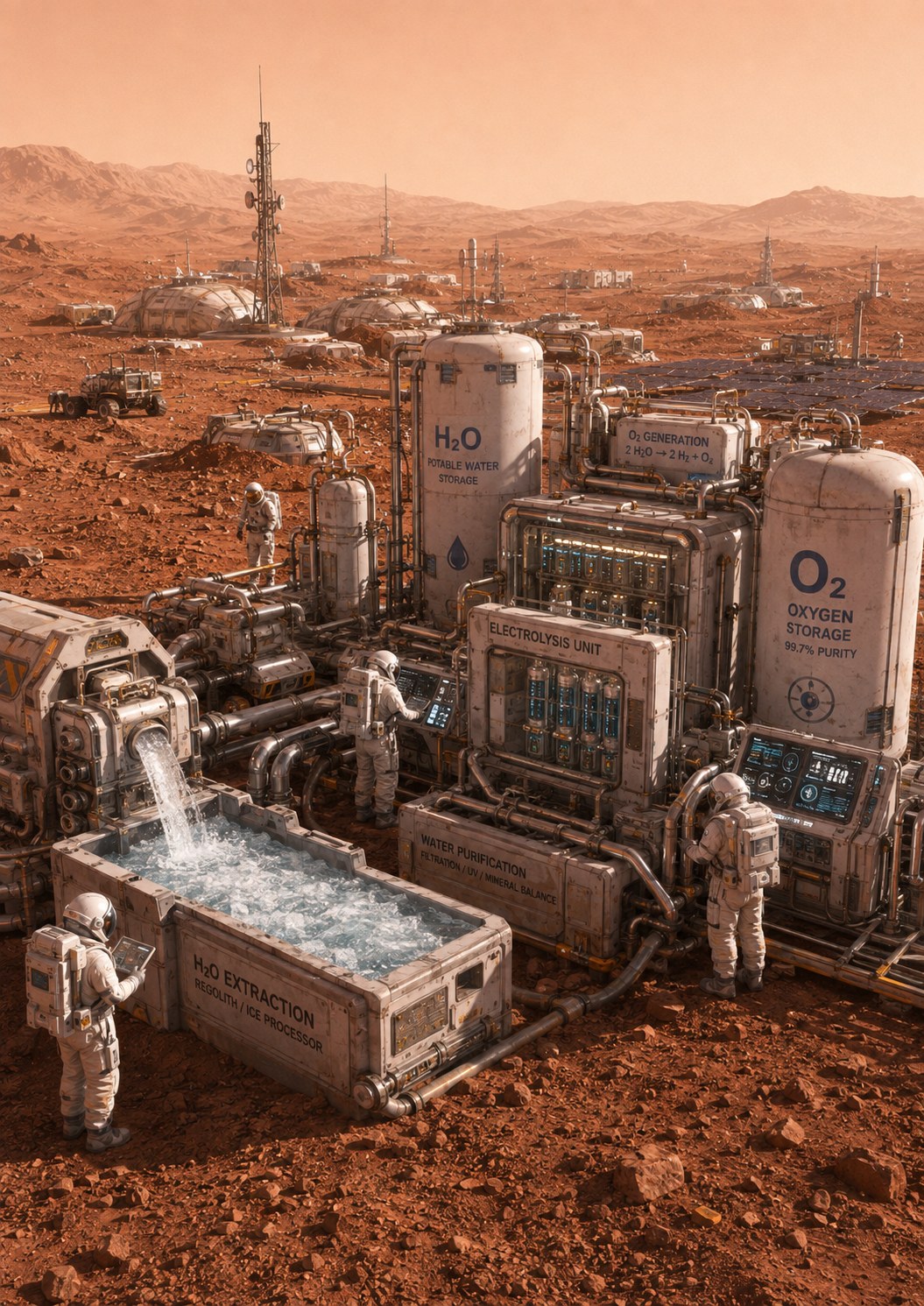
Raptor’s methane/oxygen propellants fit an architecture using Martian water and atmospheric CO₂. Sabatier chemistry and electrolysis are known; a settlement still needs an industrial plant that extracts water, runs continuously, purifies products, liquefies propellants, stores them and can be repaired.
Mission versus city
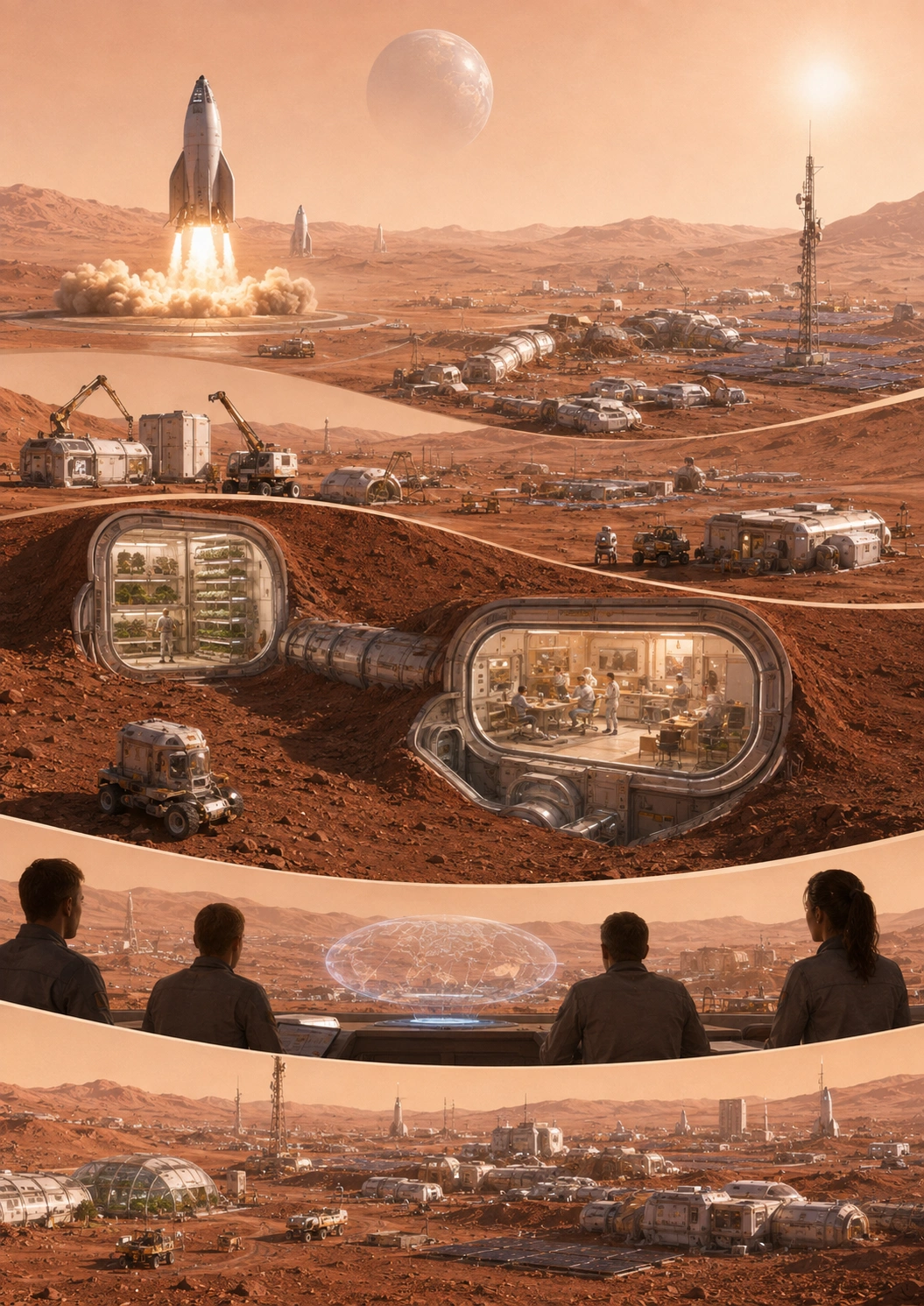
SpaceX explicitly frames its goal as making life multiplanetary and enabling a civilization on Mars. That is much larger than a landing mission. A civilization requires energy, water, food, health, education, law, demography, manufacturing and the ability to replace life-support machines. Transport is necessary, never sufficient.
Schedules are sourced objectives, not guarantees
SpaceX and Elon Musk regularly publish schedule targets. These can change with test results, regulation and engineering progress. The proper encyclopedia treatment is to date and attribute each target, then separately track demonstrated capability.
“Musk funds Mars” is too simple
SpaceX is privately organized and has a Mars-oriented mission, but it also earns commercial revenue and holds major public contracts for specific programs. NASA’s 2021 SpaceX HLS award was worth $2.89 billion and the 2022 Option B modification about $1.15 billion. Those are lunar Artemis contracts, not public funding for a Mars city.
Financial analysis should separate company capital, launch revenue, public contracts, shared technology development and spending specifically attributable to Mars.
Why reusability matters
Reusable transport can amortize vehicle manufacturing over multiple flights if refurbishment remains manageable. The relevant metrics are flight count, turnaround effort, maintenance cost, loss rate and reliability — not the word “reusable” by itself.
The hidden industrial layer
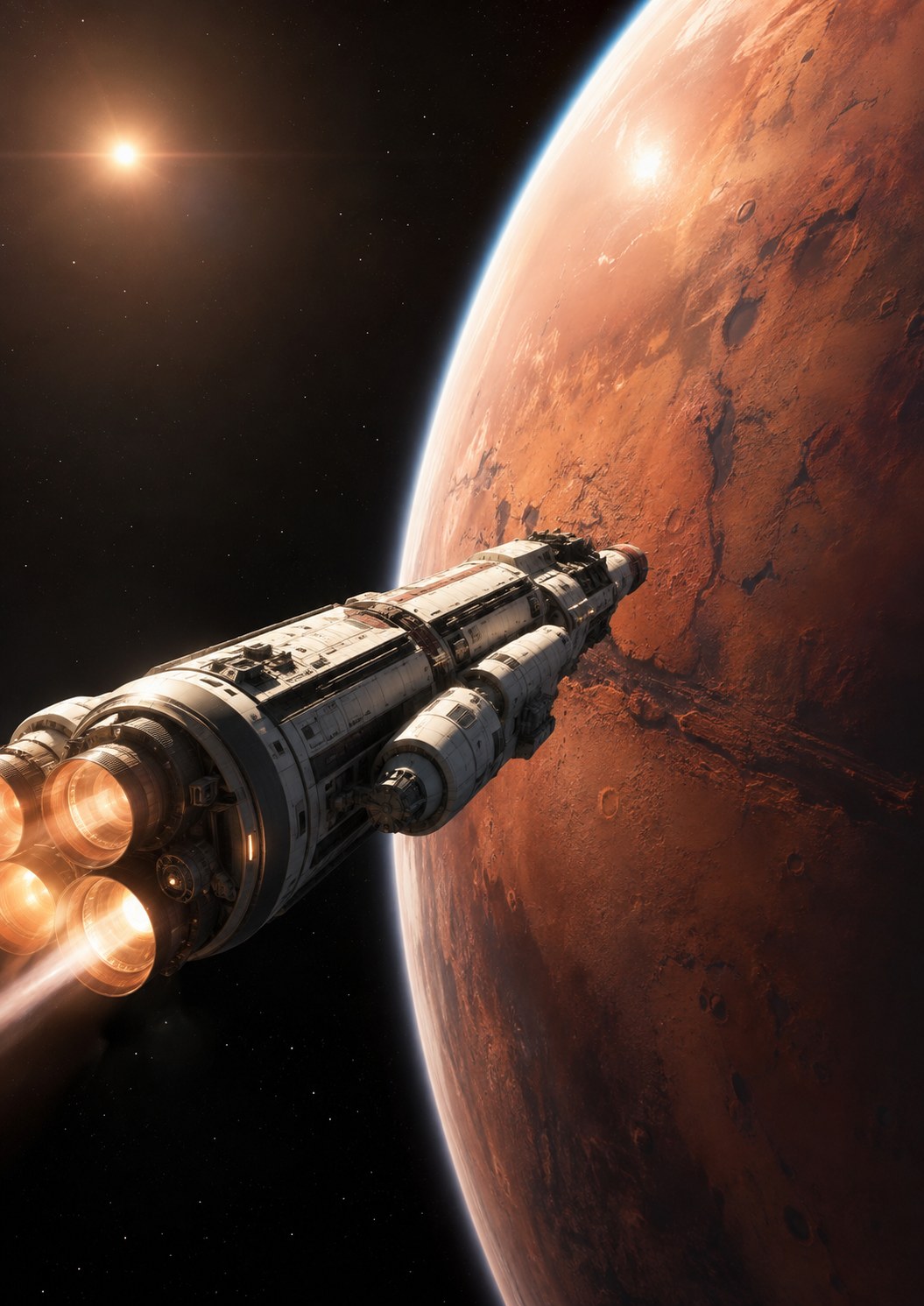
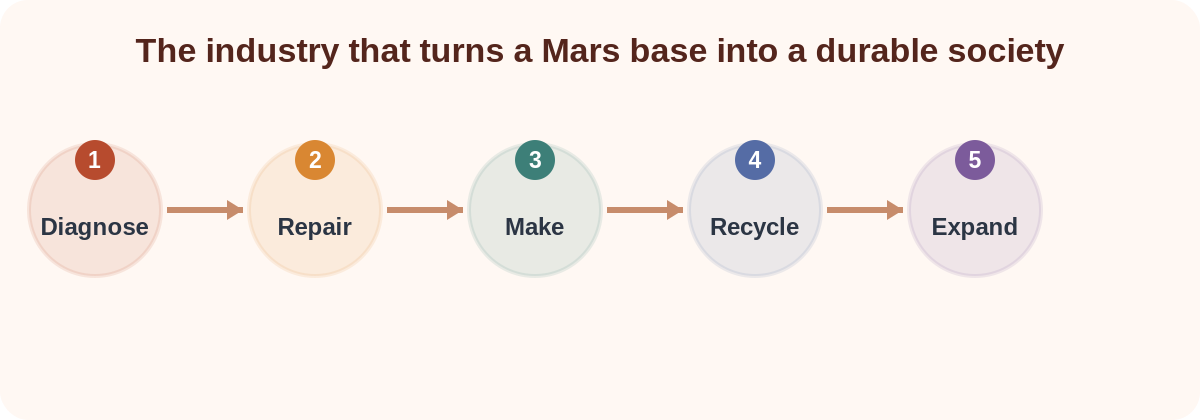
City renderings rarely show pump shops, calibration benches, seal inventory, machine tools, chemical laboratories and thousands of spare references. The settlement becomes an economy when delivered mass increasingly consists of machines that make supplies and eventually machines that make other machines.
A single transport provider is a systemic risk
A settlement dependent on one vehicle family, one company or one launch location has an institutional single point of failure. Long-term resilience points toward multiple suppliers, compatible interfaces and strategic stocks that can absorb long interruptions.
Von Braun, Zubrin and Musk ask different questions
Von Braun asked how to organize a complete expedition. Zubrin asked what mass can be removed by producing resources locally. Musk asks how the remaining transport can become reusable and high-rate. A settlement must answer all three.
Vision is not a technical source by itself
SpaceX is the primary source for SpaceX objectives; NASA is the primary source for NASA contracts and human-risk standards; technical literature supports engineering performance. A famous person’s confidence never substitutes for evidence.
Orbital refilling creates its own reliability mathematics
If one Mars departure depends on several successful tanker flights, the probability of completing the campaign depends on the reliability and schedule margin of the whole sequence. High launch cadence can compensate for individual delays only if spare vehicles, pads and propellant production are available.
This is why “fully reusable” and “rapidly reusable” are different engineering claims. A vehicle that technically flies twice may still be too slow or expensive to support a large refilling campaign.
Mars landing is not solved by Earth landing
A vehicle that can re-enter Earth’s atmosphere and land does not automatically possess a demonstrated Mars EDL system. Mars has lower gravity, a much thinner atmosphere, different entry speeds, dust and no prepared terrestrial recovery infrastructure. Human-class payloads require navigation, thermal protection and terminal descent to work at unprecedented mass.
Settlement logistics add another constraint: repeated landings near existing infrastructure without allowing a failed vehicle or plume debris to destroy the city. Landing zones become part of urban planning.
The settlement has to outlive the founder
A self-sustaining city cannot depend on one chief engineer, one corporation or one generation of enthusiasm. It needs institutions that preserve technical knowledge, train successors, document changes, investigate failures and maintain interfaces even if ownership changes.
This is the point where a corporate Mars project becomes a civilization problem. Transport may be developed by a company; long-term life requires law, education, medicine, culture and governance that survive changes in corporate strategy.
What would count as decisive milestones?
Useful milestones include repeated full-stack reuse, routine orbital propellant transfer, long-duration cryogenic storage, uncrewed heavy Mars landing, local water extraction, sustained propellant production, autonomous power recovery, and cargo infrastructure operating through a complete Earth-Mars synod before crew arrival.
These milestones are more informative than a single target date because each removes a specific uncertainty from the settlement architecture.
SpaceX treats Mars as a transport-scale problem
The central SpaceX proposition is not that one spacecraft can establish a city. It is that a settlement becomes less impossible if the same transportation system can fly repeatedly, carry very large payloads and be manufactured at fleet scale. Reuse, orbital refilling and high production rate therefore belong to one economic argument: reduce the cost per useful tonne delivered rather than optimizing a single prestige mission.
Starship must be judged in layers of demonstrated capability
A rigorous Mars page must separate flight-tested vehicle functions from the complete Mars objective. Launches, stage operations, atmospheric return experiments and other milestones can be observed directly. Long-duration crewed interplanetary life support, high-cadence orbital refilling, Mars entry with human-scale payloads, surface turnaround and locally produced Martian propellant are different capabilities and must not be implied merely because they appear in the same architecture.
This distinction protects the reader from two opposite errors: dismissing demonstrated progress because the final city does not yet exist, or presenting the final city as demonstrated because individual vehicle milestones exist.
Orbital refilling changes the mission architecture
A vehicle leaving Earth for Mars needs far more energy than a vehicle merely reaching low Earth orbit. Refilling in orbit separates those functions: launch the Mars vehicle, then deliver additional propellant with tanker flights. The architecture can therefore trade a single extremely large launch vehicle for a repeated launch campaign.
The price is operational complexity. Docking, propellant transfer, boil-off control, scheduling, launch reliability and tanker availability become mission-critical. A Mars fleet depends on the whole refilling campaign, not only on the final departure vehicle.
Why methane and oxygen connect Starship to Martian ISRU
Mars has a carbon-dioxide-rich atmosphere and accessible water ice in some regions. Hydrogen from water can react with carbon dioxide through the Sabatier process to form methane and water; electrolysis can also provide oxygen. That chemical pathway is one reason methane/oxygen propulsion is attractive for a Mars architecture.
But producing gas in a reactor is only the first part of the system. A practical propellant plant must mine or collect feedstock, purify it, run compressors and reactors, reject heat, liquefy or otherwise store products, control contamination, and operate reliably for long periods before a return vehicle depends on it.
Current company statements must be dated and labeled as objectives
As of August 2026, SpaceX’s public Mars material describes cargo missions no earlier than 2028 and publishes a commercial reference of $100 million per metric ton for those missions. These are current company statements and commercial objectives, not evidence that a 2028 Mars landing or the quoted delivery economics have already been demonstrated.
The distinction matters because SpaceX updates its plans as vehicle testing changes. Delta-Sierra should therefore date such claims, link to the company source and avoid turning a planning target into a guaranteed schedule.
Calculation example: transport price is not settlement cost
Using only the current SpaceX reference price as an illustration, 100 metric tons at $100 million per metric ton would equal 100 × $100 million = $10 billion. The × symbol means multiplication. This does not estimate the cost of a Mars city. It excludes development, launch infrastructure, crew systems, surface power, habitats, mining, food, medical systems, spares, insurance, failed missions and every local industrial chain.
The calculation is useful precisely because it prevents a common mistake: even a dramatic reduction in transport cost does not make surface infrastructure free.
A city requires production rate as much as payload capacity
If settlement growth requires hundreds or thousands of tonnes per transfer window, vehicle manufacturing, launch-pad throughput, tanker flights, payload integration and Mars unloading all become parts of the architecture. A vehicle capable of a large payload but produced only occasionally does not create a migration system.
SpaceX now describes Starship manufacturing ambitions at fleet scale. These ambitions should be tracked as industrial targets whose significance depends on demonstrated production rate and flight cadence.
Public contracts and the Mars objective must remain separate
NASA contracts involving Starship, including Human Landing System work, finance specific lunar capabilities and services under Artemis. They should not be described as government financing for a Martian city. At the same time, experience gained through lunar operations may reduce technical risk for some hardware later used in broader deep-space architectures. Both statements can be true without conflating the purposes of the contracts.
The largest risk in a single-provider architecture is common cause
If one vehicle family supplies crew, cargo, tankers and a large share of surface logistics, a design flaw, regulatory grounding or launch-site interruption can affect many missions simultaneously. The more capable the common platform becomes, the more important it is to understand this common-cause exposure.
A mature settlement architecture should therefore preserve strategic reserves, surface production and, where feasible, alternative transportation or recovery paths. Reusability reduces cost only when the reusable fleet itself remains available.
What SpaceX changes — and what it does not solve
SpaceX has made launch vehicle reusability and high flight rate central to the Mars discussion and is explicitly pursuing a self-sustaining Martian city as a company objective. It does not by itself solve radiation biology, long-term partial gravity, closed-loop food, heavy industry, law, planetary protection or multigenerational settlement.
The most useful way to analyze Musk’s contribution is therefore to place transport economics inside the larger system-of-systems. If transport becomes radically cheaper, dozens of previously impossible surface options become testable. The city still has to be engineered.
Primary sources
- SpaceX — Mission: Mars — official Mars objective
- SpaceX — Mars 2026 — current planning presentation
- SpaceX — Starship — vehicle objectives
- NASA — HLS 2021 award — $2.89B lunar contract
- NASA — HLS Option B — about $1.15B lunar modification
- NASA — Moon to Mars Architecture