


MARS BIBLE — RISK & RESILIENCE
Loss of critical logistics stocks: surviving after a Mars warehouse is lost
A stockpile is only a reserve if it survives the accident that makes the reserve necessary.
Fire, impact, contamination, or inventory error can destroy years of accumulated parts, medicines, or consumables in minutes. This chapter covers physical dispersion, verifiable inventory, functional substitutes, controlled cannibalization, and thresholds that trigger rationing.
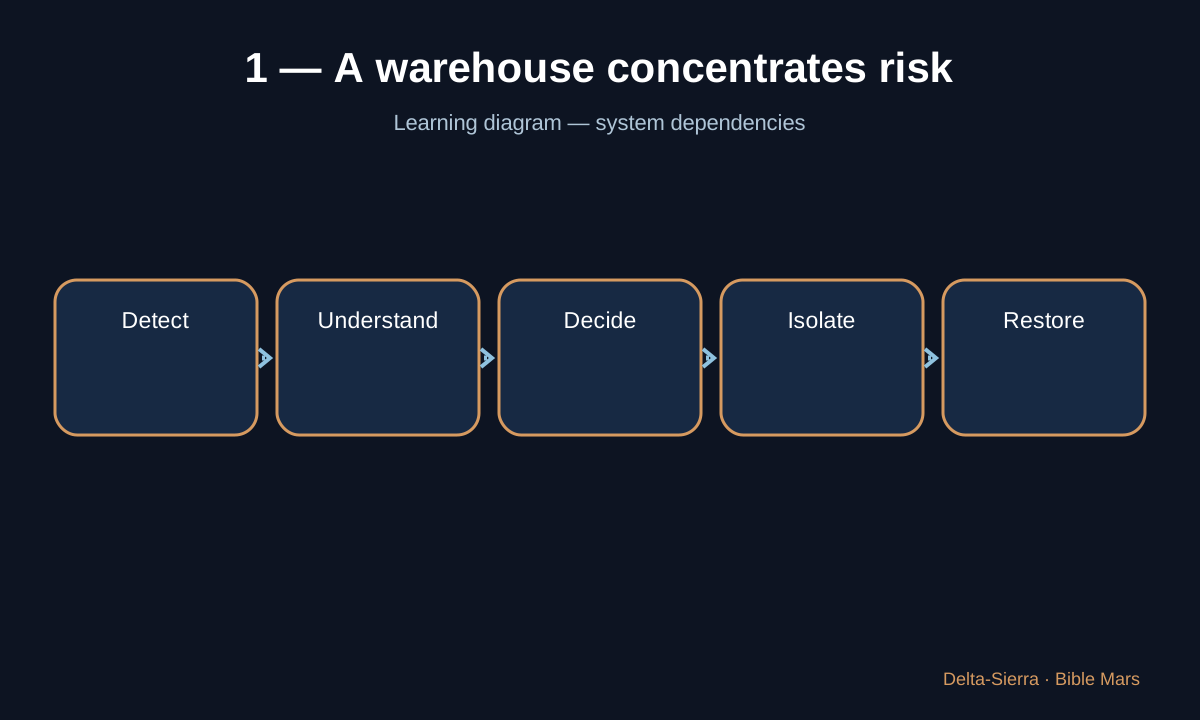
1 — A warehouse concentrates risk
Central storage simplifies logistics but creates a single point: fire, structural failure, or contamination can destroy several backup families together.
Stock value is measured not only in money but in time until replacement becomes possible.
2 — Separate spares that rescue the same systems
Two backup pumps stored on the same shelf are not redundant against warehouse fire.
Items of similar criticality should be distributed across independent zones.
3 — Inventory after loss
Teams need immediate knowledge of what survived, what is inaccessible, and what can be recovered after inspection.
A digital inventory without precise physical location is insufficient.
4 — Cannibalize deliberately
Nonessential equipment can become spare-parts banks for vital systems.
Cannibalization must be recorded to avoid invisible technical debt.
5 — Recalculate minimum stocks
Warehouse loss changes maintenance strategy and may require reducing operations that consume spares.
Local manufacturing capability becomes a survival variable.
6 — Rebuild without recreating the same single point
Replacement storage should be compartmented, monitored, and distributed.
The event must change architecture, not merely restore inventory.
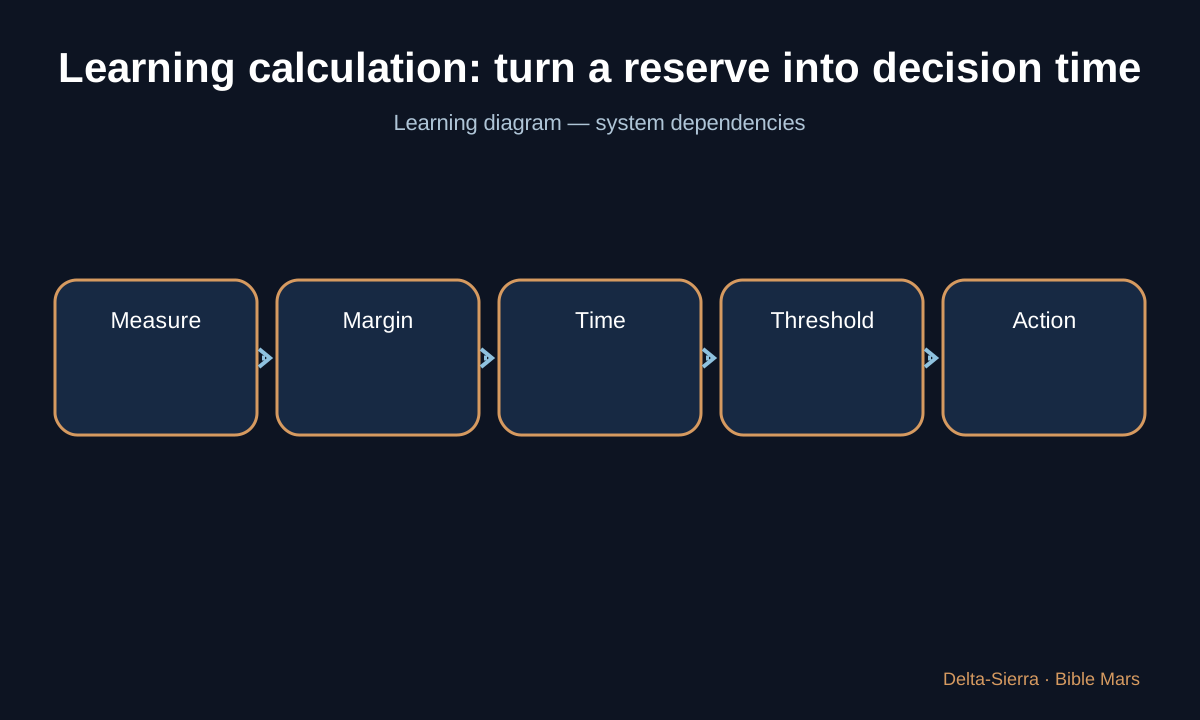
Learning calculation: turn a reserve into decision time
LEARNING CALCULATION — ASSUMPTIONS ARE EXPLICIT
LEARNING ASSUMPTION: 8 critical filters remain; replacement every 18 days.
Nominal endurance = 8 × 18 = 144 days. Reserving two filters leaves 6 × 18 = 108 planable days.
Real life depends on fouling and operating conditions.
Decision questions specific to this risk
- Which critical stocks are currently co-located?
- How many days until each lost item is needed?
- Which equipment can be cannibalized without harming another vital function?
- Which part can be manufactured locally with controlled quality?
- How should replacement stock be distributed?
A stockpile is valuable because of the functions it can keep alive
Inventory measured only in kilograms hides criticality. Ten tonnes of locally replaceable material may matter less than a box of electronics that cannot be reproduced. Strategic logistics should link every item to the functions it supports, compatible equipment and the time required to obtain or manufacture a substitute.
This mapping exposes false reserves. A settlement may believe it owns three years of spares while one connector, seal or sensor actually limits an entire machine family to six months. The useful question becomes: which missing resource will make the rest of the inventory unusable first?
Exercise the total loss of a warehouse before it happens
A tabletop exercise can suddenly remove a warehouse from the information system and ask teams to rebuild an operating plan. This reveals parts stored nowhere else, hidden dependencies and procedures that assume the central store will always be accessible.
The goal is not unlimited duplication. It is to understand the cost of concentrating logistics and deliberately decide which categories deserve separation, protection or redundancy. Storage becomes a safety-architecture decision.
Main primary sources
Connect to other dossiers
A stockpile is not a reserve if one event can erase it
Keeping all critical spares in one store simplifies logistics but creates a common failure point. Fire, depressurization, contamination or handling error can destroy years of resilience at once. Strategic reserves need distribution across independent volumes.
Separation must be functional as well as geographic. Two stores sharing the same fire zone, water loop or access path may still share one cause. Logistics maps should therefore show physical dependencies.
Classify stocks by time to consequence
A part that can wait six months is different from a consumable whose absence stops life support in three days. Classification should combine criticality, replacement delay, repairability, local manufacturing and expected consumption.
This also guides imported mass. A settlement cannot duplicate everything indefinitely. It should invest most in items whose loss produces rapid and hard-to-reverse consequences.
After the loss, re-plan the whole settlement
Losing a store is not merely a warehouse problem. The settlement may need to stop activities, cannibalize machines, change preventive maintenance, reserve components for life-critical systems or accelerate imperfect local production.
A useful resilience exercise removes one warehouse from the plan and asks which missions stop, which parts become new bottlenecks, what internal transport is required and how many months remain before a second shortage.