


MARS BIBLE — RISK & RESILIENCE
Evacuating an uninhabitable habitat: where does a Mars population go?
A resilient settlement must be able to lose an entire habitat without losing the people who live in it.
Fire, contamination, depressurization, structural damage, or thermal failure can make a volume unavailable for hours, days, or permanently. This chapter examines refuge capacity, airlocks, transferable consumables, population movement, and the rule that a backup must not depend on the building that was just lost.
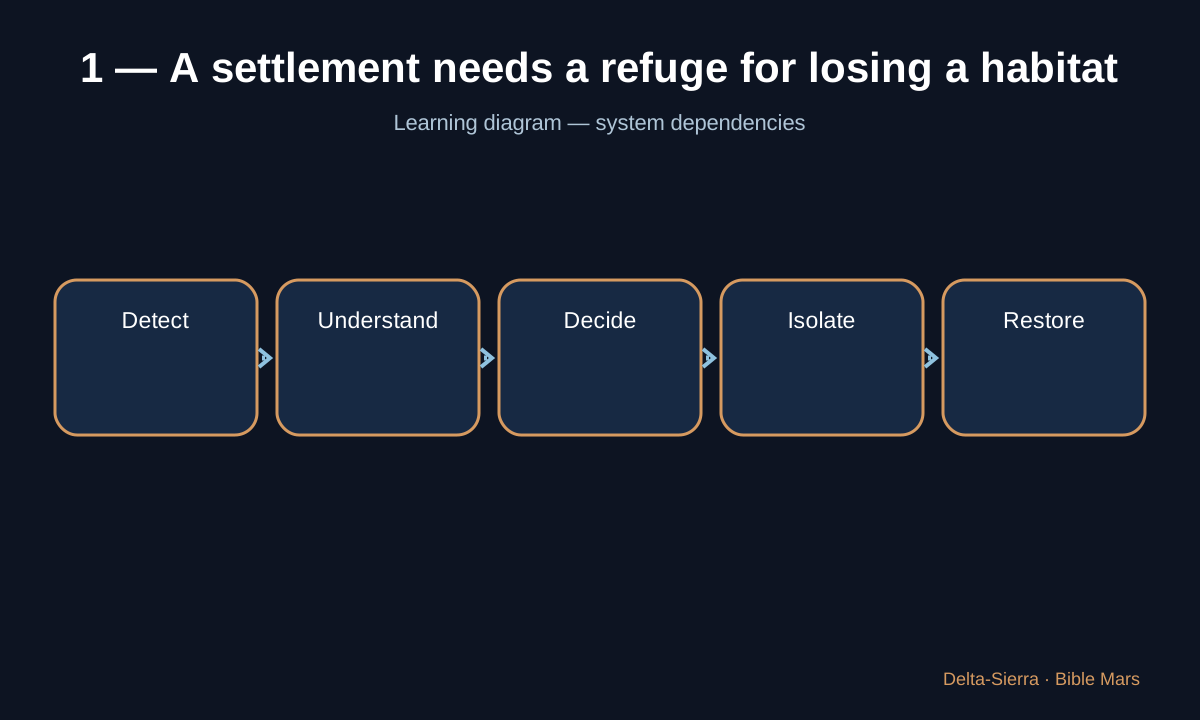
1 — A settlement needs a refuge for losing a habitat
Habitat redundancy exists only when other volumes can actually absorb displaced people with air, sleeping space, sanitation, and food.
An empty pressurized volume is not automatically evacuation capacity.
2 — How many people, for how long?
Planning needs permanent and emergency capacity for every refuge.
CO₂, water, toilets, power, or human density may become limiting before oxygen.
3 — Move without crossing the hazard
Fire, contamination, or leakage can block a corridor. At least one alternative route or protected transfer method is needed.
Evacuation plans should be tested with lost lighting or closed airlocks.
4 — Carry what matters
Medicine, data, critical spares, clothing, and tools need a “grab list” doctrine.
But retrieval must not slow evacuation enough to endanger people.
5 — The refuge quickly becomes another critical system
A zone designed for 12 people may suddenly hold 30. Ventilation, humidity, sleep, and hygiene degrade rapidly.
Emergency occupancy therefore needs a maximum duration or capacity-augmentation method.
6 — Return or abandon the habitat
After stabilization the settlement chooses repair, decontamination, rebuild, or abandonment.
Residual risk and crew-time cost must be included.
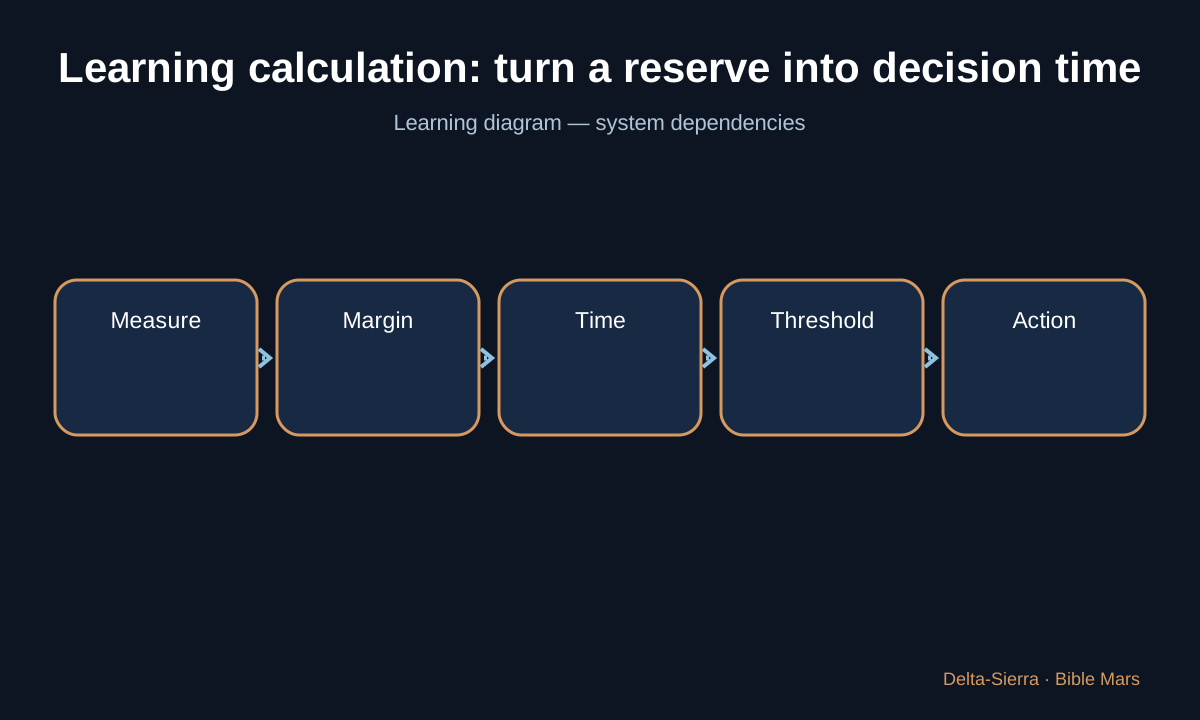
Learning calculation: turn a reserve into decision time
LEARNING CALCULATION — ASSUMPTIONS ARE EXPLICIT
LEARNING ASSUMPTION: refuge sized for 12 people, available airflow 720 m³/h. Emergency occupancy becomes 30.
Available flow per person: 720 ÷ 30 = 24 m³/h/person, versus 60 m³/h/person at 12 occupants.
This does not define a medical threshold; it shows how fixed capacity is diluted by occupancy.
Decision questions specific to this risk
- What real emergency capacity does each refuge have?
- Which route remains if a corridor is contaminated?
- Which service becomes limiting first when occupancy doubles?
- Which resources must be prepositioned in refuges?
- Which criterion authorizes return to the evacuated habitat?
How many people can a refuge actually absorb?
Saying that a neighboring habitat can receive evacuees is not enough. Engineers must check breathable air, carbon-dioxide removal, water, toilets, sleeping space, electrical power and heat rejection when occupancy rises suddenly. A reserve designed for the nominal crew can become inadequate within hours if population density doubles.
Planning must distinguish immediate shelter capacity from sustainable capacity. A volume may save twenty people for an hour while being unable to support them for days. Refuge sizing must therefore be related to plausible repair, relocation or redistribution time.
Evacuate data and responsibilities as well as people
A habitat contains more than people and hardware. It may host logs, cryptographic keys, procedures, operational authority and command functions. If the building becomes inaccessible, the settlement must be able to resume those functions elsewhere without losing operational memory.
That requires separated backups, alternative control stations and succession roles. A successful evacuation is therefore a controlled transfer of population, information and authority, not merely physical movement.
Main primary sources
Connect to other dossiers
Evacuation works only if the refuge exists before the accident
On Earth, evacuation often means leaving a building and waiting for help. On Mars, going outside is not a durable refuge. A displaced population must reach another pressurized volume with enough air, water, heat, sanitation, sleeping space and electrical capacity.
Refuge capacity therefore has to be calculated before the crisis. A neighboring habitat already near its nominal limit cannot suddenly absorb dozens of people without consuming its own margins. Evacuation becomes a systems-capacity problem.
Move people first, then move functions
The first minutes save lives. The next hours restore functions: medicines, data, communications, spares, power, environmental control and team organization. Some resources left in the damaged habitat may be recoverable, but access must be treated as a risk operation.
Evacuation planning should therefore consider several time horizons: immediate survival, 24 hours, one week and prolonged operation. A refuge comfortable for two hours may become unsustainable after several days.
Return is not always the objective
Deep contamination, structural damage or complex fire can make repair more dangerous than abandonment. A settlement must be able to condemn a volume and redistribute its population. That possibility affects network and district design.
True Martian urban resilience therefore favors multiple units capable of partial independent operation. One giant pressurized volume could be efficient in normal operation but extremely vulnerable to total loss.