


MARS BIBLE — RISK & RESILIENCE
Multiple rover outage: when surface mobility collapses
Losing one rover is an incident; losing several at once can disable logistics, EVA rescue, and access to remote infrastructure.
Risk rises when vehicles share batteries, software, wheels, or spare parts. This chapter examines fleet diversity, rescue of an isolated crew, mission priorities, strategic spares, and maximum safe range under simultaneous failures.
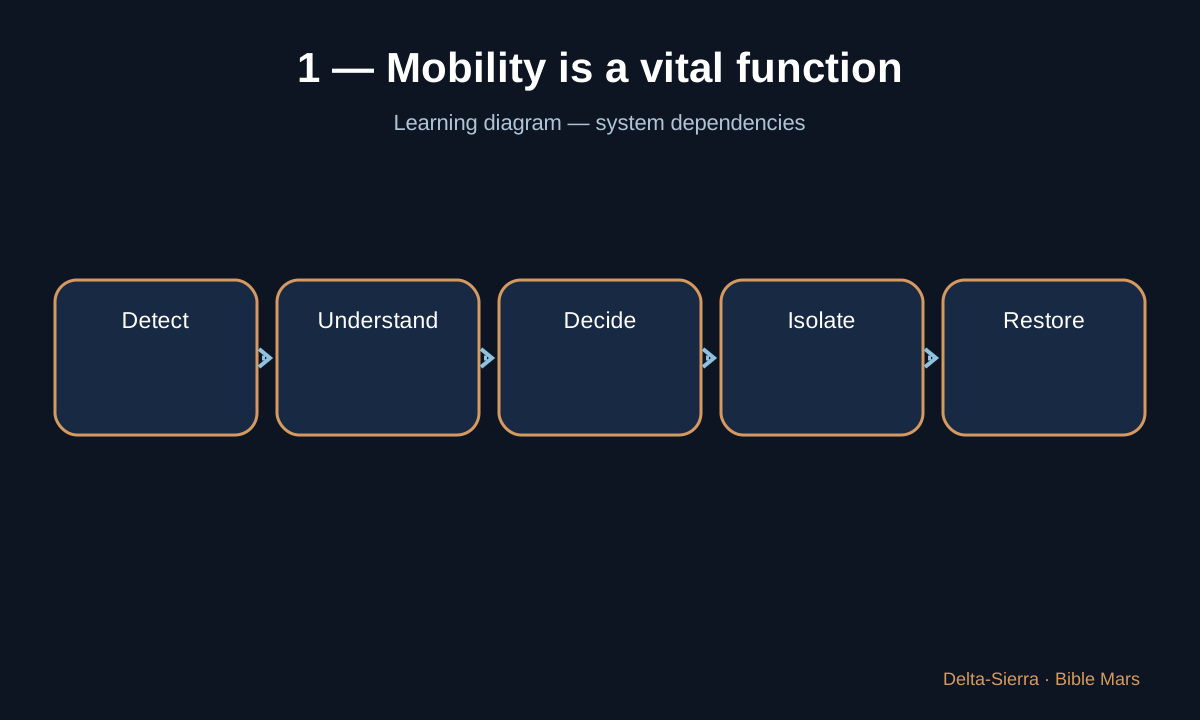
1 — Mobility is a vital function
Rovers transport people, spares, water, tools, and rescue teams. Multiple outages can isolate mines, power plants, or EVA crews.
The base needs to know which missions can stop and which must continue despite fleet loss.
2 — Fleet common causes
Shared software, tire batches, batteries, connectors, or dust contamination can disable multiple vehicles.
Design and maintenance diversity can reduce the risk.
3 — Safety radius
A crew should not travel beyond a rescue distance compatible with vehicles actually available.
Operational radius should shrink as rescue fleet capacity falls.
4 — Power and charging
A disabled rover may still hold useful battery energy; towing or energy transfer can matter.
Charging stations should avoid a single point of failure.
5 — Rescue a distant crew
The plan combines suit endurance, mobile refuge, communications, rescue vehicle, and intervention time.
Every minute spent finding a usable rover consumes vital margin.
6 — Rebuild fleet availability
Repairing one vehicle is insufficient when a common cause affects the others.
Common-cause analysis comes before declaring fleet recovery.
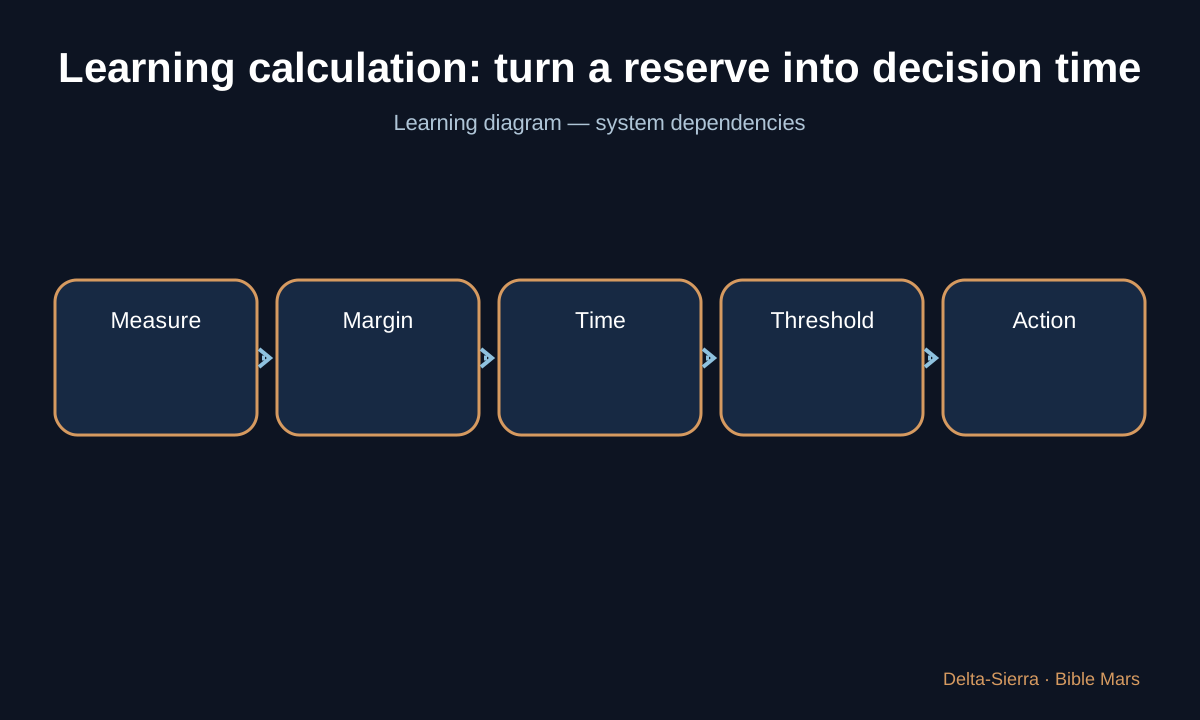
Learning calculation: turn a reserve into decision time
LEARNING CALCULATION — ASSUMPTIONS ARE EXPLICIT
LEARNING ASSUMPTION: rescue rover averages 18 km/h on safe terrain; crew is 27 km away.
Ideal travel time = 27 ÷ 18 = 1.5 h. Preparation and final approach can make the delay much longer.
Distance alone is insufficient: terrain, endurance, communications, and preparation matter.
Decision questions specific to this risk
- How many independent vehicles can still rescue an EVA?
- Which common defect could disable the entire fleet?
- What radius remains acceptable with only one rescue rover?
- Do chargers share the same power source?
- What refuge endurance does a stranded crew have?
Mobility is a distributed resource
Two failed rovers can remove far more than two vehicles. They may interrupt spare-parts transport, mine access, EVA rescue or maintenance of a remote installation. The effect depends on the missions that only those vehicles can perform and the routes they make reachable.
A settlement should map mobility functions as a network. A small slow vehicle may become strategic if it is the only remaining way to preserve a minimum connection between two sites. Diversity in vehicle types and transport modes can create more useful redundancy than many identical copies.
Recover one rover without losing the rescue vehicle
A remote recovery mission must not turn one failure into two. Before departure, the team needs to understand remaining endurance, weather, communications, carried spares and whether it can return even if the stranded rover cannot be repaired. The rescue vehicle must retain its own independent return margin.
This leads to mobility doctrine in which some limits are not committed simultaneously. The purpose is not one universal rule but a preserved fallback capability during remote interventions.
Main primary sources
Connect to other dossiers
Mobility is a life-supporting function, not a convenience
A distributed settlement depends on rovers to move crews, spares, tools, harvest and injured people. Losing several vehicles can isolate a district or block critical repair even when habitats remain healthy.
Fleet design should therefore be expressed as retained capacity. How many vehicles can fail before one essential mission is lost? Which vehicles can tow one another? Which routes remain usable with reduced capability?
Common parts can make the whole fleet vulnerable
Standardization simplifies spares and maintenance but can create common-cause risk. A battery, software, bearing or connector defect can affect several vehicles at nearly the same time. Some diversity can protect mobility.
That does not require two completely unrelated fleets. Diversity can be focused on the most critical elements, while mechanical recovery modes or specialized rescue vehicles preserve basic transport.
Plan the crisis in transport capacity, not rover count
Two available rovers do not reveal how much logistics capacity remains. Payload, range, speed, operator availability and charging time all matter. The settlement should track effective transport capacity.
This can make a slow but robust vehicle extremely valuable in crisis. Resilience preserves functions rather than the appearance of a full fleet.