


MARS BIBLE — RISK & RESILIENCE
Loss of medical capability on Mars: when the hospital becomes the critical system
On Mars, the clinic is not an external service that can be replaced by an ambulance; it is part of the settlement’s survival system.
Losing a surgeon, imaging device, pharmacy function, sterilization capacity, or treatment bay can sharply reduce what medicine can do. This chapter reasons in minimum medical functions, alternatives, delayed telemedicine, strategic stocks, and activity restrictions when care capability falls.
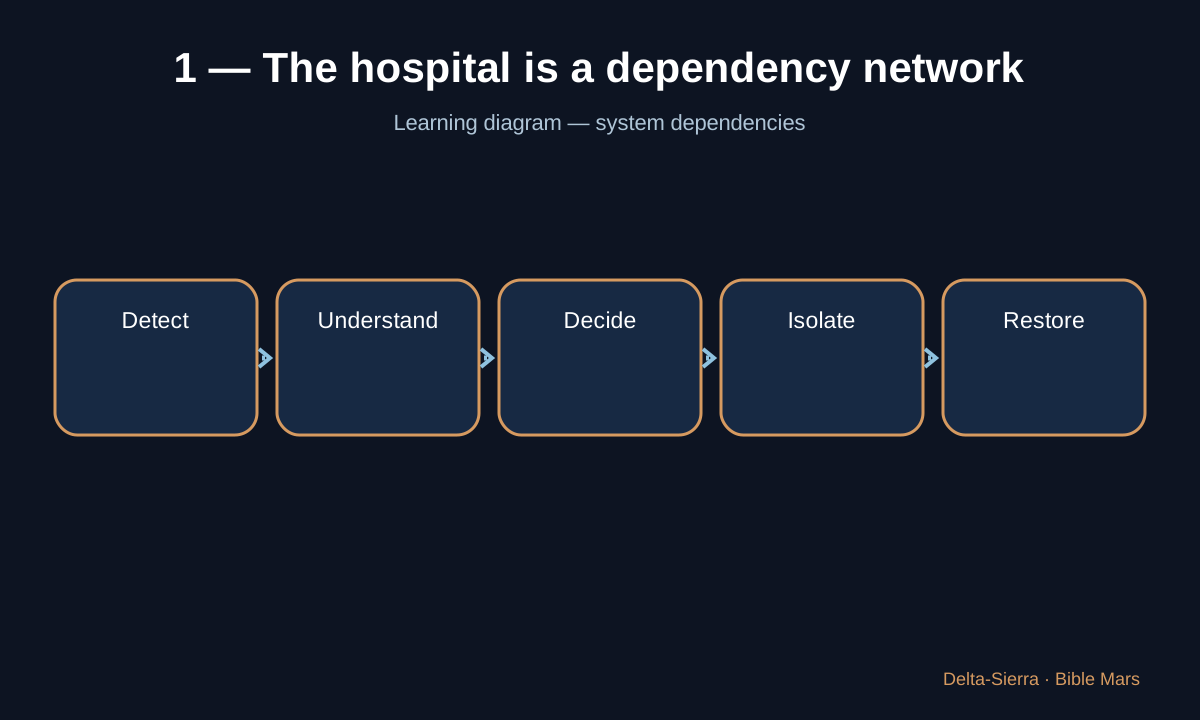
1 — The hospital is a dependency network
Surgery, diagnostics, pharmacy, sterilization, medical oxygen, power, and staff form one system. Losing one device can remove several treatments.
Resilience begins by identifying procedures that depend on one machine or one specialist.
2 — Triage under constraint
When demand exceeds capacity, triage criteria should be prepared before the crisis. Improvisation under overload increases unfairness and error.
Procedures must also account for medical staff fatigue.
3 — Drugs and consumables
Expired medication, contaminated lots, or refrigeration failure can abruptly reduce care capability.
The settlement needs therapeutic substitutes, minimum stocks, and realistic local-production options.
4 — Diagnostic redundancy
Two identical machines in the same room and on the same power bus share common causes.
Diversity can include manual methods, portable ultrasound, multiple assays, and delayed tele-expertise.
5 — Stabilize until help becomes possible
On Mars, “transfer to a larger hospital” may be impossible. Care may need to sustain a patient for weeks or months.
That raises the importance of long-duration care, rehabilitation, and nursing.
6 — Learn after the event
Every medical incident should become system data: which equipment, stock, or training was missing?
The goal is not blame but changes to design, preparation, and inventory.
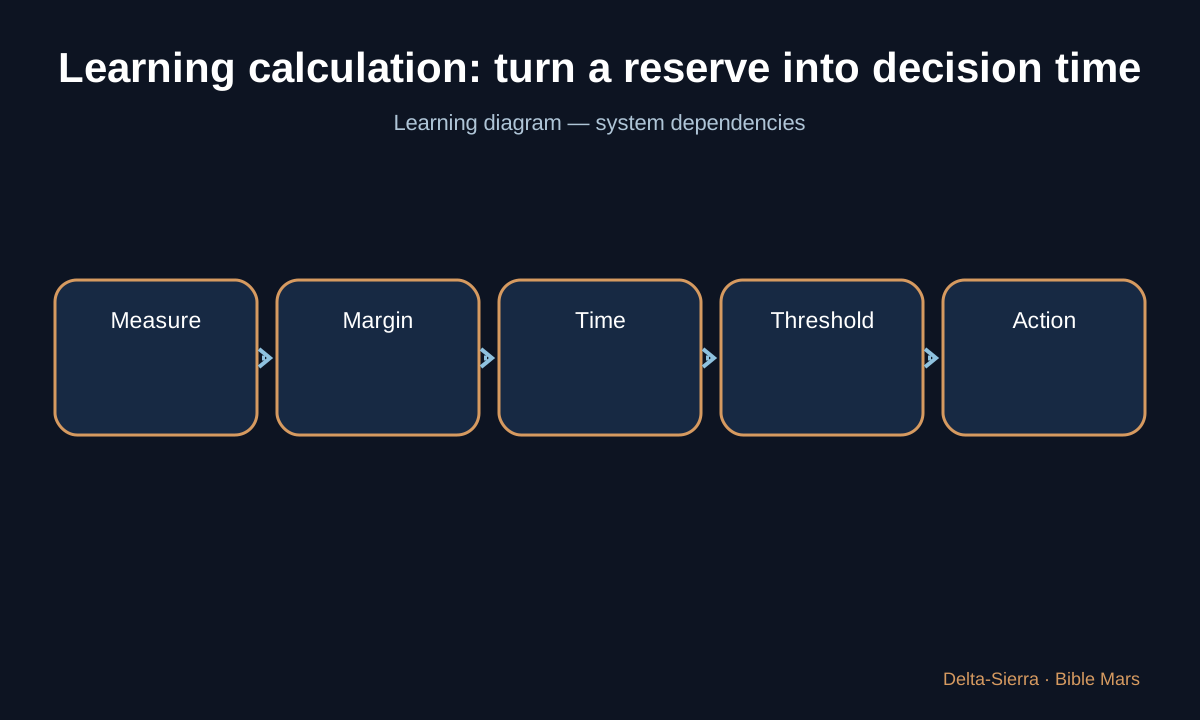
Learning calculation: turn a reserve into decision time
LEARNING CALCULATION — ASSUMPTIONS ARE EXPLICIT
LEARNING ASSUMPTION: 180 doses of a critical medicine, average use 3 doses/day.
Nominal endurance = 180 ÷ 3 = 60 days. Keeping 25% unplanned reserve leaves 135 doses, or 45 planable days.
Real use depends on patient count, alternatives, and shelf life.
Decision questions specific to this risk
- Which treatments disappear if one machine fails?
- Which medical stock has the longest replacement time?
- Which substitute exists if a drug becomes unavailable?
- Do backup devices share power and sterilization?
- Which level of care must persist without evacuation?
Medical capability is a chain, not only a doctor
A highly skilled crew cannot compensate for missing medical oxygen, imaging, sterilization, medicines, laboratory capability or electrical power. Failure of one subsystem can suddenly reduce which treatments are possible. Medical capability should therefore be mapped by procedures that can actually be performed and by their technical dependencies.
This also supports degraded modes. A procedure may have a full version and a limited version when some equipment is unavailable, provided the limits are explicit. The danger would be to assume that a hospital still exists merely because the room and personnel remain.
Telemedicine helps but does not replace local capability
Earth can provide extraordinary expertise, but communications delay and the absence of rapid transport force practical autonomy. A specialist on Earth can advise; that specialist cannot hold an instrument, directly monitor the patient or replace a missing physical resource.
The settlement therefore needs cross-training, asynchronous consultation protocols and robust local medical documentation. Martian medicine is a clear example of the difference between available information and executable capability.
Main primary sources
Connect to other dossiers
Losing one medical capability is not losing the whole hospital
Failure of sterilization, imaging, pharmacy or surgery removes a specific function while others may remain. The medical system should therefore be mapped by capabilities: diagnose, stabilize, operate, ventilate, analyze, produce selected medicines and monitor patients.
This decomposition reveals alternatives. A less precise test may still support some decisions; procedures may be adapted; delayed telemedicine may help when communications allow. Medical resilience comes from combinations of people, consumables and equipment.
Medical consumables create hidden dependencies
A sophisticated machine can become unusable for lack of one disposable sensor, reagent, filter or drug. Medical stocks should therefore be analyzed by clinical act: how many operations, tests or treatment-days remain possible?
Shelf life adds another difficulty. A settlement needs stock rotation, stability monitoring and gradually increasing local substitution or manufacturing where it is realistic and safe.
Deciding under reduced medical capacity
In a prolonged crisis, scarce medical resources may require allocation rules. Those rules need ethical preparation, traceable decisions and protection against arbitrary choices. The psychological pressure in a small community would be severe.
Prevention therefore becomes a medical capability in its own right. Avoiding accidents, monitoring risk factors and intervening early saves scarce resources. On Mars, the best operation is often the one good design prevented.