Course compass
Guiding question : What was really missing in the 1930s–1940s: physical laws or the industrial ability to integrate them?
Evidence tags : 📏 MEASURED · 📐 CONVENTION · 🧮 CALCULATED · 🎓 LEARNING ASSUMPTION · 🚀 MISSION DATA · 🏭 MANUFACTURER DATA · ⚠️ APPROXIMATION
Objectives :
- avoid the “they did not know physics” anachronism
- understand propellant margin
- compare analog and digital navigation
- understand relight/landing demands
- see reuse as a system-level design
1 — Newton did not wait for SpaceX
The laws needed to understand forces, trajectories, and feedback existed long before 1940. The challenge was not inventing torque or vertical velocity.
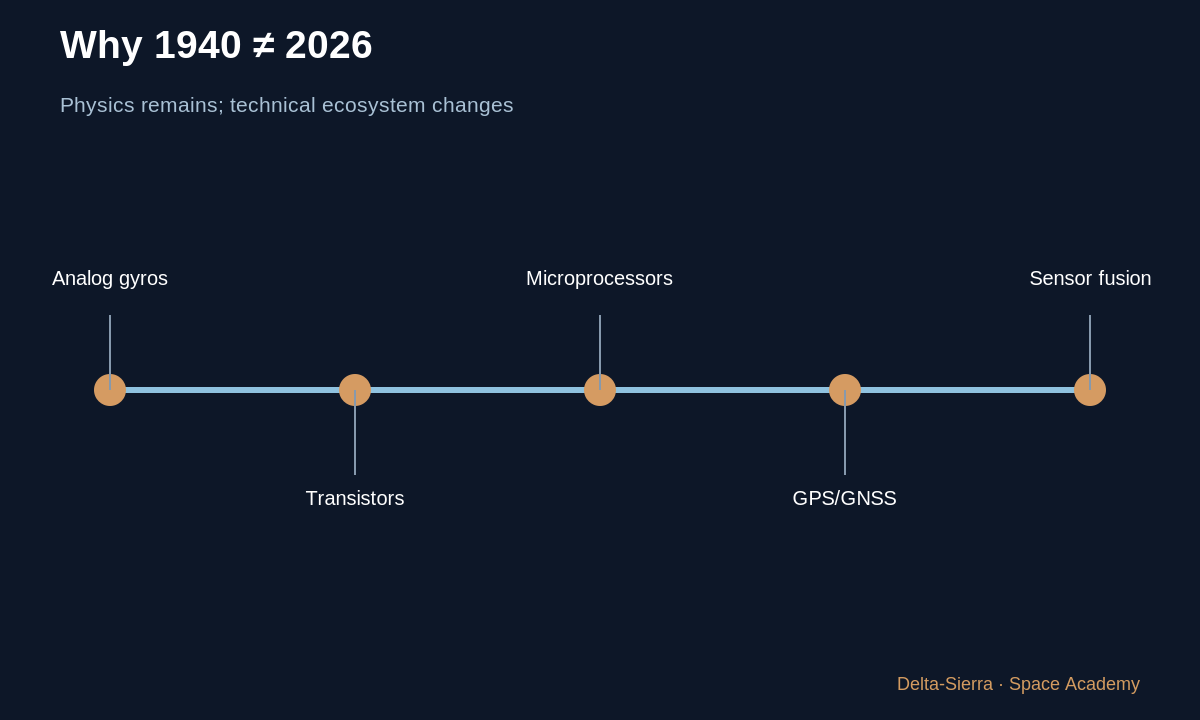
The challenge was integrating lightweight reliable sensors, computers, actuators, restartable engines, and performance margins into one practical vehicle.
2 — V-2 was a ballistic weapon, not a recovery vehicle
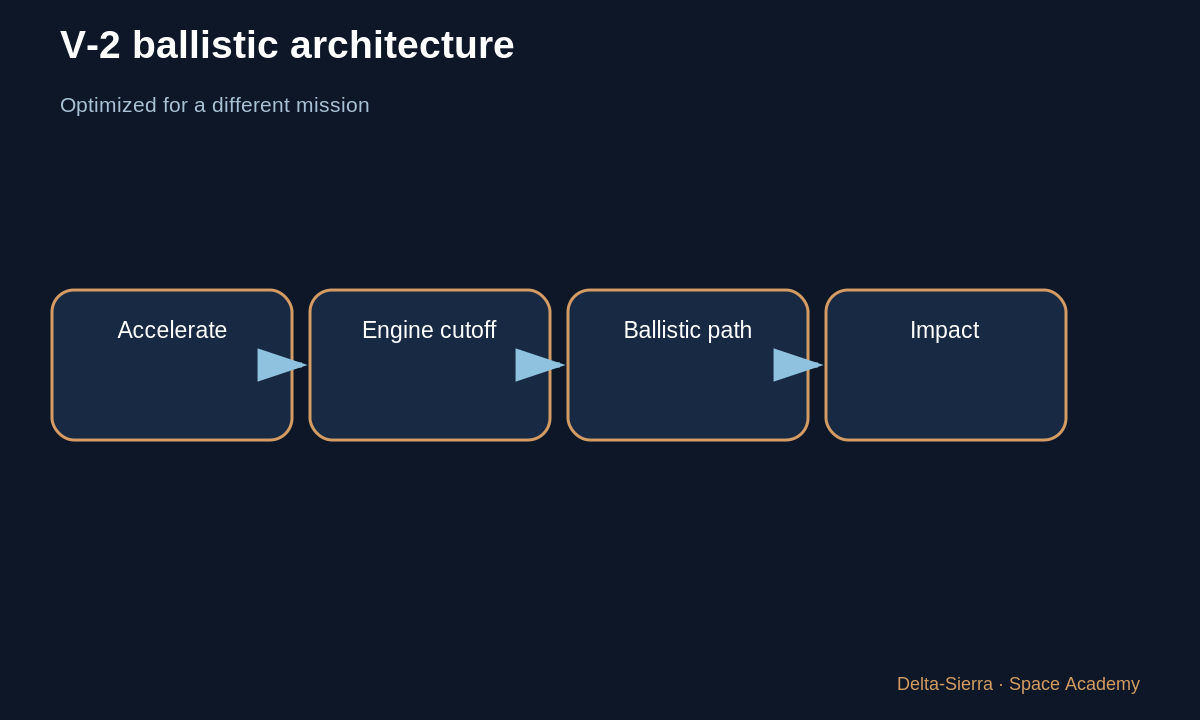
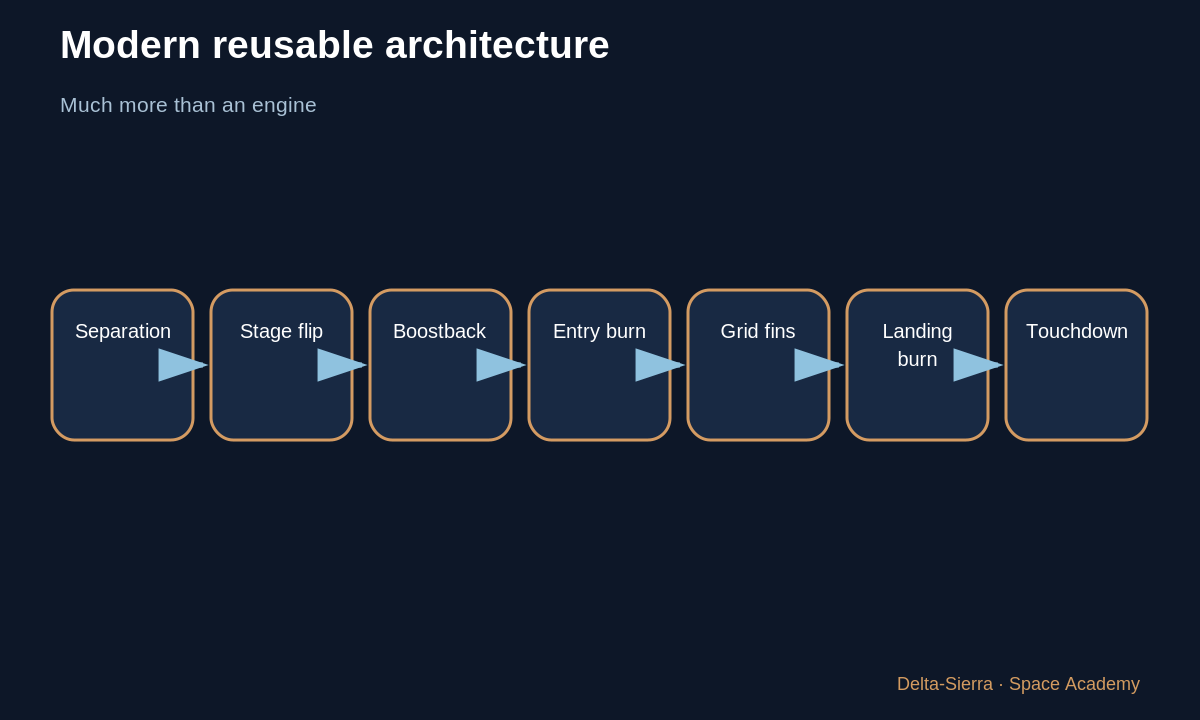
Its architecture was designed to accelerate a payload onto a wartime ballistic trajectory, not to reserve propellant, flip, survive controlled reentry, and land.
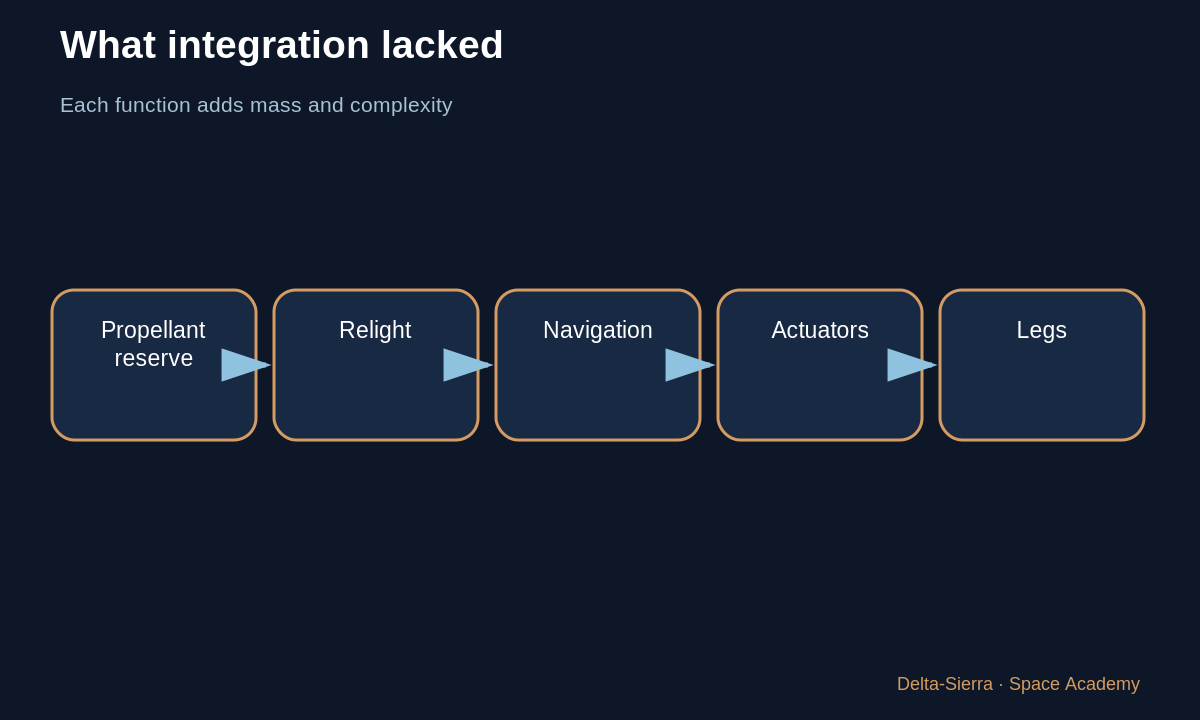
Adding recovery would have changed size, mass, structure, guidance, and performance. It is not a software feature added at the end.
3 — Navigation: know where you are accurately enough
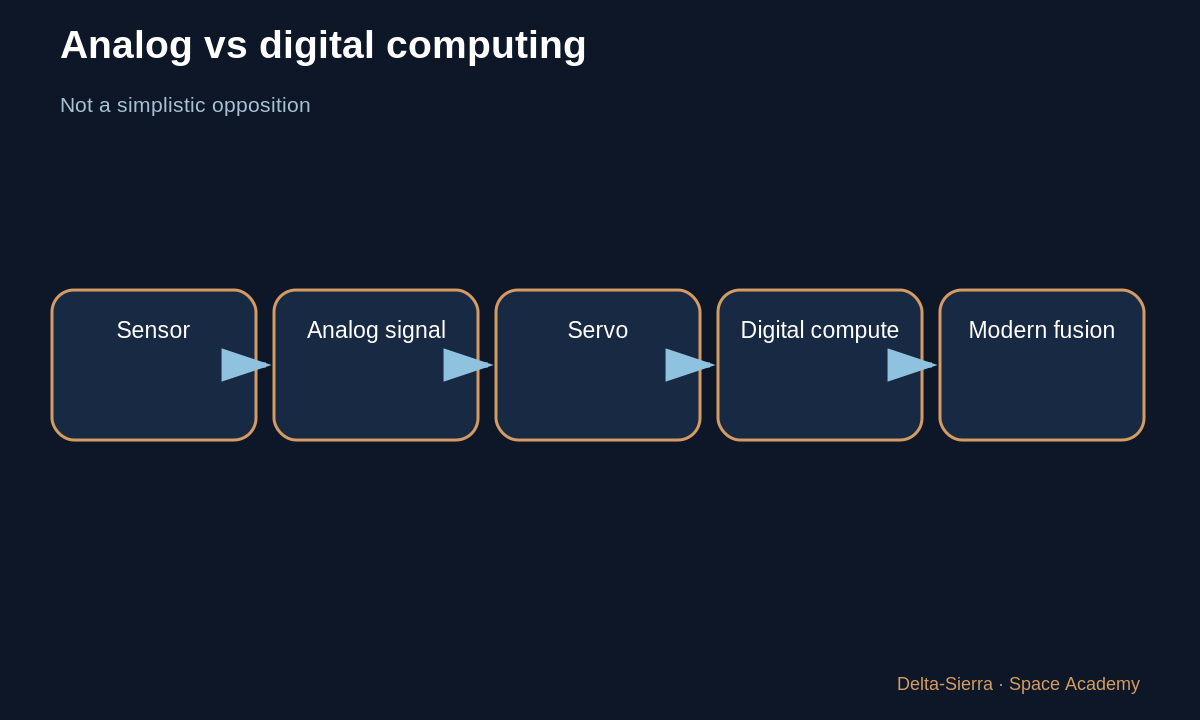
Vertical return requires continuous estimates of position, velocity, attitude, and environment. 1940s analog gyros were remarkable but lacked the modern ecosystem of digital computation, sensor fusion, and rapid updating.
Satellite navigation did not exist. That does not make navigation impossible, but uncertainty and engineering difficulty rise dramatically.
4 — Engine: relight, regulate, and survive
A recovery engine must restart after coast, behave predictably, and provide adequate control authority for terminal approach. Relight transients become critical.
The architecture must also protect engines through reentry and preserve compatible propellant feed, pressure, and temperature for restart.
5 — Actuators and computers: close the loop quickly
Final descent needs repeated corrections. Modern computers run models and filters at high rate; actuators respond quickly and accurately.
1940s systems could perform analog regulation, but the mass/reliability/precision/computing combination for a reusable booster was on another level.
6 — The SpaceX step is system + operations
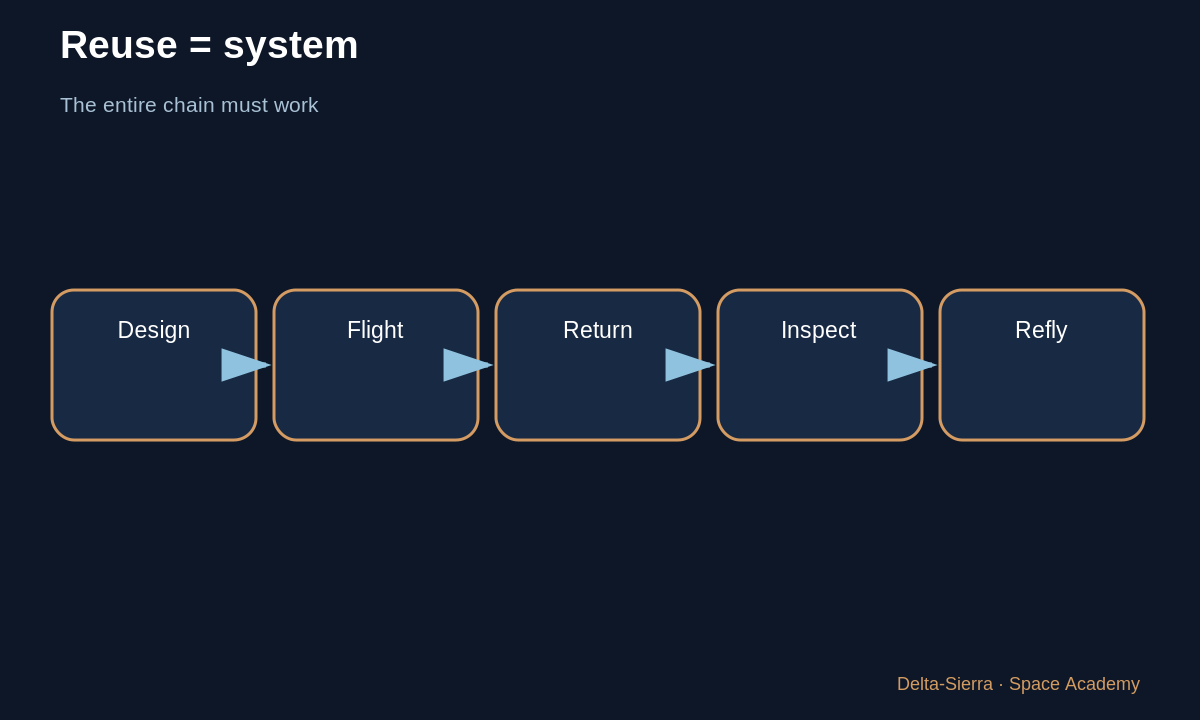
Reuse is not one invention. It combines restartable engines, guidance, TVC, grid fins, structure, protection, legs, software, telemetry, testing, and operational cadence.
It is also an industrial learning loop: fly prototypes, recover data, inspect hardware, modify, and fly again.
7 — Impossible, unnecessary, or simply immature?
It would be too simple to say a V-2 could not return because microprocessors did not exist. Some control functions already existed in analog or electromechanical form. But mission purpose, computing capacity, sensor precision, restartable engines, propellant margin, materials, actuators and the test ecosystem were not combined for modern propulsive recovery.
A technology can be physically possible yet economically pointless, industrially immature or unrelated to the program need. Technical history becomes more useful when we ask which functions were required and when each became mature enough to integrate.
8 — SpaceX: visible innovation hides an operations innovation
A landing focuses attention on the spectacular final phase. Reuse also depends on what happens afterward: inspection, refurbishment, flight data, scheduling, recovery logistics and return to the launch manifest. A reusable rocket creates economic value only if that entire cycle is sufficiently fast and repeatable.
This is systems thinking. Vehicle, software, launch site, teams and industrial chain form one economic system. A landing improvement that made inspection much harder could shift cost instead of removing it.
Exercises and answers
Anachronism
Why is “they did not know the physics” a poor answer?
Architecture
Name four functions needed for a recoverable booster.
System
Why is a better computer alone insufficient?